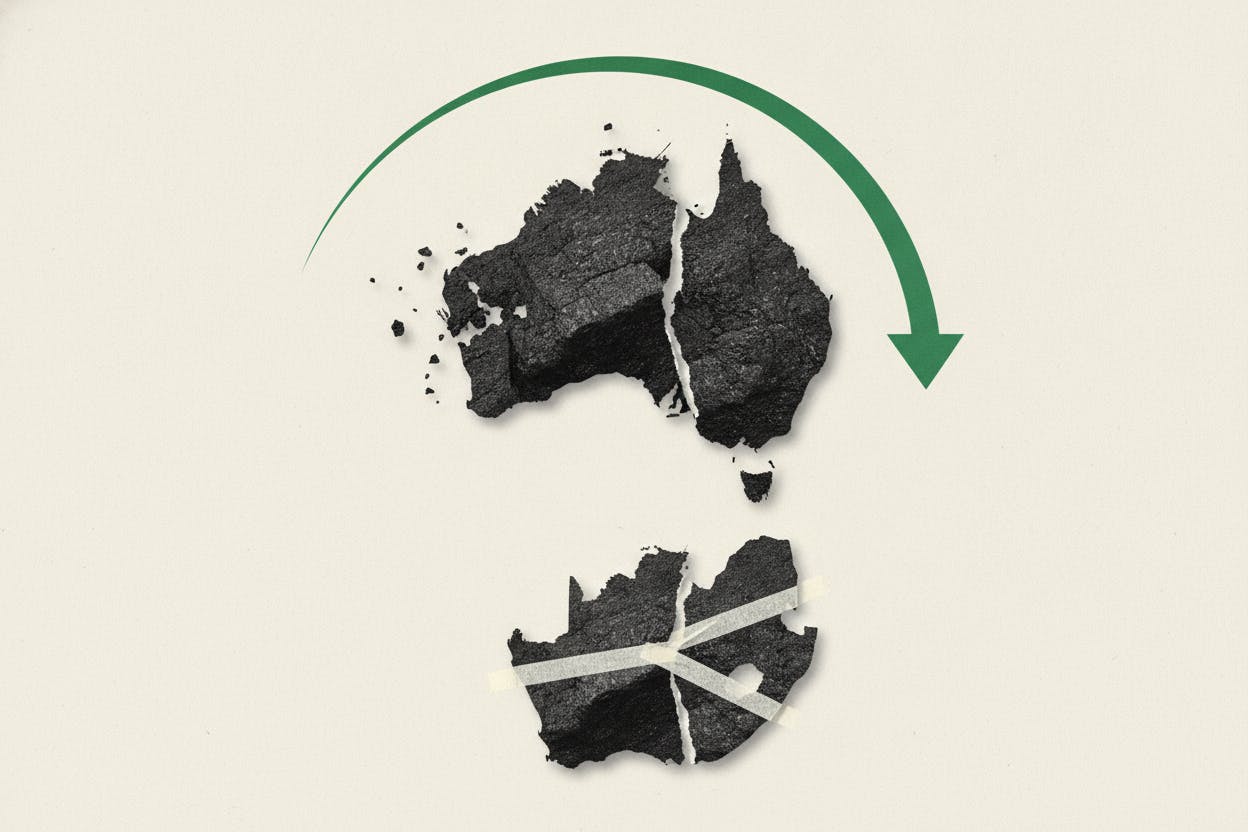
South African coal miner Thungela Resources has reported a sharp jump in half-year earnings, with its Australian Ensham mine emerging as a key growth driver. The company said the mine helped double its profit for the six months to June 30 and allowed it to raise its interim dividend to shareholders.
Thungela acquired Ensham in 2023 as part of a strategy to diversify away from its home market, where rail and port bottlenecks have long limited how much coal exporters can ship. The Australian asset has now delivered on that promise, with output rising 38% to 2.2 million tons during the period, as the company improved its handling of difficult mining conditions.
Higher coal prices also helped. Benchmark thermal-coal prices in Australia climbed 25% during the half, while South African prices rose 15%, giving the company a tailwind across both operations.
Why Ensham matters
Ensham is a large open-cut coal mine in Queensland's Bowen Basin, one of the world's most prolific coal-producing regions. It produces thermal coal, which is burned to generate electricity, and has historically been a reliable supplier to Asian markets, particularly Japan and South Korea.
For Thungela, the mine represents a hedge against the logistical problems that have plagued South Africa's coal export industry. State-owned rail operator Transnet has struggled with equipment failures, cable theft and maintenance backlogs, which have constrained how much coal can reach the port of Richards Bay. That has forced South African miners to either stockpile or sell into lower-margin domestic markets.
By contrast, Ensham has access to well-established rail and port infrastructure in Australia, allowing Thungela to move product to international buyers more efficiently. The company said it is now studying ways to expand output beyond 4 million tons a year, which would further cement Ensham's role as a growth engine.
What it means for investors
For everyday investors, the key takeaway is that Thungela's diversification strategy is starting to pay off. The company is less exposed to the operational risks that have historically weighed on South African coal producers, and it is benefiting from a stronger price environment in Australia.
The higher interim dividend is a direct result of that improved profitability. Dividends are a way for companies to return cash to shareholders, and an increase signals that management is confident about the business's near-term outlook. However, investors should remember that coal prices are cyclical and can swing sharply with global supply and demand, so today's strong results are not guaranteed to continue.
Thungela's focus on expanding Ensham's output suggests management sees long-term value in the asset, even as the world gradually shifts toward cleaner energy. Coal remains a major fuel source for power generation in Asia, and demand from countries like China and India is likely to persist for years, even if it eventually declines.
Investors should also keep an eye on the broader coal market. China's steel output has recently hit a six-month low as demand and profits weaken, which could weigh on coal demand in the region. That said, thermal coal used for power generation is a different market from metallurgical coal used in steelmaking, and Thungela's Australian operations are focused on the former.
Thungela's results also come amid a mixed earnings season for miners. BlueScope, an Australian steelmaker, doubled its profit on strong demand from the US and Asia, while SAB, a South African brewer, beat profit forecasts despite a mixed quarter. These reports highlight how commodity prices and regional demand are driving corporate performance across sectors.
Risks to watch
While Thungela's half-year numbers are encouraging, there are risks. Coal prices could fall if global economic growth slows or if renewable energy adoption accelerates faster than expected. The company also faces regulatory and environmental pressures, as many governments and investors are pushing for a transition away from fossil fuels.
Operationally, expanding Ensham's output beyond 4 million tons a year will require significant capital investment and regulatory approvals. Any delays or cost overruns could eat into the returns that investors are hoping for.
Still, for now, Thungela's bet on Australia looks like a smart one. The company has reduced its reliance on a struggling logistics network, gained access to a more efficient export route, and is now reaping the rewards in its bottom line. Whether that momentum continues will depend on coal prices, operational execution, and the pace of the global energy transition.