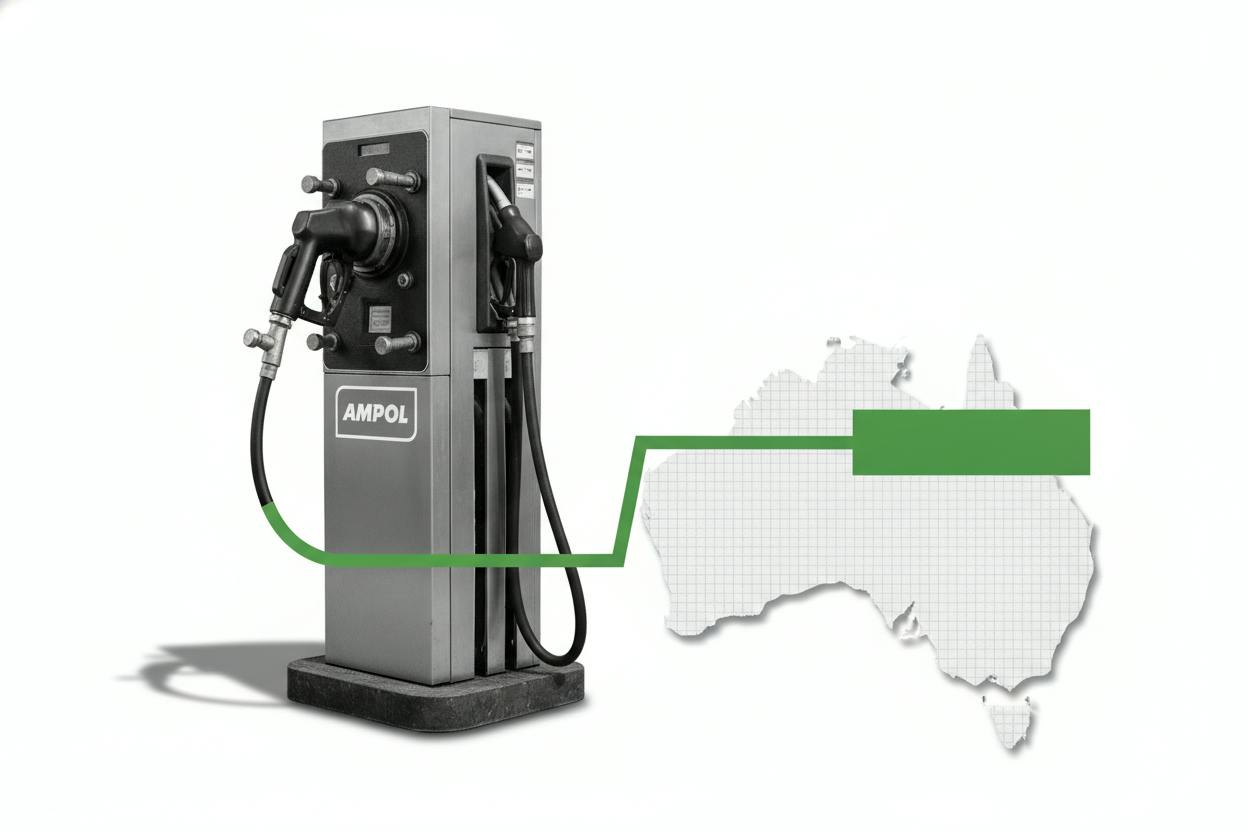
Ampol, one of Australia's largest fuel retailers, has agreed to buy EV charging operator Evie Networks for AU$225 million, a move that would significantly expand its AmpCharge network if regulators approve it. The deal underscores the race among fuel companies to secure a foothold in the electric vehicle charging market, even as the economics remain challenging.
What the deal involves
Ampol told the Australian stock exchange on Thursday that its unit Ampol Energy will acquire 100% of Evie, pending clearance from the Australian Competition and Consumer Commission (ACCC) and other standard conditions. Completion is targeted for the first half of 2027.
The acquisition is mainly about scale. Evie would add more than 1,030 charging bays, lifting AmpCharge to about 1,425 bays across more than 400 sites. That's a substantial jump for a network that is still in its growth phase.
Ampol argues it's buying time as much as hardware. Evie comes with well-located sites, long-term leases, and existing grid connections—elements that can be the slow and expensive parts of building a charging network from scratch. For a company used to the logistics of fuel retailing, these ready-made assets could accelerate its expansion.
The economics of EV charging
But the numbers underline how early-stage the economics still are. Ampol expects the combined business to generate about AU$30 million of annualized earnings before interest, taxes, depreciation, and amortization (EBITDA) within three years of completion, including roughly AU$10 million of cost synergies. Yet it still sees EBITDA breakeven only in 2028.
That timeline is a giveaway: profits depend less on bay count and more on utilization—how often drivers are actually charging. EV charging has a high fixed-cost base: site leases, maintenance, software, staffing, and the cost of securing and keeping enough power on hand. Those costs don't shrink just because a charger is idle, so margins usually arrive late and then improve faster once usage climbs.
The purchase will be fully debt-funded, which Ampol says should have only a nominal impact on leverage. That's a notable point for investors, as the company is taking on debt to fund a business that won't break even for several years.
What it means for investors
For markets, Ampol's AU$225 million land-grab still points to a 2028 breakeven. A jump to roughly 1,425 bays sounds like instant scale, but the market takeaway is that this deal likely keeps AmpCharge in an “investment phase” for longer than the footprint headline suggests.
The key swing factor after 2028 is how quickly higher throughput turns that bigger network into operating leverage, rather than the headline expansion itself. If charging usage grows as EV adoption accelerates, the network could become profitable faster. But if adoption lags, the fixed costs could weigh on returns.
This deal also highlights a broader trend: traditional fuel retailers are diversifying as electric vehicles gain traction. Ampol is not alone in this shift. Other companies are also investing in charging infrastructure, though the path to profitability remains uncertain. For context, similar dynamics are playing out in other sectors, such as NIO's battery-swap partnership with Geely, where scale is being pursued ahead of clear profits.
Investors should watch how Ampol manages the integration and whether it can achieve the projected synergies. Regulatory approval is another hurdle, as the ACCC will scrutinize the deal's impact on competition in the emerging EV charging market.
For everyday investors, this deal is a reminder that the transition to electric vehicles is a long-term story. Companies are spending heavily now, hoping to reap rewards later. The risk is that the payoff takes longer than expected, or that competition intensifies, squeezing margins.
As with any acquisition, the real test will be execution. Ampol's experience in fuel retailing could help, but EV charging is a different business with different economics. The company's own projections suggest patience will be required.
In the meantime, the broader market continues to digest similar themes. For instance, AI's grip on markets shows how investors are betting on future growth, often at the expense of current profits. EV charging is no different.
Ultimately, Ampol's move is a strategic bet on the future of transport. Whether it pays off will depend on how quickly drivers embrace electric vehicles and how efficiently Ampol can turn its expanded network into a profitable business.