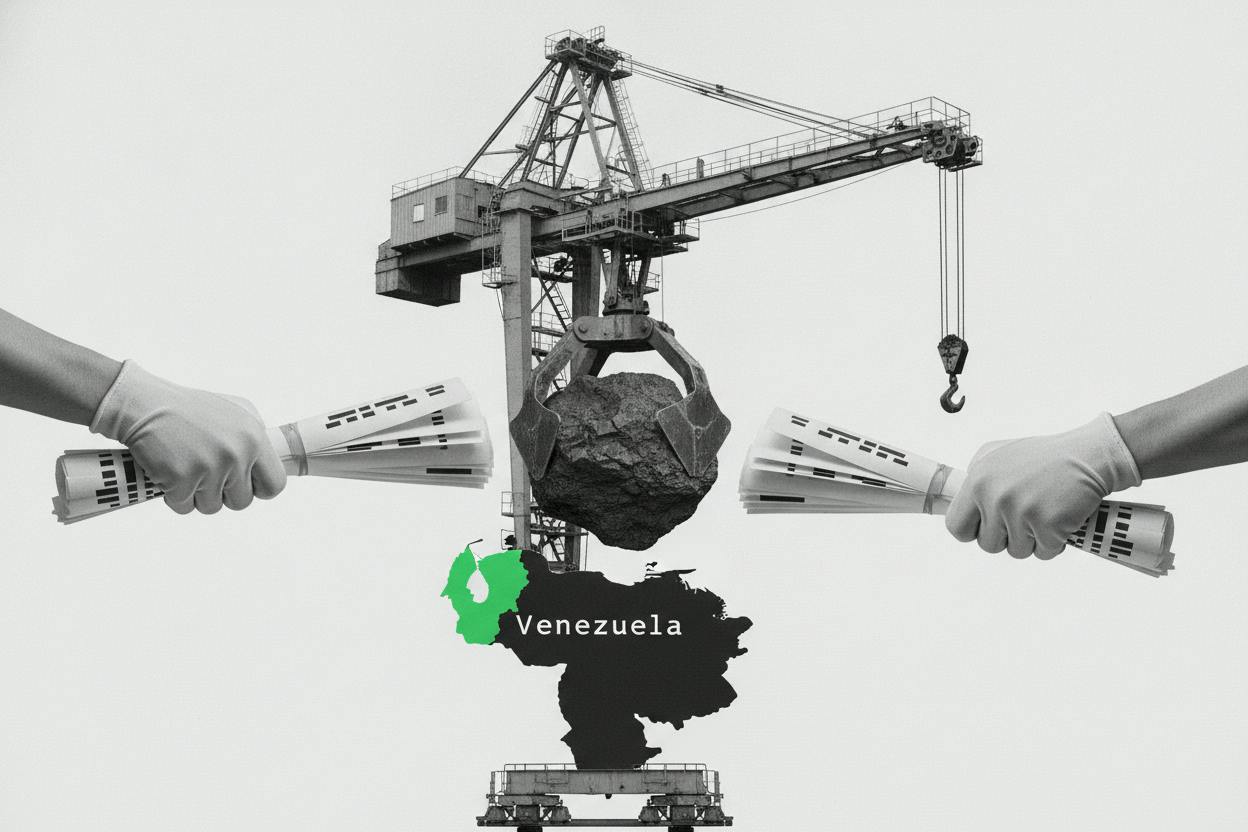
Two of the world's biggest coal players are circling Venezuela's coal-rich Zulia state. Peabody Energy, a US-based miner, and Glencore, the Swiss commodities giant, are in talks to jointly pursue coal assets there, according to a Bloomberg report. But this isn't a typical acquisition story — the negotiations are reportedly focused on operating control and off-take rights, not buying the mines outright.
For everyday investors, the distinction matters. In commodity markets, owning the asset is often less important than controlling how it's run and who gets to sell what comes out of the ground. Off-take rights are contractual agreements that give a company the right to purchase a specified amount of a product — in this case, coal — at an agreed price. That can secure a steady supply for traders like Glencore, which makes money moving commodities around the world, or for miners like Peabody that need consistent volumes to feed their sales pipelines.
Why operating control and off-take matter
When a company takes on operating control, it's responsible for day-to-day mining, safety, logistics, and meeting production targets. That's a heavy lift, especially in a country like Venezuela, where infrastructure has deteriorated and the business environment is challenging. But the payoff can be significant: the operator typically earns fees and can influence quality and output levels, which directly affect profitability.
Off-take rights, meanwhile, are about securing product. Even if the mines stay on someone else's balance sheet, having the right to buy and sell the coal gives a company a foothold in the market. For Glencore, which already has a large coal trading business, this could complement its existing operations. For Peabody, it could provide access to reserves without the full risk of ownership.
Bloomberg also noted that Peabody joined a US-government-led delegation to Caracas in March. That's a telling detail. Venezuela has been under US sanctions for years, and any deal involving its natural resources will likely require careful navigation of those restrictions. The delegation suggests Peabody is trying to build relationships and understand the regulatory landscape before committing.
Competition and the real gatekeepers
Peabody and Glencore aren't the only ones interested. Investor Heeney and Drummond, an Alabama-based miner, are also exploring a bid, according to Bloomberg. That means the contest may be less about who can pay the most for the title deed and more about who can secure the right to manage exports and move coal to market.
In this kind of situation, the real gatekeepers are permits, sanctions-related constraints, and access — to the mines, to ports, and to buyers. A rival group doesn't need to outbid on ownership to matter; it just needs to lock up access to exportable volumes. That's why the structure of the deal is so important.
For investors, this shifts the focus from acquisition price to execution. If Peabody and Glencore win the operating role, they'll need to prove they can actually get coal out of the ground and onto ships. That's a tall order in Venezuela, where political and logistical hurdles are common.
What it means for investors
For those watching the energy sector, this story is a reminder that commodity deals are often about control and contracts, not just ownership. The value in a coal asset can lie in reliably getting product out, arranging shipping, and finding buyers — all things that operating and off-take agreements can provide.
It also highlights the ongoing interest in fossil fuels even as the world transitions to cleaner energy. Coal remains a major source of power generation globally, and companies like Glencore and Peabody are still investing in supply. For a broader view of how Glencore is positioning itself, analysts have recently raised targets on the stock ahead of its copper output and planned ASX listing, showing the company's dual focus on both traditional and future-facing commodities.
At the same time, the political backdrop is worth watching. US-Iran tensions and uncertainty around the Strait of Hormuz have been pushing oil and Treasury yields higher, which can affect energy markets broadly. While coal isn't oil, geopolitical instability can ripple through all commodity prices.
For now, the key question is whether either consortium can turn Venezuelan coal in the ground into dependable shipments out of Zulia. That will depend on permits, infrastructure, and the ability to navigate sanctions — factors that are hard to predict. Investors should watch for any official announcements about the talks, as well as updates on Venezuela's political and regulatory environment.
As always, this is a developing story, and the details could change. But the structure of the deal — operating control and off-take rather than ownership — is a smart reminder that in commodities, the real prize is often the flow, not the asset itself.