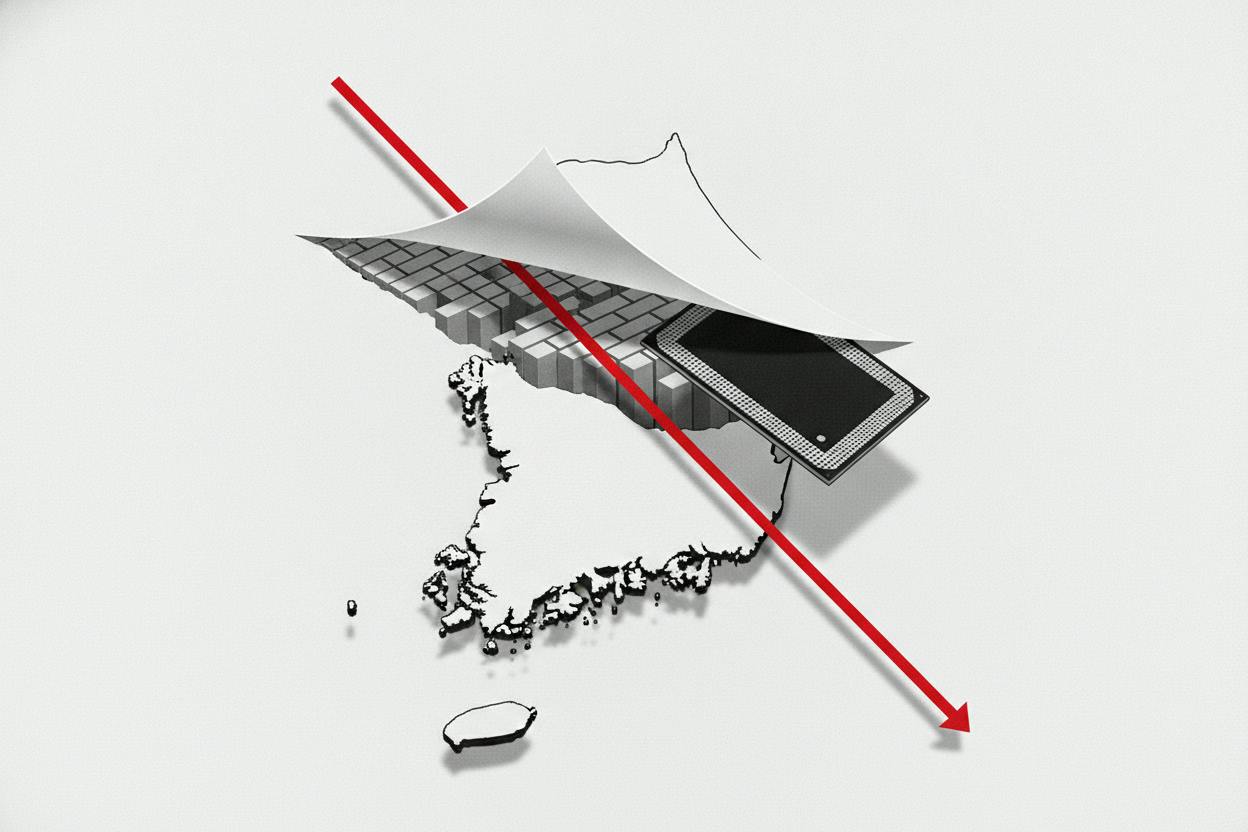
Chip-heavy markets in South Korea and Taiwan steadied on Wednesday, snapping a sharp selloff that had rattled investors. The rebound came as traders took a fresh look at two big questions: how long the artificial-intelligence spending boom can last, and whether rising competition in memory chips is about to squeeze the industry's biggest players.
The earlier drop hit giants like Samsung Electronics and SK Hynix, according to Reuters. Those two companies are among the world's largest makers of memory chips, the components that store data in everything from smartphones to the servers that power AI models. When their stocks fall, they drag down the entire KOSPI, South Korea's main index, and often ripple across the region.
Why the selloff happened
Investors have been juggling two pressure points. The first is bond yields. When yields on government bonds rise, the future profits that tech companies are expected to earn become less valuable in today's dollars. That's because higher yields mean investors demand a bigger return to tie up their money for years, so they discount future earnings more heavily. Tech stocks, which trade on expectations of big future growth, are especially sensitive to this.
The second worry is China's CXMT, a memory-chip maker that is reportedly improving its technology. If CXMT can produce competitive memory chips, it could add supply to a market already dominated by a few players, potentially pushing prices down. That would be bad news for Samsung and SK Hynix, which have enjoyed strong pricing power during the AI-driven demand surge.
Taiwan's market also rebounded, helped by Taiwan Semiconductor Manufacturing Company (TSMC), the world's largest contract chipmaker. TSMC is set to report earnings soon, and Reuters said the report is expected to extend a run of record profits. That optimism helped lift the broader market despite the lingering concerns.
Who's actually buying the dip?
One notable detail from the rebound: it may not be driven by the usual retail crowd. Pepperstone, a brokerage, quoted strategist Dilin Wu saying that Korean retail traders have been cutting their margin loans rather than buying the dip.
Margin loans are borrowed money that investors use to buy more shares than they could with cash alone. When prices fall, brokers can issue margin calls, demanding that investors put up more money or sell shares to cover the loan. That forced selling can amplify a downturn. So when retail investors reduce their margin debt, it's a sign they're becoming more cautious, not more aggressive.
Wu's observation matters because it suggests the rebound may lack a key source of support. If retail investors are not stepping in to buy, the rally could be more fragile. There's also the risk that if another downdraft hits, any remaining leverage could be unwound quickly, adding to volatility.
What it means for investors
For everyday investors, the takeaway is that the KOSPI's ability to hold its gains may depend less on local dip-buying and more on the broader US AI trade. If American tech stocks stabilize and demand for high-bandwidth memory—the specialized chips used in AI servers—stays strong, that could support Korean and Taiwanese chipmakers. But if AI spending slows or competition intensifies, the pressure could return.
It's also worth remembering that markets can move in ways that feel disconnected from fundamentals. Leveraged single-stock ETFs, which use derivatives to amplify daily moves, can mechanically rebalance in ways that magnify price swings. That can thin liquidity just when markets get jumpy, making rebounds less reliable.
For now, the steadiness is a relief, but it's not a signal that all is well. Investors should keep an eye on bond yields, any news from CXMT, and the upcoming TSMC earnings report. Those factors will likely determine whether this rebound has legs or is just a pause before the next move.