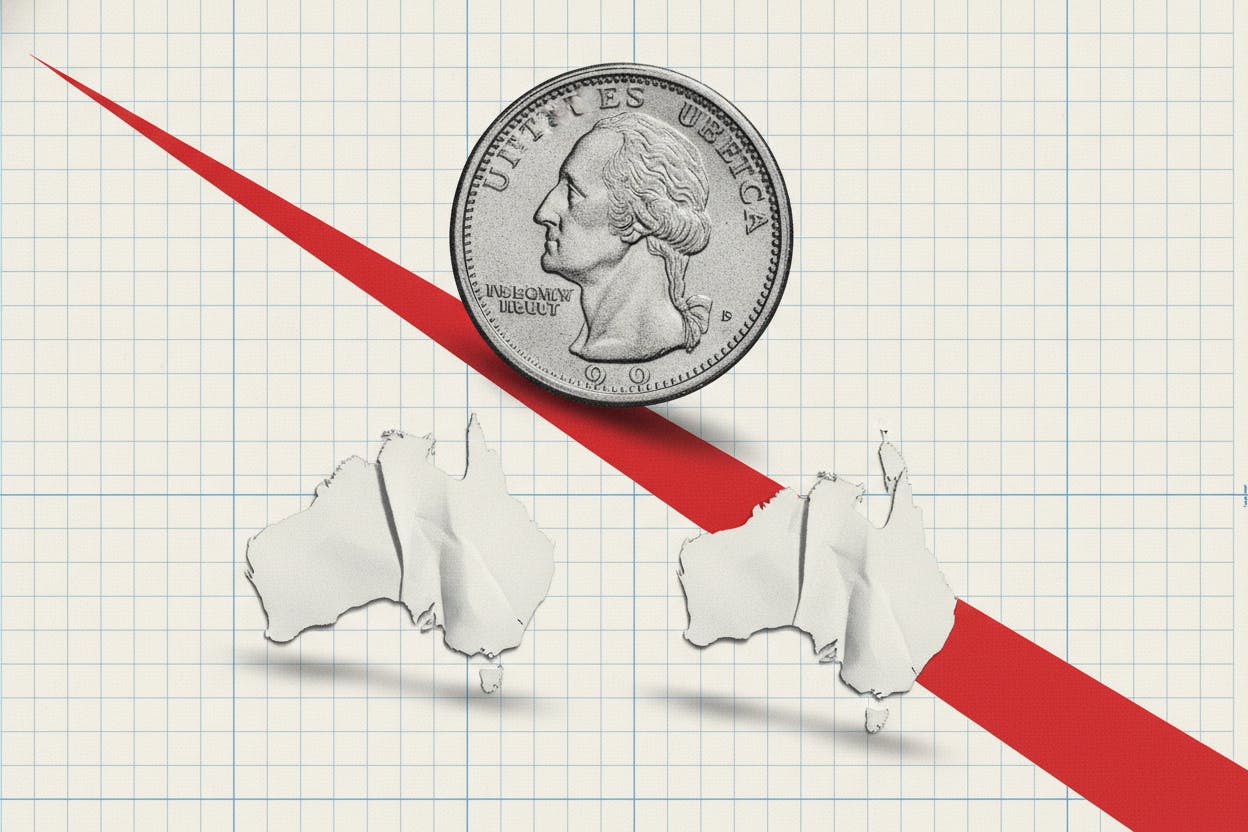
The Australian and New Zealand dollars both fell this week as traders increasingly bet that the US Federal Reserve will raise interest rates again, boosting the US dollar and putting pressure on currencies around the world.
By Friday, the Australian dollar (AUD) was down 1.7% for the week at $0.6900, while the New Zealand dollar (NZD) fell 1.6% to $0.5642. The moves come as markets price in a 75% chance that the Fed will hike rates as soon as September, according to the source brief.
Why the rate gap matters
When the US is expected to raise rates, global investors tend to move money into dollar-denominated assets like US Treasury bonds, which offer higher returns. That demand pushes up the value of the US dollar and makes other currencies weaker by comparison.
At the same time, expectations for rate hikes in Australia and New Zealand have cooled. In Australia, falling fuel costs and softer inflation expectations have traders pricing only a 50% chance that the Reserve Bank of Australia (RBA) will lift its current cash rate of 4.35% again. In New Zealand, markets still see a 66% chance that the Reserve Bank of New Zealand (RBNZ) will raise its 2.25% cash rate on July 8, but the total number of expected hikes has fallen compared to earlier forecasts.
The widening gap between where investors think US rates are headed versus local rates is a classic recipe for a stronger US dollar and weaker Aussie and Kiwi dollars. This dynamic is similar to what has been seen in other commodity-linked currencies, such as the Canadian dollar, which has also been stuck near lows as yield gaps widen.
What it means for everyday investors
A weaker Australian or New Zealand dollar doesn't just affect currency traders—it has real-world consequences for anyone who spends money in US dollars. When the AUD or NZD buys fewer US dollars, the same US-priced item becomes more expensive in local currency terms.
This affects things like overseas travel, app subscriptions, and some imported electronics. You might not notice the impact immediately because many airlines, retailers, and importers use currency hedges—contracts that lock in an exchange rate for a period of time. But when those hedges expire, they are often renewed at the newer, weaker rate, and that's when higher currency costs can start filtering into prices.
For investors, the stronger US dollar also tends to weigh on commodity prices, which can affect Australian and New Zealand stocks that are heavily exposed to commodities. Gold, for example, has been heading for its fourth weekly drop as the strong dollar and rate hike bets weigh on the precious metal.
Broader market context
The moves in the Aussie and Kiwi dollars are part of a broader trend of US dollar strength that has been building for weeks. The US dollar index, which measures the greenback against a basket of major currencies, has been rising as economic data in the US has remained resilient, giving the Fed room to keep rates higher for longer.
In contrast, the Australian economy has shown signs of slowing, with consumer spending easing and inflation moderating. That has led markets to scale back expectations for further RBA hikes. In New Zealand, the economy has also faced headwinds, though the RBNZ is still seen as more likely to hike than its Australian counterpart.
The divergence in rate expectations is a key driver of currency movements, and it's something investors should watch closely in the coming weeks. If US data continues to surprise to the upside, the dollar could strengthen further, putting additional pressure on the Aussie and Kiwi.
For now, the message for everyday investors is clear: a stronger US dollar means higher costs for US-priced goods and services, and it's worth keeping an eye on how long this trend lasts.