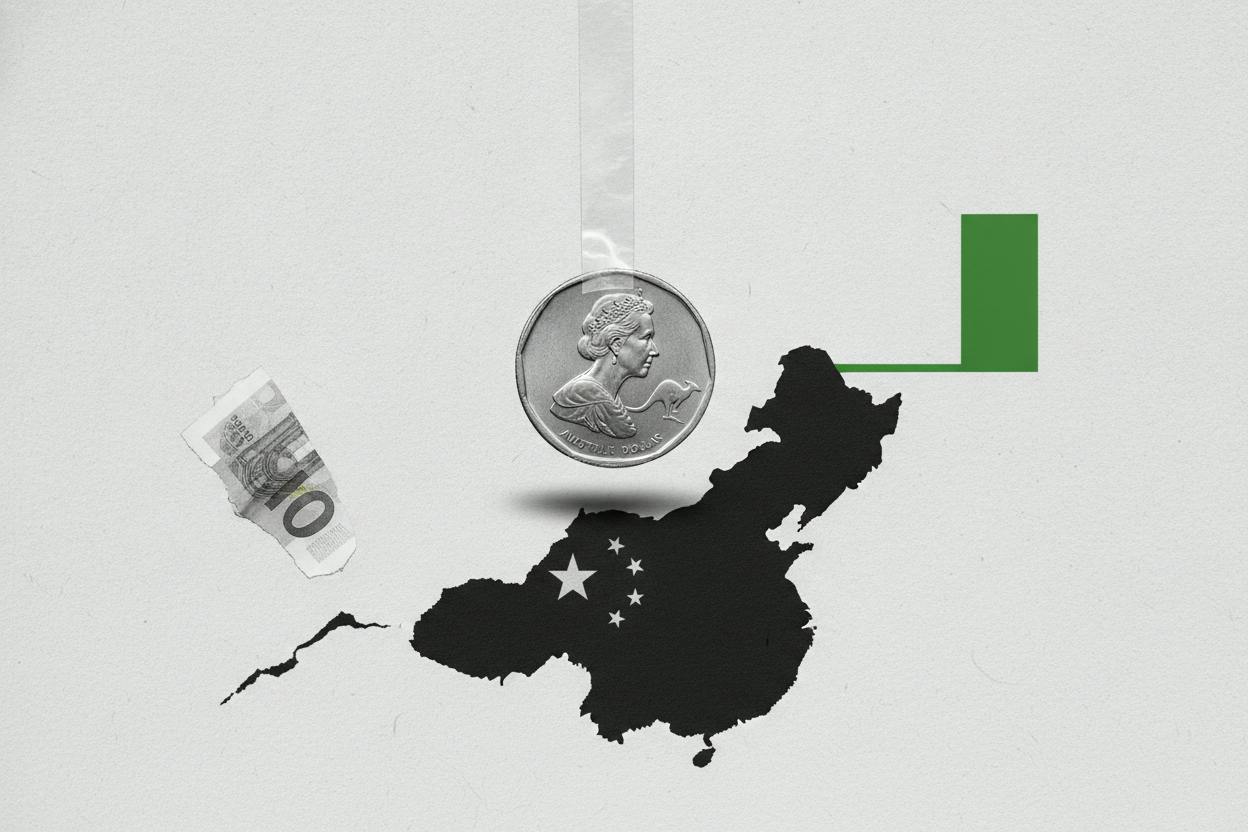
The Australian dollar pushed higher on Tuesday, trading at $0.6978, as a double dose of global news worked in its favour. Stronger-than-expected economic data from China, Australia's largest trading partner, lifted demand for the currency, while the euro slid amid political unrest in France, sending investors looking for alternatives.
The move underscores how closely the aussie tracks the health of the Chinese economy and the broader appetite for risk. When China's growth outlook brightens, expectations rise for Australian exports like iron ore and copper, which in turn supports the currency. At the same time, stress in Europe can prompt global money managers to shift funds out of the euro and into currencies perceived as safer or more growth-linked, and the aussie has often been a beneficiary of such flows.
Why China matters for the aussie
China is Australia's biggest trading partner, buying everything from iron ore to natural gas and agricultural products. So when Chinese data surprises on the upside, it tends to lift the outlook for Australian export earnings. Recent figures showing stronger-than-expected growth in China have helped reinforce that narrative, even as some other parts of the global economy show signs of strain.
The aussie's rise also had a technical element. As the currency approached the $0.70 level, traders were watching recent highs and common stop-loss orders—pre-set levels where automated selling can kick in. In the short run, currencies often swing on positioning and flows as much as on economic fundamentals, and the approach of a round number like $0.70 can attract attention from technical traders.
For a broader view of why this level matters, consider the stronger Chinese growth data that has been filtering through markets. It has also helped lift other China-sensitive assets, such as copper prices, which have been supported by supply tightness and a softer US dollar.
The euro's stumble
On the other side of the trade, the euro slipped as unrest in France rattled investors. Political instability in a major eurozone economy can weigh on the single currency, as it raises questions about economic policy and the region's stability. The euro's decline gave the aussie an extra push, as investors sought alternatives.
This is not the first time French political tensions have moved the euro. Markets tend to react sharply to events that could disrupt the region's economic outlook, and the current unrest has added to a backdrop of uncertainty ahead of central bank meetings. The euro's slide has been a key driver of currency moves this week.
What it means for investors
For everyday investors, the aussie's move is more than just a number on a screen. It reflects how global investors are feeling about growth and risk. A stronger aussie can affect the returns on Australian investments when converted back to other currencies, and it can also influence the cost of imported goods.
Barclays, a global investment bank, has argued that Australia is a major beneficiary of an "AI commodity supercycle." The idea is that the rise of artificial intelligence and data centres will drive demand for commodities like copper and rare earths, lifting export prices faster than import costs. That would improve Australia's terms of trade—the ratio of what it earns from exports to what it pays for imports—and could support a healthier current account, the broadest measure of trade and income flows.
When a country's trade balance looks sturdier, its currency often gets a more persistent bid than it would from a one-off risk-on bounce. That is why the AUD/USD pair is often seen as a liquid proxy for how investors feel about China growth and commodity demand. If that narrative stays constructive, holding above recent levels like $0.6961 becomes easier, and the $0.70 area could turn from resistance into a plausible next step.
For now, the aussie's climb is a reminder that currencies are driven by a mix of economic data, geopolitical events, and market positioning. Investors should keep an eye on upcoming Chinese data releases and any further developments in Europe, as both could influence the currency's direction in the days ahead.