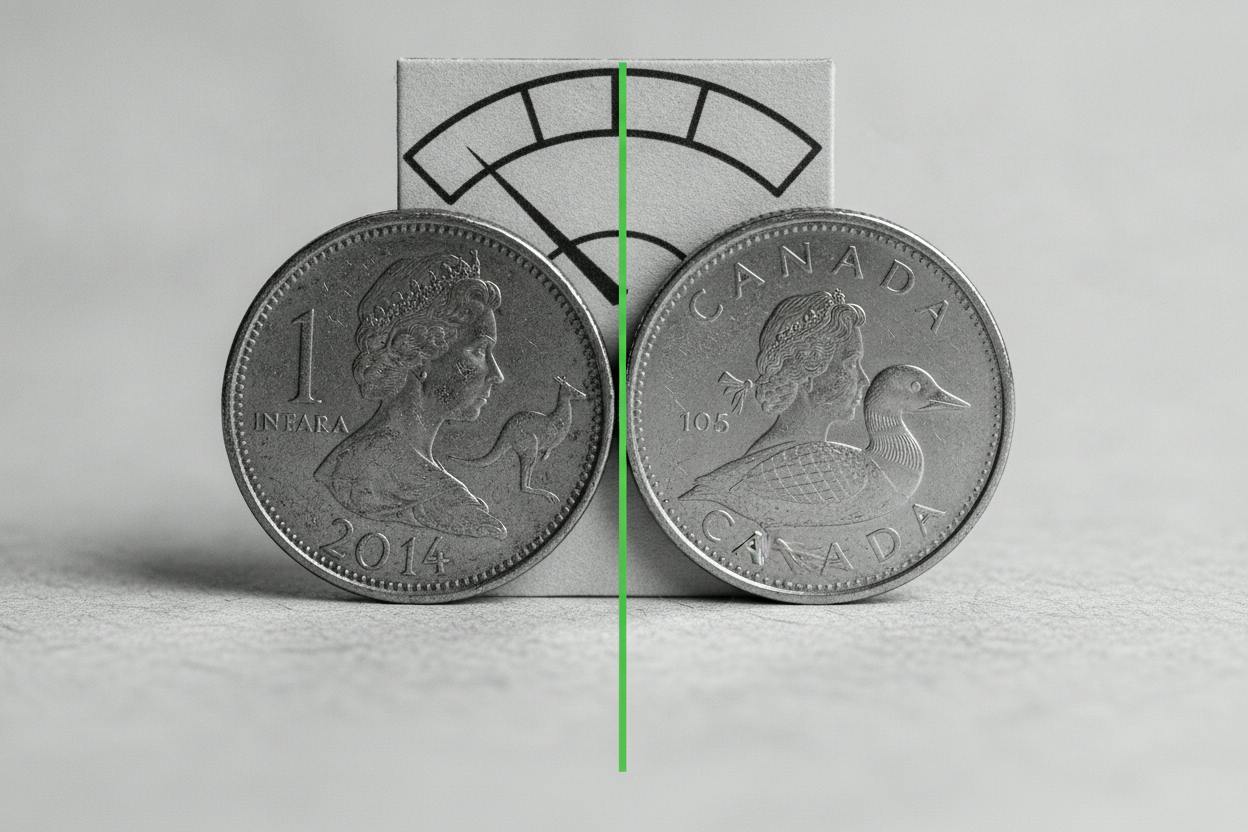
The Australian dollar has reached parity with Canada's loonie for the first time since March 2018, a move driven by diverging interest-rate expectations between the two central banks. Traders are increasingly convinced the Reserve Bank of Australia (RBA) will keep raising rates, while the Bank of Canada appears more cautious about further tightening.
Currency markets often move in lockstep with interest-rate expectations. When investors believe a central bank is more likely to hike rates, that country's assets can look more attractive, supporting its currency. The Aussie's climb to parity reflects exactly that dynamic: markets are pricing another RBA hike as nearly certain, while the Bank of Canada is seen as staying on the sidelines.
What's driving the move?
According to Reuters, markets are treating an RBA rate hike to about 4.6% on September 29 as close to a done deal. Investors are also watching whether policymakers signal another move in November. This hawkish stance contrasts with the Bank of Canada, which has adopted a more cautious tone, likely due to concerns about economic slowdown and inflation trends.
The loonie has also been under pressure from a widening yield gap between US and Canadian bonds, as noted in a recent report on the loonie's slide. This has contributed to the Canadian dollar's weakness, making it easier for the Aussie to catch up.
For context, the RBA has been on a tightening path to combat inflation, which remains above its target range. The Bank of Canada, meanwhile, has paused its rate hikes, waiting to see how the economy responds to previous increases. This policy divergence is a classic driver of currency movements.
What it means for investors
For everyday investors, a stronger Australian dollar relative to the loonie has several implications. If you're investing in Canadian assets or planning a trip to Canada, your Australian dollars now buy more. Conversely, if you hold Canadian investments, their value in Australian dollar terms has declined.
More broadly, currency movements can affect the returns of international investments. For Australian investors with exposure to Canadian stocks or bonds, the exchange rate adds another layer of volatility. Similarly, Canadian investors looking at Australian assets will find them more expensive.
The move also highlights the importance of central bank policy in shaping currency trends. As the RBA and Bank of Canada diverge, investors will be watching for any shifts in their language or data that could alter expectations. The RBA's warnings on inflation risks have already supported the Aussie, and further hawkish comments could extend the rally.
It's worth noting that currency markets are notoriously difficult to predict. While current expectations favor the RBA, any surprise in economic data or a change in central bank tone could quickly reverse the trend. For most investors, the key takeaway is to be aware of how currency fluctuations can impact international portfolios, but not to make drastic changes based on short-term moves.
Broader market context
The Aussie's strength comes amid a broader backdrop of global currency movements. The US dollar has been firming as traders await Federal Reserve speeches and fresh economic data, as covered in our report on the dollar's firmness. Oil prices near $100 and the 10-year Treasury yield holding at 4.9% are also influencing market sentiment, as noted in this market update.
For Canada, the loonie's weakness is partly tied to oil price dynamics, though the yield gap with the US is a bigger factor. For Australia, the RBA's inflation fight is the primary driver. These cross-currents make for a complex currency landscape, but the parity milestone is a clear signal of where investor sentiment currently stands.
As always, investors should focus on their long-term goals rather than reacting to every currency wiggle. But understanding the forces behind these moves can help you make more informed decisions about international exposure.