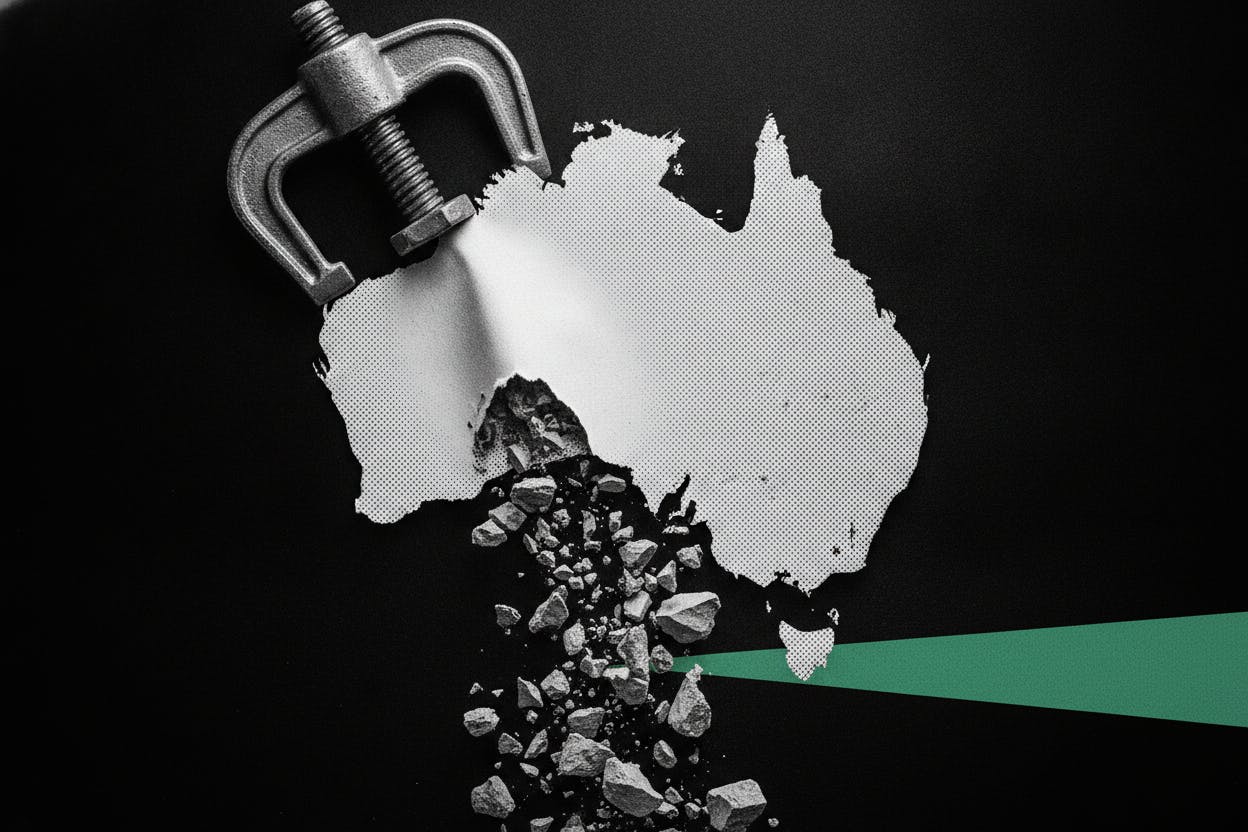
Australia has flagged a potential headwind for its most valuable export, warning that China's state-backed iron ore buyer is pushing for pricing changes that could lower benchmark prices over time.
In a quarterly report, the Department of Industry, Science and Resources (DISR) said China Mineral Resources Group (CMRG) has become more active this year and is seeking to alter how iron ore is priced. The department warned that this push "may drive the benchmark [iron ore] price down in medium term," which would in turn reduce Australia's tax revenue from the commodity.
What is CMRG and why does it matter?
China Mineral Resources Group is a state-owned enterprise established in 2022 to centralize China's iron ore buying. China is the world's largest steel producer and buys roughly three-quarters of all seaborne iron ore, making it the dominant customer in the market.
Historically, Chinese steel mills have negotiated individually with miners like BHP, Rio Tinto, and Fortescue, often using index-linked pricing mechanisms. CMRG's role is to coordinate buying and potentially shift the balance of power away from miners toward buyers.
The logic is straightforward: when a single buyer controls a huge share of demand, it can push for more favorable terms. If CMRG succeeds in changing how prices are set, it could pressure the benchmarks that underpin the entire iron ore market.
What it means for investors
For investors in Australian mining stocks, the warning is a reminder that iron ore prices are not just a function of supply and demand but also of bargaining power. BHP, Rio Tinto, and Fortescue generate a large portion of their profits from iron ore, and any sustained drop in prices would hit earnings.
The Australian government is also exposed. Iron ore is Australia's biggest export, and the tax revenue from mining royalties and company taxes is a significant contributor to the federal budget. A lower iron ore price would reduce that income, potentially affecting government spending plans.
It is worth noting that the department's warning is about the medium term, not an immediate threat. CMRG's influence is still evolving, and miners have long-term contracts and diversified customer bases. But the direction of travel is clear: China is trying to exert more control over a market where it is the dominant buyer.
This dynamic is part of a broader trend in commodities where state-backed buyers are becoming more active. Similar coordination has been seen in other markets, such as coking coal, where buyers are also seeking to influence pricing.
Broader market context
Iron ore prices have been volatile in recent years, driven by swings in Chinese steel demand, property market weakness, and global economic uncertainty. The addition of a coordinated buyer adds a new layer of complexity.
For everyday investors, the key takeaway is that iron ore is not just a commodity but a geopolitical one. China's push for pricing changes is a reminder that markets are shaped by policy as much as by supply and demand. Investors in Australian resources should watch for any signs that CMRG is gaining traction in its negotiations.
The Australian dollar could also be affected, as iron ore is a major export earner. A sustained drop in prices would weigh on the currency, which in turn affects the returns for international investors in Australian assets.
Meanwhile, the Reserve Bank of Australia is navigating its own challenges. As noted in a recent analysis, tight financial conditions could keep the RBA on hold, and a weaker commodity price outlook would add to the economic headwinds.
What to watch next
Investors should monitor quarterly reports from major miners for any commentary on pricing negotiations. Any public statements from CMRG about its strategy would also be significant.
The Australian government's next resources and energy quarterly report will provide an updated outlook. If the department's warning proves prescient, it could lead to downward revisions in iron ore price forecasts and, by extension, tax revenue estimates.
For now, the message from Canberra is clear: China's buying power is a risk to Australia's iron ore earnings, and investors should not assume that current pricing mechanisms are permanent.