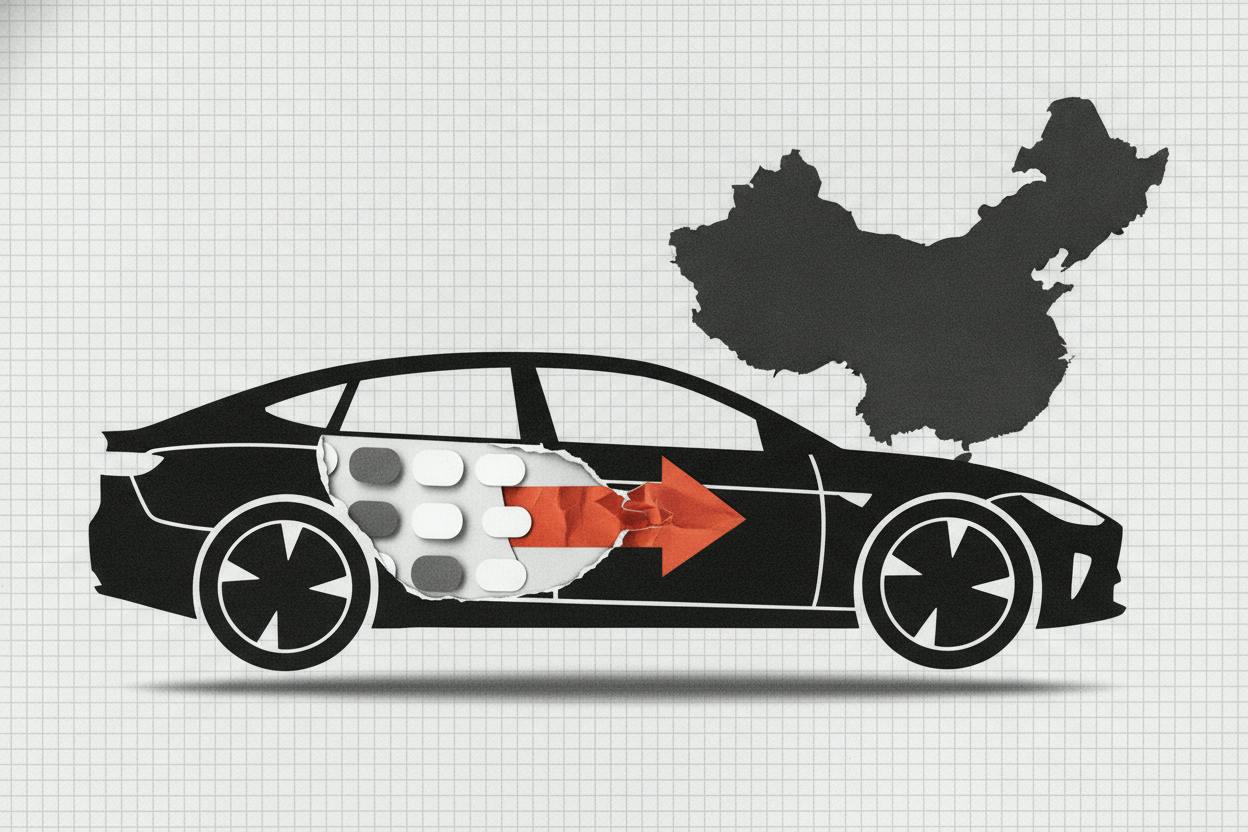
The next big battle in the car industry won't be about horsepower or chassis design. According to a new survey from KPMG, it will be about software.
The consulting firm polled 775 senior auto executives worldwide, and the results point to a future where the features that make cars stand out are digital: dashboards that feel like smartphones, driver-assist systems that learn from your habits, and AI-powered services that update over the air.
In the survey, 51% of executives said software and digital technology will be the main competitive differentiator by 2035. That's a striking shift for an industry that has spent a century competing on mechanical engineering and manufacturing scale.
China's expected rise
The survey also highlights a geographic shift that could reshape the global auto industry. Nearly half of the executives surveyed—48%—expect six of the world's top 10 automakers to be headquartered in China by 2035.
That expectation reflects China's aggressive push into electric vehicles and its growing strength in software development. Chinese automakers like BYD and NIO have already made inroads in Europe and other markets, and they benefit from a massive domestic supply chain and government support for EVs and digital technology.
For investors, this is a reminder that the competitive landscape in autos is changing faster than many traditional carmakers can adapt. The companies that dominate the next decade may not be the ones with the best engines, but the ones that can write the best code.
Why software is so hard
The survey also underscores why this transition is difficult. A striking 92% of companies said it takes at least 12 months to deploy a new software feature. In an industry where tech companies ship updates weekly, that's an eternity.
Traditional automakers are used to long development cycles—a new model can take five years to go from drawing board to dealership. But software moves faster, and customers increasingly expect their cars to improve over time, just like their phones.
This is why some automakers are building their own software platforms rather than relying on outside vendors. For example, Subaru is betting on in-house software-defined cars, skipping Toyota's Arene platform. That kind of decision shows how seriously carmakers are taking the software challenge.
The difficulty isn't just technical. It's also organizational. Carmakers have to hire software engineers, change their corporate culture, and figure out how to monetize digital services—all while still building millions of physical vehicles.
What it means for investors
For everyday investors, this survey is a useful lens on where the auto industry is heading. If software becomes the main differentiator, then the companies that succeed will be those that can attract tech talent and move quickly.
That could favor newer entrants with fewer legacy constraints, as well as tech companies that supply the underlying software and chips. It also raises questions about traditional automakers' ability to keep up.
The survey's expectation of Chinese dominance is worth watching. If six of the top 10 automakers are indeed Chinese by 2035, that would have major implications for global supply chains, trade policy, and the fortunes of Western and Japanese carmakers.
But it's not a done deal. The same survey shows how hard the transition is, and history is full of industries where the expected leader stumbled. The next decade will be a test of execution, not just ambition.
For now, investors should pay attention to how automakers talk about software in their earnings calls and product launches. The ones that can ship updates quickly and build compelling digital experiences may be the ones that thrive. The ones that can't may find themselves left behind, no matter how good their engines are.