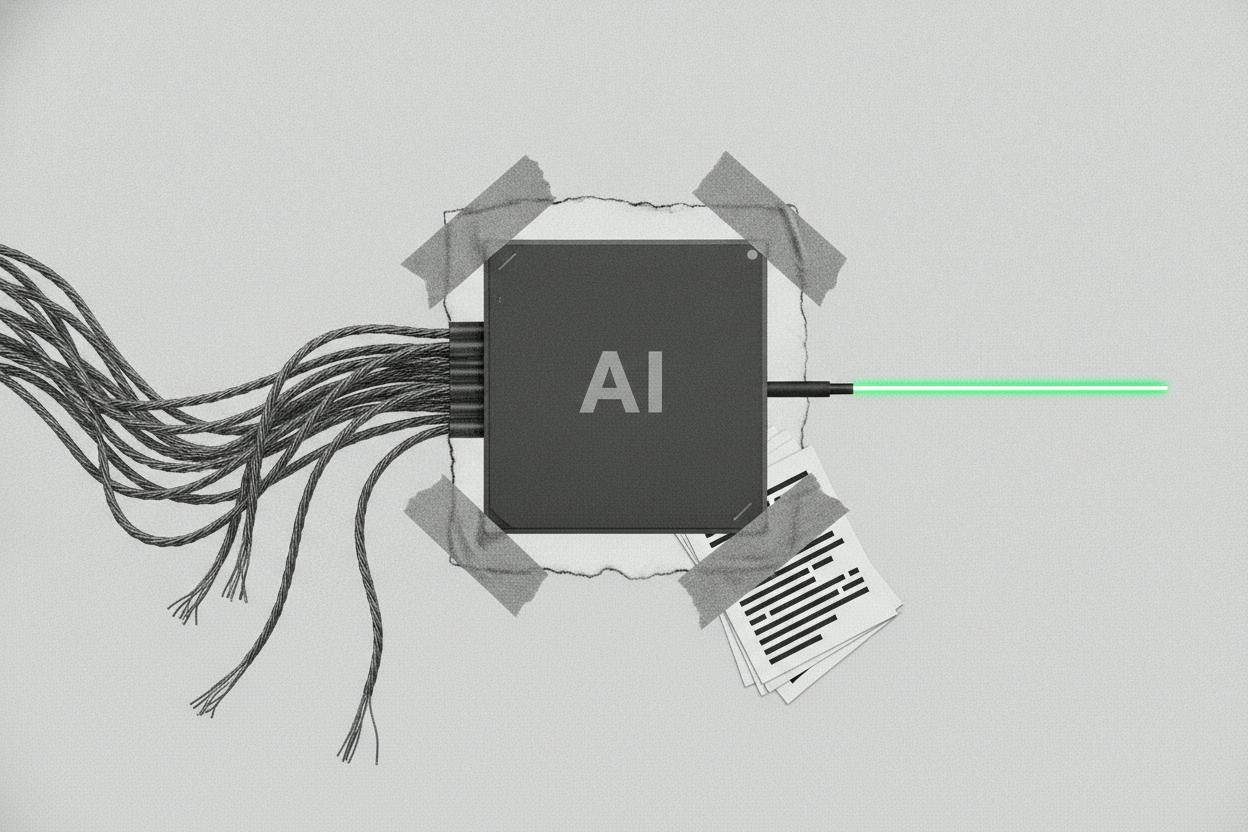
Ayar Labs, a startup working on a new way to connect AI chips, has raised an additional $150 million, extending its Series E funding round. The company is developing what it calls “co-packaged optics” — a technology that uses light to move data between chips instead of traditional copper wires. The goal is to have products ready for customers to deploy at scale in the 2028-2029 timeframe.
Co-packaged optics are seen as a potential solution to one of the biggest bottlenecks in modern computing: getting data in and out of processors fast enough. As AI models grow larger and more complex, the demand for high-speed data transfer between chips has skyrocketed. Copper connections, which have been the standard for decades, are reaching their physical limits in terms of speed and energy efficiency. Light-based connections, or optical interconnects, can carry far more data over longer distances while using less power.
Why this matters for AI infrastructure
The funding comes at a time when the AI industry is spending heavily on data centers and advanced chips. Nvidia, the dominant maker of AI processors, is an investor in Ayar Labs, and its backing signals that the technology could become important for future AI systems. The startup’s approach involves embedding optical components directly into the chip package, which could reduce the need for separate optical modules and improve overall performance.
For everyday investors, this is a reminder that the AI boom isn’t just about the chips themselves. The entire ecosystem around AI — from power and cooling to data transfer — is attracting significant capital. Companies that solve these infrastructure challenges could see substantial growth, but they also face technical hurdles and long development timelines.
What it means for investors
For investors, the key takeaway is that Ayar Labs is targeting a market that could be worth billions by the end of the decade. However, the timeline is long, and the technology is still in development. The company will need to prove that its products can be manufactured at scale and deliver the promised performance gains.
Investors should also note that this is a private company, so most retail investors won’t be able to buy shares directly. But the technology could have ripple effects for publicly traded companies in the semiconductor and data center space. For example, companies that make optical components or networking equipment could benefit if co-packaged optics become widely adopted. On the other hand, companies that rely heavily on traditional copper-based interconnects could face disruption.
The funding round also highlights the ongoing competition in the AI hardware space. China's GPU ambitions are a reminder that the race to build better AI chips is global, and startups like Ayar Labs are part of a broader push to improve the entire AI stack.
What to watch next
Investors should keep an eye on Ayar Labs’ progress in the coming years. Key milestones would include successful pilot programs with major customers, manufacturing partnerships, and any announcements about commercial deployment. The 2028-2029 target suggests that the company is aiming for a realistic timeline, but delays are common in advanced technology development.
Also worth watching is how Nvidia and other chipmakers integrate co-packaged optics into their future products. Nvidia’s involvement is a strong signal, but the technology will need to prove itself in real-world applications. Regulatory scrutiny of Nvidia's deals could also affect how the company works with startups like Ayar Labs.
For now, the $150 million raise gives Ayar Labs the runway to continue its work. It’s a bet on the future of AI infrastructure, and for investors, it’s a story worth following as the industry evolves.