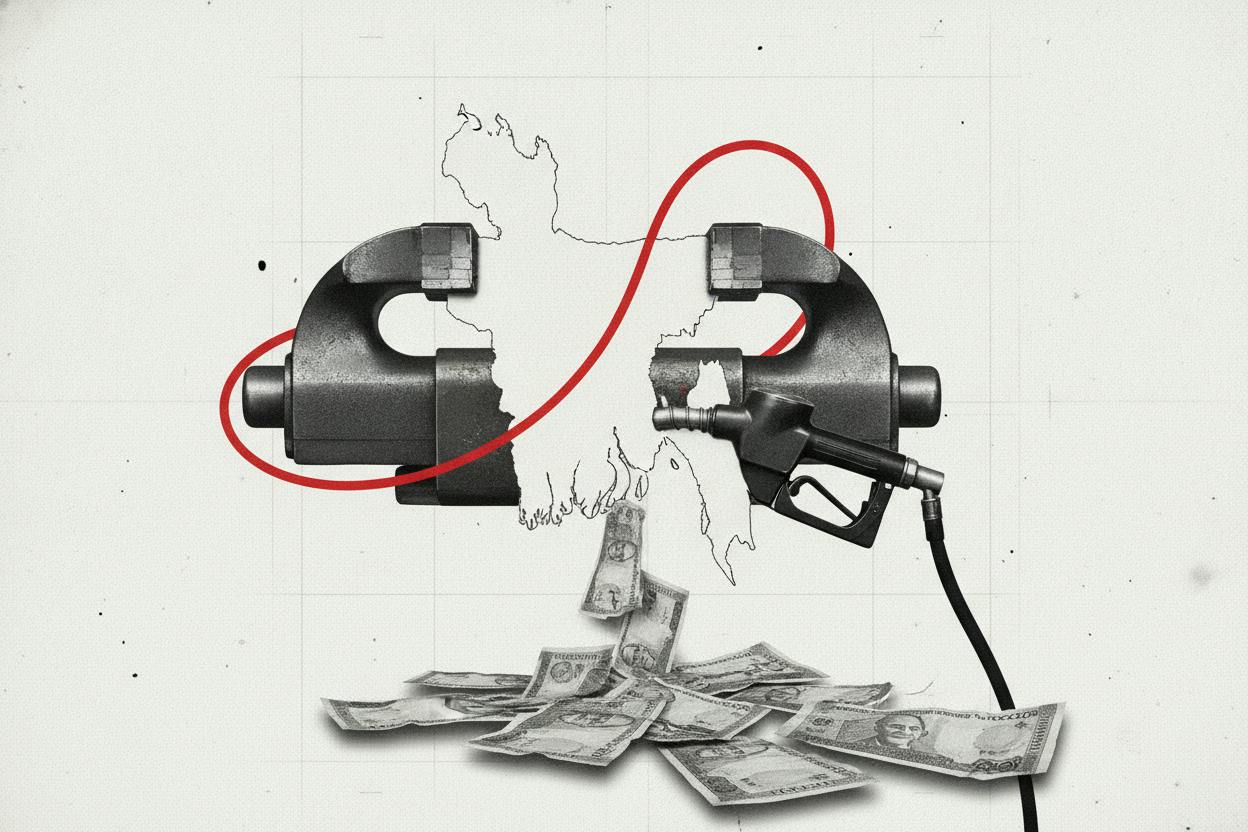
Bangladesh has once again raised retail fuel prices, with diesel jumping 17.4% to 135 taka per liter, as the government moves to stem mounting losses at the state-owned oil importer. The increase, which also affects other fuels, comes amid higher global oil prices and rising shipping costs that have squeezed households and factories across the South Asian nation.
Why the price hike?
The Bangladesh Petroleum Corporation (BPC), the state-owned entity responsible for importing and distributing fuel, has been selling fuel below its actual cost. According to Reuters, this mismatch led to losses of 228.76 billion taka between March and August. The government has been covering these losses with public money or by drawing down foreign-exchange reserves, which are also used to pay for imports.
Officials say the new pricing could reduce annual losses by about 100 billion taka, easing the need for such support. This is the latest in a series of price adjustments as the country grapples with the fallout of higher energy costs globally.
Impact on households and businesses
For ordinary Bangladeshis, the hike means higher costs for transport, cooking fuel, and goods that rely on diesel-powered trucks and machinery. Factories, especially those in the garment sector—a key export earner—will face increased operating expenses, which could feed into higher prices for consumers.
Energy shortages have already been a concern, with power cuts and fuel rationing reported in recent months. The price increase may help secure supply by reducing the financial strain on the importer, but it also adds to the cost-of-living pressures that have been building globally.
What it means for investors
For investors, the move is a signal that Bangladesh is taking steps to address fiscal and external imbalances. By reducing the need for government subsidies, the country can better protect its foreign-exchange reserves, which are crucial for paying for imports and maintaining currency stability. This could be seen as a positive step for the country's creditworthiness and for investors exposed to Bangladeshi assets.
However, the price hike could also dampen consumer spending and corporate margins, particularly in energy-intensive industries. Companies that rely on diesel for logistics or power generation may see their costs rise, potentially affecting their earnings.
The broader context is that many emerging economies are facing similar pressures from elevated energy prices and a strong US dollar. Central banks around the world are tightening monetary policy to combat inflation, as seen with the Bank of Japan's recent rate hike, which adds to global financial conditions.
Looking ahead
Investors will be watching whether Bangladesh can sustain fuel supply without further price shocks, and whether the government can keep fiscal deficits in check. The effectiveness of this price adjustment in reducing losses will be a key indicator. If global oil prices remain high, further hikes may be necessary, which could weigh on economic growth.
For now, the move is a pragmatic step to align domestic prices with international costs, but it comes at a time when households and businesses are already feeling the pinch. The coming months will reveal whether the adjustment is enough to stabilize the country's energy finances.