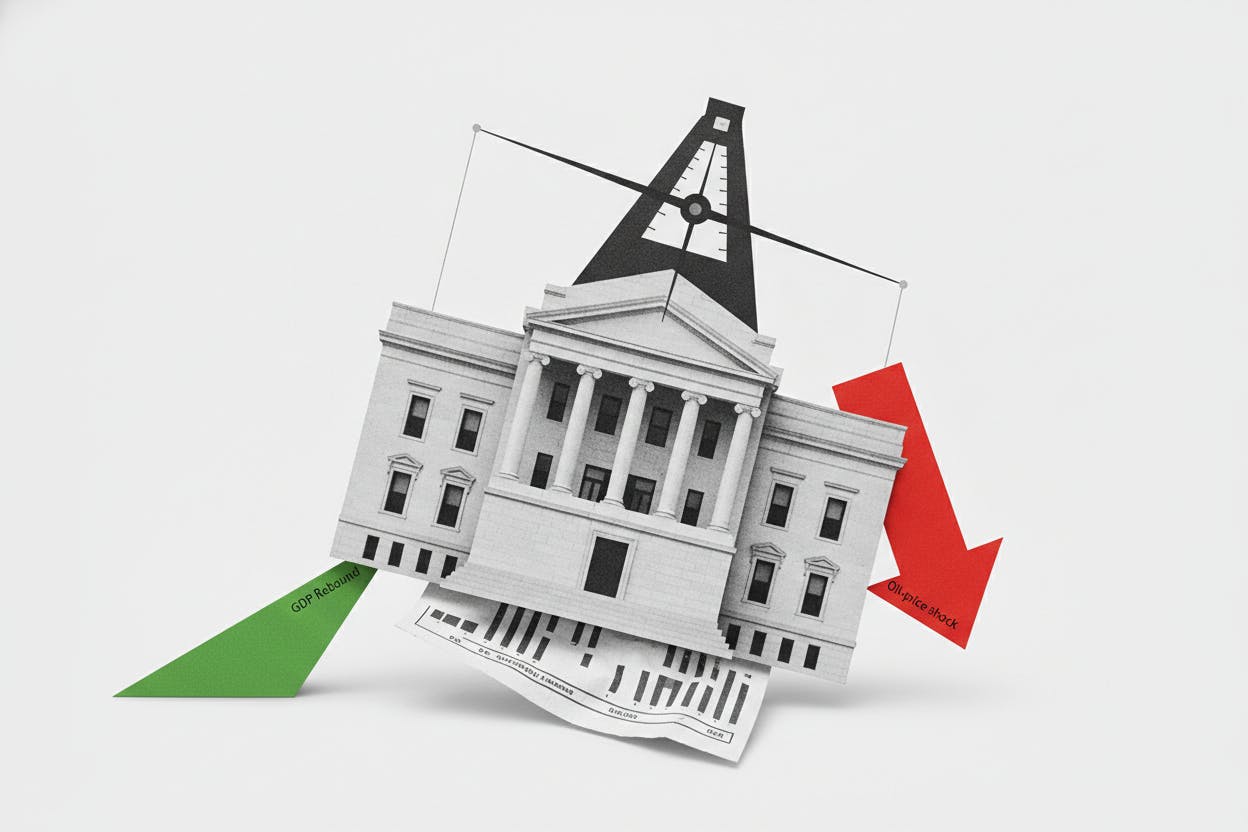
The Bank of Canada (BoC) released minutes from its July 15 rate decision meeting on Wednesday, revealing a divide among policymakers over whether the country's recent economic rebound has staying power. While the central bank held its benchmark overnight rate at 2.25%, the minutes showed officials were wary that rising oil prices and US tariffs could derail the path back to steady growth and 2% inflation.
What the minutes reveal
The BoC's July 15 decision kept rates unchanged, but the minutes highlighted a split in views on the durability of Canada's second-quarter growth. The central bank had penciled in 2.5% annualized growth for the second quarter, a sharp recovery after a flat first quarter. However, some policymakers questioned whether that rebound is sustainable, given headwinds from higher oil prices and trade tensions with the United States.
Higher oil prices, while often a boon for Canada's energy-heavy economy, can also raise costs for consumers and businesses, potentially dampening demand. Meanwhile, US tariffs on Canadian goods—a lingering issue from trade disputes—threaten to slow exports and investment. The minutes noted that these factors could complicate the BoC's efforts to bring inflation back to its 2% target, a key goal for the central bank.
The split among policymakers suggests that the BoC is navigating a delicate balancing act. On one hand, the economy is showing signs of life after a sluggish start to the year. On the other, external risks could quickly reverse that progress. This uncertainty is likely to keep the BoC cautious in its next moves, with markets watching closely for any hints of a rate change.
Broader context: Oil, tariffs, and global uncertainty
The BoC's concerns come against a backdrop of global market jitters. Oil prices have surged recently, partly due to geopolitical tensions in the Middle East, which has lifted energy stocks but also raised inflation fears. For context, a 6% oil surge on Iran tensions earlier this month rattled markets, and the BoC is now weighing how that might affect Canadian consumers and businesses.
US tariffs remain a wild card. The trade relationship between Canada and the US has been fraught with disputes, and any escalation could hit key sectors like manufacturing and agriculture. The BoC's minutes suggest that policymakers see tariffs as a persistent risk to growth, one that could undermine the rebound if not resolved.
Globally, central banks are grappling with similar challenges. The US Federal Reserve, for instance, faces its own split on whether to hike or hold rates, as markets remain divided on the Fed's next move. The BoC's situation is unique, however, given Canada's reliance on commodity exports and its proximity to the US market.
What it means for investors
For everyday investors, the BoC's split signals uncertainty ahead. A central bank that is divided on the outlook is less likely to make bold moves, meaning interest rates could stay on hold for longer. That's generally positive for borrowers—mortgage rates, for example, may not rise soon—but it also means the economy faces headwinds that could weigh on corporate profits and stock prices.
Canadian stocks, as measured by the TSX, have already felt the impact of these crosscurrents. The index slipped 0.6% recently as the Fed decision loomed, even as oil surges lifted energy stocks. Investors should watch how oil prices and trade talks evolve, as these will be key drivers for the Canadian economy and the BoC's next steps.
The BoC's focus on inflation is also crucial. If higher oil prices push inflation above 2%, the central bank may eventually need to raise rates to cool the economy. That could hurt bond prices and make growth stocks less attractive. On the flip side, if tariffs slow growth, the BoC might cut rates to stimulate demand, which could boost equities but weaken the Canadian dollar.
In short, the BoC's split reflects a broader uncertainty in the global economy. Investors should stay diversified and keep an eye on oil prices, trade policy, and central bank signals. The BoC's next rate decision, likely in September, will be a key moment to watch.