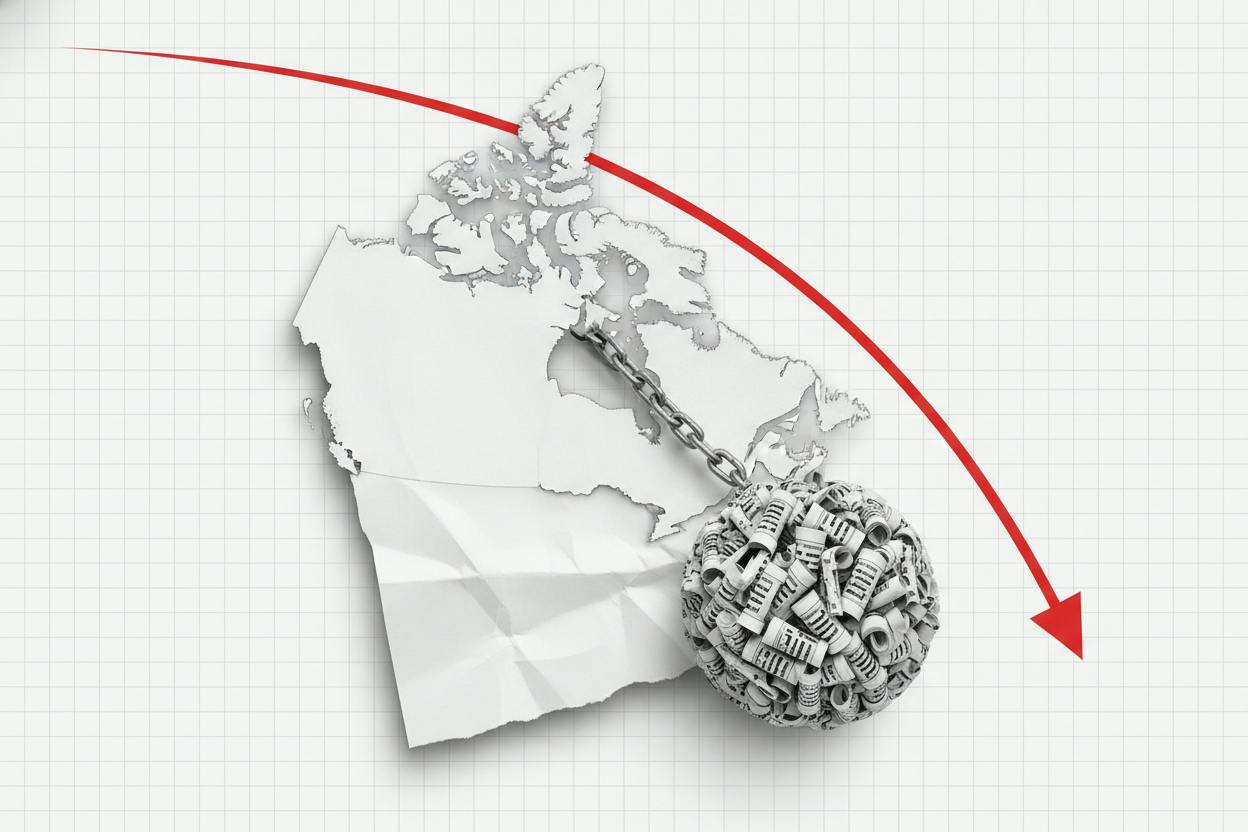
Canada's independent budget watchdog is painting a gloomier picture for the country's finances, citing persistent trade tensions with the United States. The Parliamentary Budget Officer (PBO) now expects the economy to grow just 0.9% this year, down from its previous forecast of 1.1%, and sees the federal debt-to-GDP ratio rising to 42.6% by 2030-31.
The revised outlook, released in the PBO's latest economic and fiscal update, also trims growth for 2027 to 1.5% from 1.6%. The downgrade reflects the expected drag from US tariffs and Canada's retaliatory measures, which the PBO estimates would knock about 1.4% off real economic output over the medium term if they remain in place—worse than the 0.9% hit it projected earlier.
Why slower growth means more debt
The connection between growth and debt is straightforward: when the economy expands more slowly, tax revenues grow more slowly, while spending commitments—such as social programs, debt interest, and public sector wages—tend to keep rising. That makes it harder for the federal government to shrink its deficits, which in turn pushes up the debt-to-GDP ratio, a key measure of fiscal health.
The PBO also flagged additional spending pressures beyond the trade fallout. It pointed to extra financing tied to loans, capital projects, and defense procurement—items that add to the government's borrowing needs even if they are meant to support long-term growth or national security.
As a result, the debt-to-GDP ratio—which measures the size of the federal debt relative to the economy—is now projected to climb to 42.6% by 2030-31, up from earlier estimates. A rising ratio can signal that a country's debt is growing faster than its ability to pay it back, which can lead to higher borrowing costs and less fiscal flexibility in the future.
What this means for investors
For everyday investors, the PBO's update is a reminder that trade policy and fiscal policy are closely linked. Slower growth can weigh on corporate earnings and stock prices, particularly for companies that rely on exports to the US. It can also keep interest rates higher than they might otherwise be, as the Bank of Canada may need to balance inflation pressures against a weakening economy.
Canadian stocks have already felt the impact of trade uncertainty. In a related development, Canadian stocks slipped recently as inflation data fueled bets on another Bank of Canada rate hike. That kind of environment—slower growth plus higher rates—can be challenging for both equities and bonds.
Investors should also watch how the federal government responds. If Ottawa tries to stimulate the economy with more spending, that could add to the debt burden. If it cuts spending to control deficits, that could further dampen growth. The PBO's report suggests the government has limited room to maneuver.
Broader context and what to watch
The PBO's projections are not set in stone. They depend on how trade negotiations evolve, whether tariffs are lifted, and how businesses and consumers respond. The office's estimates are based on current policies, so any changes—such as a trade deal or new fiscal measures—would alter the outlook.
For investors, the key takeaway is that Canada's fiscal trajectory is increasingly tied to the US trade relationship. A resolution that removes tariffs could improve growth and ease debt concerns, while prolonged tensions could make the debt picture worse.
In the meantime, the PBO's report adds to a growing list of warnings about the economic impact of trade disputes. Similar concerns have been echoed in other markets, such as mixed stock moves driven by trade-related headlines and oil price swings.
For those with exposure to Canadian assets, it's worth keeping an eye on the federal budget and any updates from the Bank of Canada. The central bank's rate decisions will be crucial in shaping how the economy navigates this period of slower growth and elevated debt.
Ultimately, the PBO's numbers are a sobering reminder that trade frictions have real fiscal consequences. While the economy is still growing, the pace is slower than hoped, and the debt load is set to rise. For investors, that means staying informed and being prepared for continued volatility in Canadian markets.