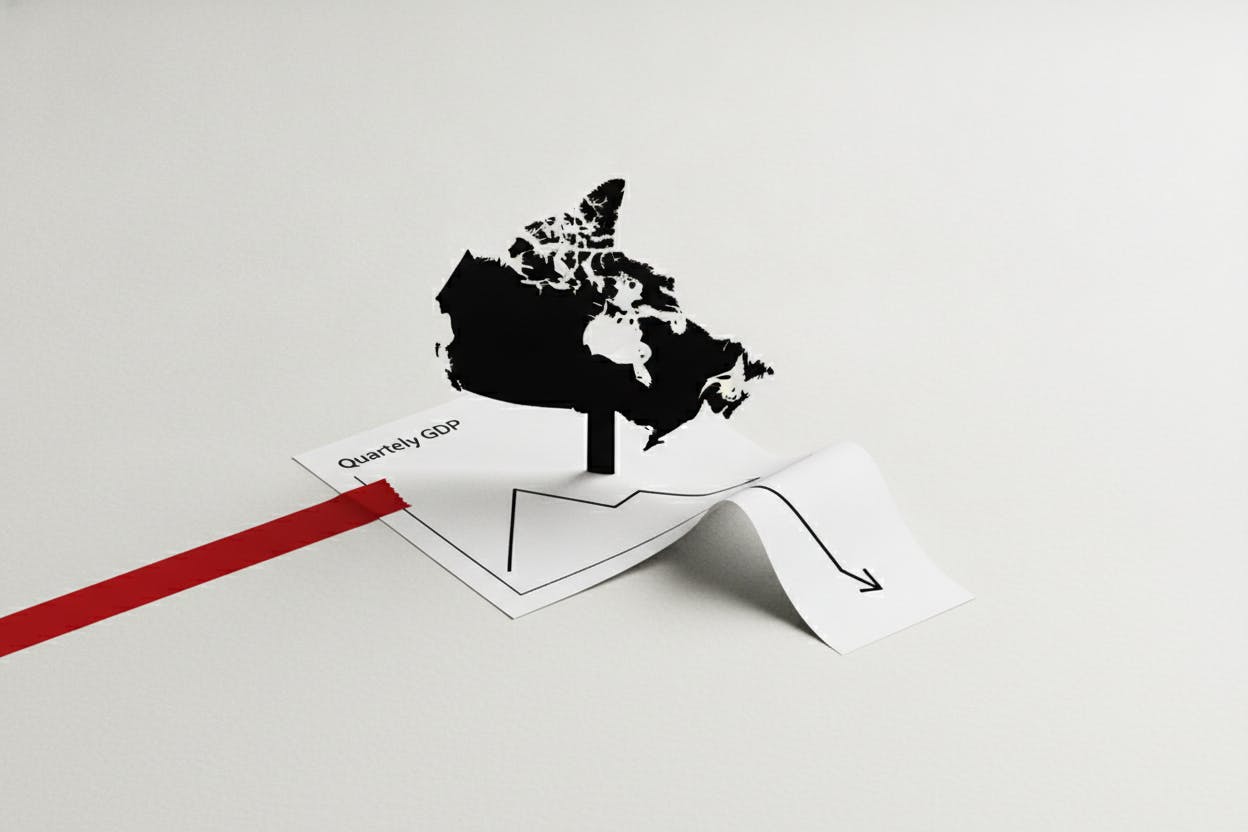
Canada's economy is expected to have posted modest growth in May, but one of the country's largest banks says the steady pace is unlikely to continue. CIBC forecasts a 0.1% increase in monthly gross domestic product (GDP) for May, following a rebound in April. However, the bank cautions that the second half of the year will likely see slower growth as temporary supports fade and the threat of new US tariffs weighs on demand.
What the data shows
CIBC's note points to April's rebound carrying into May, with retail spending and housing-related activity providing some of the lift. Wholesale trade, on the other hand, likely softened during the month. The bank's estimate comes ahead of official data from Statistics Canada, which is scheduled to release May GDP figures and an early estimate for June on Friday.
The 0.1% monthly gain would mark a continuation of the recovery from a weak start to the year. Canada's economy contracted in January and February before rebounding in March and April. The second quarter as a whole is expected to show solid growth, but CIBC sees that as a temporary reprieve.
Why the outlook turns cautious
CIBC says the Bank of Canada can keep interest rates on hold for now, given the current steady growth and still-elevated inflation. But the bank expects the central bank to face a more challenging environment later this year. A key risk is the potential for new US tariffs on Canadian goods, which could hit exports and business investment. The threat has been a recurring theme in trade negotiations, and any escalation could dampen economic activity.
Additionally, the factors that boosted growth in the first half — such as a rebound in housing and consumer spending — are expected to fade. Higher interest rates, while paused, continue to work their way through the economy, slowing borrowing and spending. CIBC's view aligns with a broader consensus that Canada's economy will cool in the second half, even as the US economy remains relatively resilient.
What it means for investors
For everyday investors, the message is one of caution rather than alarm. A slowing economy can affect corporate earnings, particularly for companies tied to domestic demand, such as retailers, homebuilders, and banks. If growth weakens further, the Bank of Canada may eventually cut interest rates, which could boost bond prices and support rate-sensitive sectors like real estate.
Investors should watch for the official GDP data on Friday, as well as any signals from the Bank of Canada about its next move. The central bank's next rate decision is in September, and markets will be looking for clues on whether it will hold steady or pivot to easing. In the meantime, the tariff issue remains a wild card. Any escalation in US-Canada trade tensions could weigh on the Canadian dollar and hurt export-focused industries.
For context, Canada's economy has shown resilience in the face of high interest rates, but the path ahead looks bumpy. Similar dynamics are playing out in other economies, such as New Zealand's cooling job market, where central banks are balancing growth and inflation. In Canada, the key question is whether the slowdown will be mild or more pronounced.
Bottom line
CIBC's forecast of 0.1% May growth suggests the economy is still moving forward, but the bank's warning about the second half is a reminder that the recovery is fragile. Investors should keep an eye on trade developments and central bank policy, as both will shape the outlook for Canadian stocks and bonds in the months ahead.