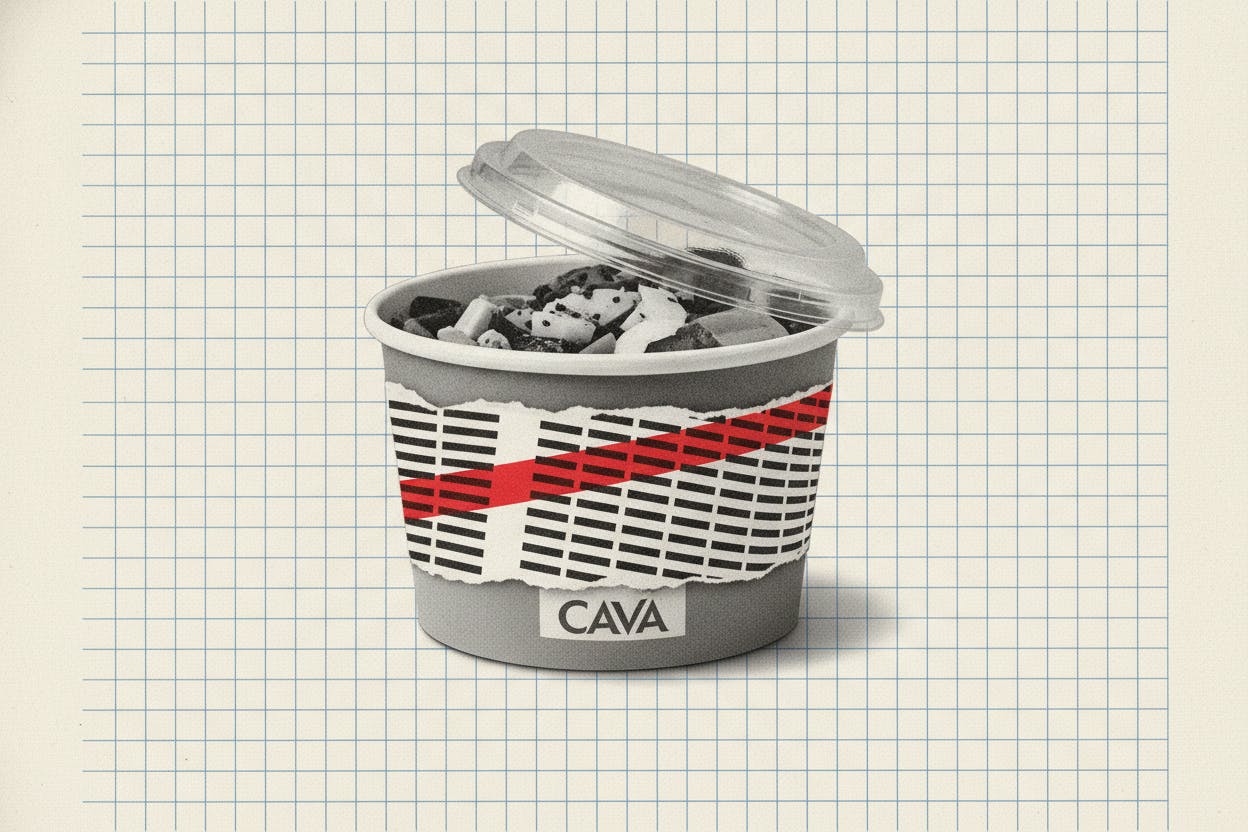
Cava Group, the fast-casual Mediterranean chain, delivered stronger-than-expected results for its fiscal second quarter, but management chose to keep its full-year guidance intact after a brief demand slowdown tied to food-safety headlines in July.
For the quarter ended July 12, same-restaurant sales—a key metric that tracks sales at locations open at least a year—rose 9%, comfortably ahead of the 7.6% that analysts polled by LSEG had projected. The gain was driven by a 5.3% increase in guest traffic, meaning more customers walked through the doors, not just higher prices.
The company also reported adjusted EBITDA—a profit measure that excludes certain one-time items—of $54.7 million, up 30% from a year earlier and slightly above expectations.
Why the cautious outlook?
Despite the strong quarter, Cava's management said that concerns about cyclosporiasis, a gastrointestinal illness linked to contaminated produce, briefly cooled customer demand in July. The company was not linked to the outbreaks, but the headlines still had an effect.
"We saw a temporary softening in traffic during that period," the company indicated, adding that trends have since improved. Still, the decision to hold the full-year forecast suggests management wants to see more evidence that the recovery is durable before raising expectations.
This is a common pattern for restaurant chains: a short-term scare can spook investors even if the underlying business is healthy. The key question is whether the dip in demand was truly temporary or a sign of lingering consumer caution.
What it means for investors
For everyday investors, Cava's report offers a few takeaways. First, the company continues to grow at a solid clip, with traffic rising even as consumers remain selective about where they spend. That's a positive sign for the broader fast-casual sector, which has benefited from diners trading down from more expensive full-service restaurants.
Second, the food-safety episode is a reminder that headlines can move stocks, even when a company isn't at fault. Investors should be prepared for volatility around such news, but the fact that Cava saw a recovery suggests the impact was contained.
Third, the decision to keep the full-year outlook unchanged could be seen as conservative, but it also gives management room to beat expectations later. For investors, that might be more reassuring than a raised guide that proves too optimistic.
Cava's performance also comes against a backdrop of mixed signals in the restaurant industry. While some chains are struggling with softer traffic, others are benefiting from strong brand loyalty and new store openings. Cava's 9% same-restaurant sales growth stands out in that context.
Looking ahead, investors will likely watch whether Cava can sustain its traffic momentum and whether any further food-safety headlines emerge. The company's ability to navigate such challenges will be key to its stock performance.
For those interested in the broader retail and consumer picture, Cava's results offer a useful data point. Meanwhile, other companies are facing their own headwinds, as seen in Middleby's profit outlook cut and softer US sales at Ahold Delhaize. And with back-to-school season underway, retail stocks aren't celebrating despite strong sales, suggesting investors are focused on margins and guidance.
In the end, Cava's quarter was a solid one, but the food-safety scare and the unchanged outlook mean the story isn't entirely clean. For investors, it's a reminder that even good news can come with caveats.