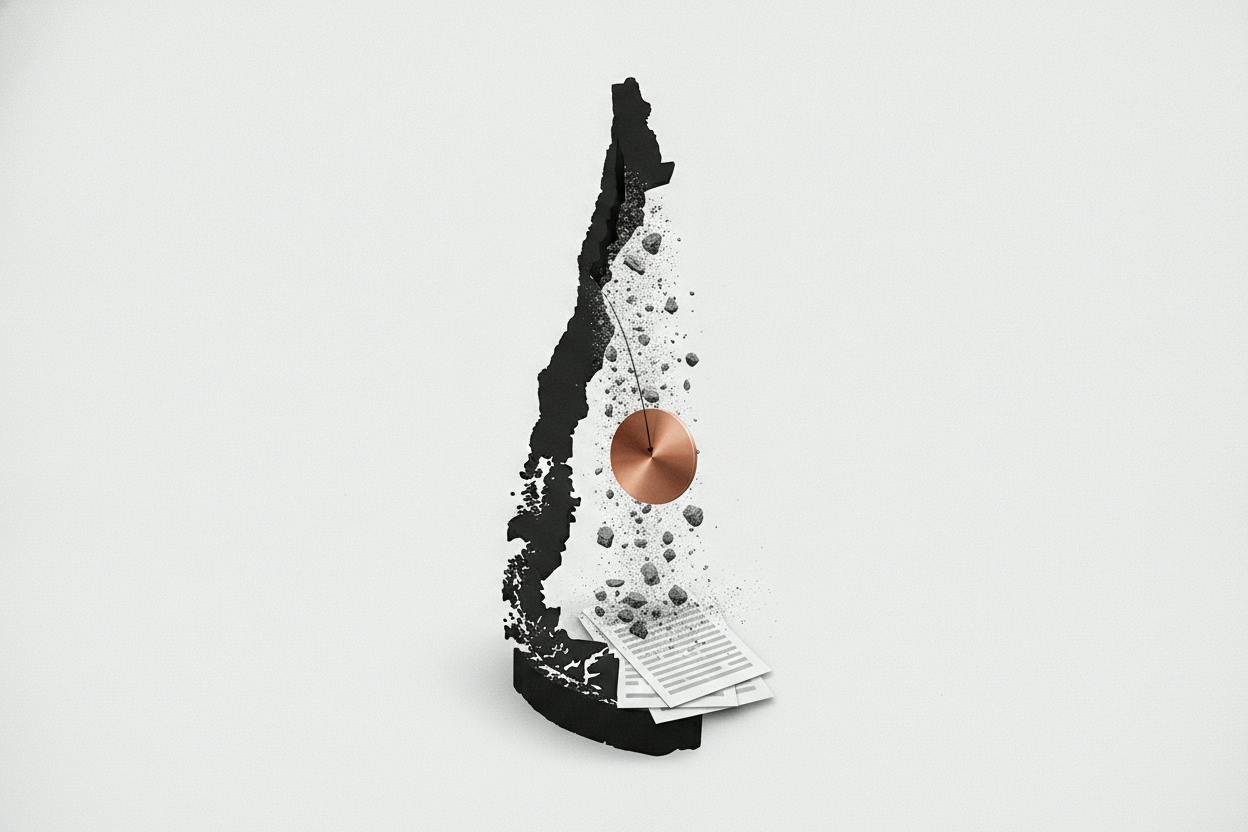
SANTIAGO – Chile's economy contracted in the third quarter, with the mining sector bearing the brunt of the decline. According to the country's central bank, gross domestic product (GDP) fell 1.8% from the previous quarter, while mining output tumbled 12.9%. The central bank also pointed to softer domestic demand as a contributing factor.
The figures mark a sharp reversal for an economy that had been showing resilience. Mining is a cornerstone of Chile's economy, accounting for a significant share of exports and government revenue. The country is the world's largest copper producer, and copper prices have been volatile amid global economic uncertainty.
Why mining matters so much
Chile's reliance on mining, particularly copper, makes it highly sensitive to swings in commodity prices and global demand. When mining output falls, the effects ripple through the entire economy—affecting employment, tax revenues, and investment. The 12.9% drop in mining is a substantial decline, likely reflecting a combination of lower ore grades, operational disruptions, or weaker global demand.
For everyday investors, this highlights the risks of concentrated exposure to commodity-driven economies. Chile's economic health is closely tied to the health of the global industrial cycle, especially in China, which is the largest buyer of copper. Any slowdown in Chinese manufacturing or construction can directly impact Chile's growth.
The central bank's mention of softer domestic demand suggests that households and businesses are also pulling back. High interest rates, which were raised to combat inflation, may be cooling consumer spending and investment. This is a familiar trade-off: central banks often tighten policy to tame prices, but that can slow growth.
What this means for investors
For investors with exposure to Chilean assets—whether through stocks, bonds, or exchange-traded funds (ETFs)—this contraction is a signal to reassess risk. A shrinking economy can weigh on corporate earnings, particularly for companies tied to domestic consumption and mining. It may also pressure the Chilean peso, which could affect foreign investors' returns.
On the other hand, the central bank's response will be crucial. If the contraction deepens, policymakers might consider cutting interest rates to stimulate growth. However, they must balance that against inflation risks. The central bank has previously warned that global tightening is a top financial risk, so any move will be carefully calibrated.
For those invested in mining companies operating in Chile, the 12.9% drop in output is a direct concern. Companies like Sumitomo Metal Mining, which is expanding copper output through Pacific Rim deals, may face headwinds if Chilean production remains weak. However, long-term demand for copper, driven by electrification and renewable energy, could provide a floor.
Investors should also watch how Chile's economic slowdown affects broader regional markets. Latin American economies often move in tandem, and a contraction in Chile could have spillover effects. The ASX 200's recent decline shows how global markets react to mixed economic signals, and Chile's data adds to the cautious mood.
Looking ahead
The central bank's next policy meeting will be closely watched. If the economy continues to shrink, there may be pressure to ease monetary policy. But with inflation still a concern, the bank may hold rates steady for now. Investors should also monitor copper prices, which will be a key driver of Chile's recovery.
For now, the message is clear: Chile's economy is facing headwinds, and the mining sector is at the center of the storm. While this is concerning, it also presents opportunities for investors who can identify undervalued assets or companies that are well-positioned to weather the downturn. As always, diversification remains a prudent strategy.
In the broader context, Chile's contraction is a reminder that even commodity-rich economies are not immune to global shocks. The Collective Mining's $100M 2027 spend in Colombia shows that mining investment is shifting across the region, but Chile's dominance in copper means its fortunes are closely tied to the metal's price.
For everyday investors, the key takeaway is to stay informed and avoid making knee-jerk reactions. Economic data like this can cause short-term market volatility, but long-term investment decisions should be based on a thorough understanding of the fundamentals.