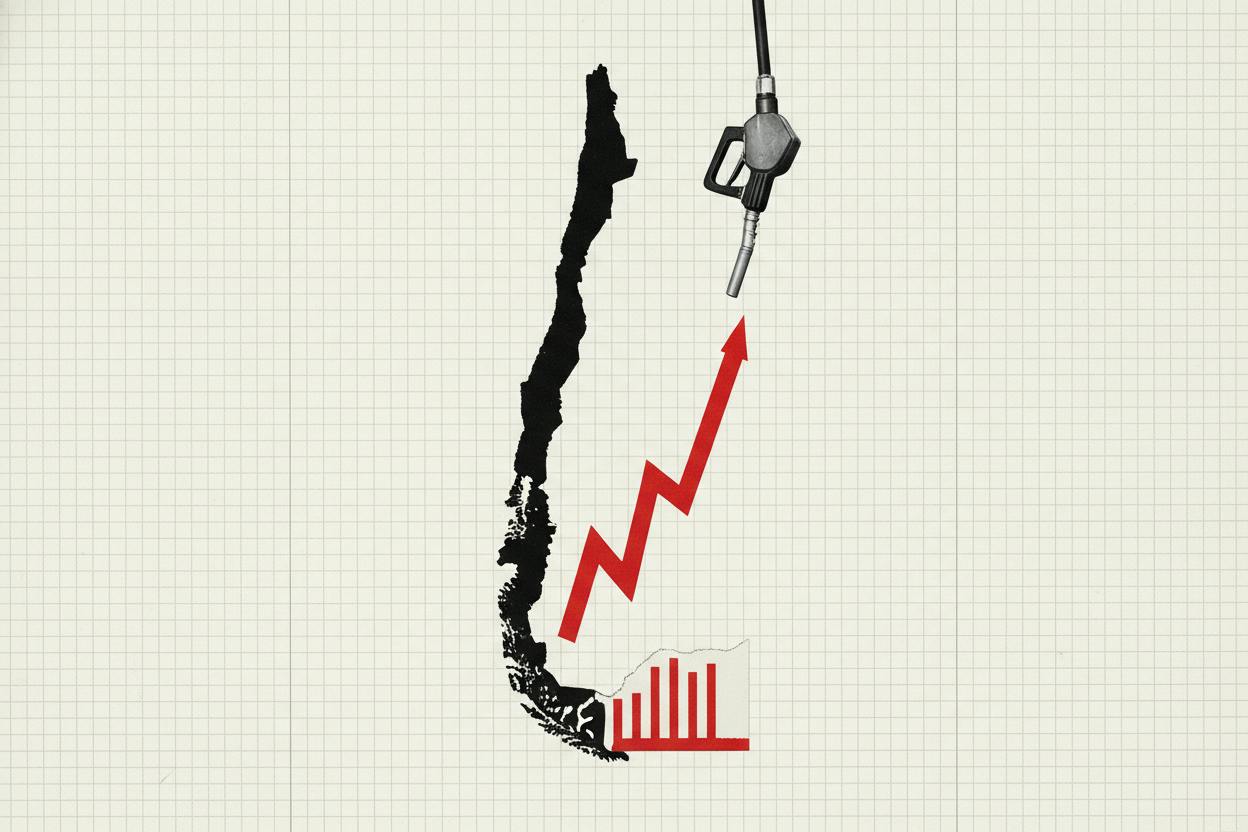
Chile's inflation accelerated in October as higher fuel costs pushed consumer prices up 0.5% from the previous month, according to data from the National Statistics Institute (INE). On an annual basis, prices rose 4.5%, up from 4.1% in September and above the central bank's tolerance range of 2% to 4% around its 3% target.
The monthly increase was broad but led by transport and food. Transport prices climbed 2% in October, with fuel for personal vehicles jumping 5.6% and gasoline up 4.5%. Food and non-alcoholic drinks rose 1% during the month. Overall, prices increased in six of the 13 categories the INE tracks.
Why fuel is driving the numbers
Fuel prices are a key component of Chile's consumer price index, and their recent surge reflects global energy market pressures. While the brief does not specify the cause, higher oil prices and currency movements often feed directly into domestic fuel costs. For everyday Chileans, this means more expensive trips to the pump and higher costs for goods that rely on transportation, such as food.
The rise in food prices is particularly notable because it affects household budgets directly. Food and non-alcoholic drinks are a significant part of consumer spending, especially for lower-income families. When these costs rise, it can squeeze disposable income and reduce purchasing power.
Central bank's dilemma
Chile's central bank targets 3% inflation, with a tolerance range of 2% to 4%. At 4.5%, inflation is now clearly above that range, which puts pressure on policymakers to consider tightening monetary policy. However, the central bank must weigh this against the need to support economic growth. Raising interest rates could cool inflation but also slow borrowing and spending.
In recent months, Chile's central bank has been gradually cutting its benchmark interest rate as inflation moderated from earlier peaks. But this latest uptick could pause or reverse that trend. Investors will be watching the central bank's next policy meeting for signals on how it plans to respond.
This situation is not unique to Chile. Across the globe, central banks are grappling with sticky inflation driven by energy costs. For example, Poland's central bank recently raised its inflation forecast due to higher energy costs, and New Zealand also saw fuel costs drive up card spending in October. These trends highlight how energy prices remain a common headache for policymakers worldwide.
What it means for investors
For investors, the key takeaway is that Chile's inflation is running hotter than the central bank would like. This could lead to a more cautious approach to interest rate cuts, which would affect bond yields and the Chilean peso. Higher rates tend to support the currency but can weigh on equities, especially in rate-sensitive sectors like real estate and consumer discretionary.
If inflation persists, the central bank might even consider a rate hike, which would be a significant shift from the easing cycle seen earlier this year. Investors should monitor upcoming inflation data and central bank communications for clues.
On a broader level, this report underscores how energy prices continue to influence inflation dynamics globally. As seen in EOG's record output on higher oil prices, energy producers benefit from higher prices, but consumers and central banks bear the cost. For everyday investors, this means staying aware of how energy price movements can ripple through portfolios, from utility stocks to consumer goods companies.
For those with exposure to Chilean assets—whether through mutual funds, ETFs, or direct investments—it's worth reviewing how inflation and potential rate changes might impact returns. While the central bank's tolerance range allows for some flexibility, a sustained breach could lead to tighter financial conditions.
In the near term, the focus will be on whether October's spike is a one-off or the start of a trend. Fuel prices are volatile, and a drop in global oil prices could ease the pressure. But if food costs continue to climb, inflation could stay elevated, forcing the central bank to act.
As always, diversification remains a prudent strategy. Inflation surprises in one country can affect global markets, as seen in currency moves during recent market turbulence. Keeping a balanced portfolio can help mitigate such risks.