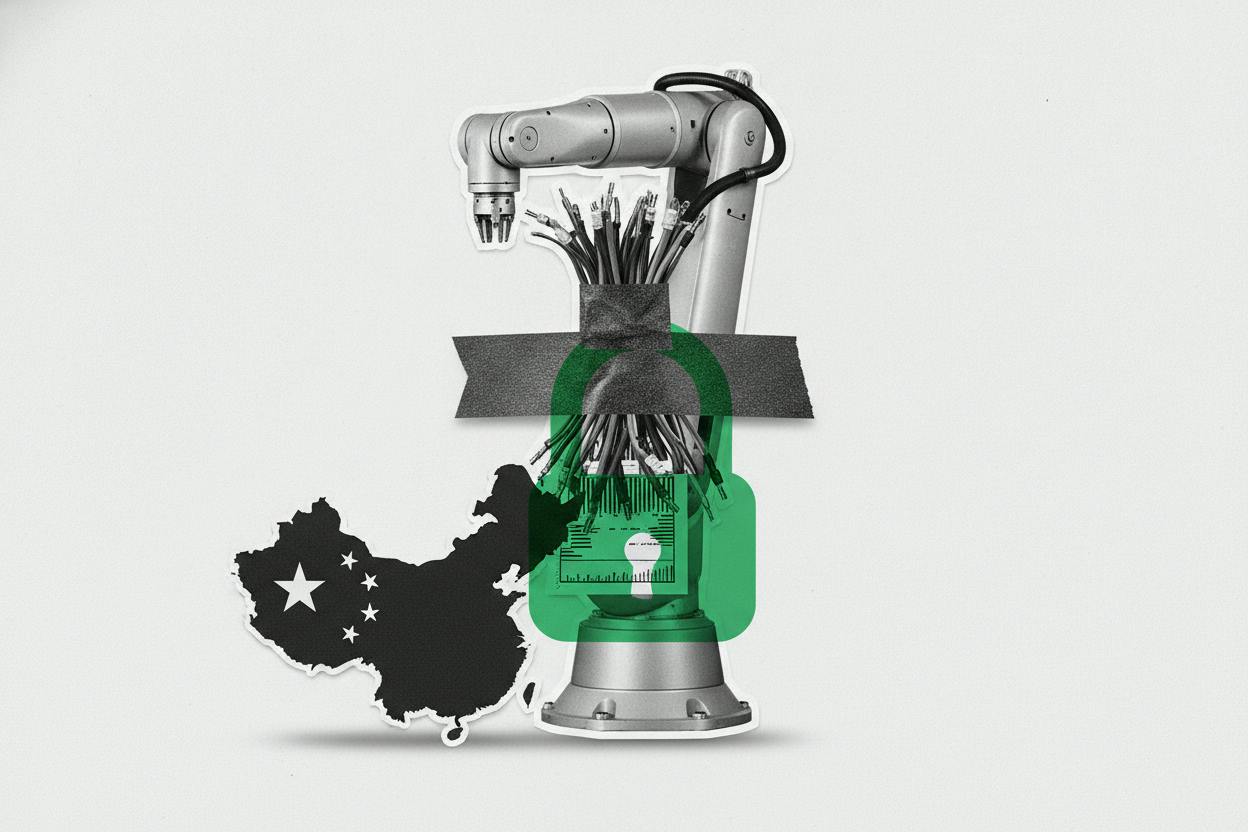
China's top economic planner is reportedly blocking SoftBank's $5.4 billion acquisition of ABB's robotics division, citing concerns that data generated by those robots could be transferred overseas and used to train artificial intelligence models. The move, first reported by the Financial Times, marks a significant hurdle for one of the year's largest industrial tech deals.
The National Development and Reform Commission (NDRC) has told SoftBank, the Japanese tech investment firm, that it will not clear the acquisition, according to people familiar with the matter. SoftBank had reportedly expected approval until last week, making the sudden reversal a surprise.
Why data is the sticking point
The core issue isn't just who owns the robots—it's who controls the information they produce. Modern industrial robots are packed with sensors that collect vast amounts of operational data on factory floors: how machines move, how they wear, how they interact with human workers. That data is increasingly valuable for improving software, optimizing production, and training AI systems.
China's concern, according to the report, is that this data could end up in foreign hands and be used to advance AI capabilities outside the country. For Beijing, that's a strategic risk, especially as the global race for AI dominance intensifies.
China is ABB's largest market for robots, accounting for roughly 30% of the division's business. That gives Beijing significant leverage. If regulators can limit how data is stored, shared, or exported, the value of the deal shifts from hardware and intellectual property toward continued access to that market.
What this means for SoftBank and ABB
For SoftBank, the block is a major setback. The company had been betting on robotics as a growth area, and the ABB unit would have given it a strong foothold in industrial automation. Now, SoftBank faces the prospect of delays, tougher conditions, or even a renegotiated price.
For ABB, the deal was a way to streamline its portfolio and focus on electrification and automation. If the sale falls through, ABB may need to find another buyer or continue running the robotics unit itself—a scenario that could weigh on its stock.
The situation also highlights a broader trend: cross-border mergers in robotics and industrial automation are increasingly looking like data deals as much as manufacturing deals. When a buyer can't be sure it can collect, keep, and move operational data across borders, regulators can force remedies like data localization (keeping data in-country), ring-fencing (separating systems and access), or China-specific structures that limit foreign control.
What it means for investors
For everyday investors, this news is a reminder that regulatory risk is a real factor in any deal involving China. Even if a company announces a big acquisition, approval is never guaranteed—and the conditions attached can change the economics.
Investors should watch for updates on whether SoftBank and ABB can negotiate a compromise, such as agreeing to keep data in China or setting up a joint venture. If they can't, the deal could collapse entirely, which would likely hit both companies' shares.
More broadly, this episode underscores how China's regulatory stance can affect global tech deals. It's not just about chips or AI models—it's about the data that powers them. As China's tech giants face long waits for Nvidia AI chips, the country is clearly focused on protecting its own data and AI capabilities.
For investors in companies with heavy China exposure, the takeaway is clear: market access itself can become the main closing condition. That adds execution risk—longer approval timelines, more legal and compliance costs, and a wider gap between the announced price and what a buyer ultimately finds worth paying.
The ABB deal is just the latest example. As Democrats' midterm sweep sets up AI data center roadblocks, similar dynamics are playing out in the U.S., where regulators are also scrutinizing data flows and foreign ownership. The message for investors is that in today's world, data is as valuable as the hardware—and that means more regulatory hurdles ahead.