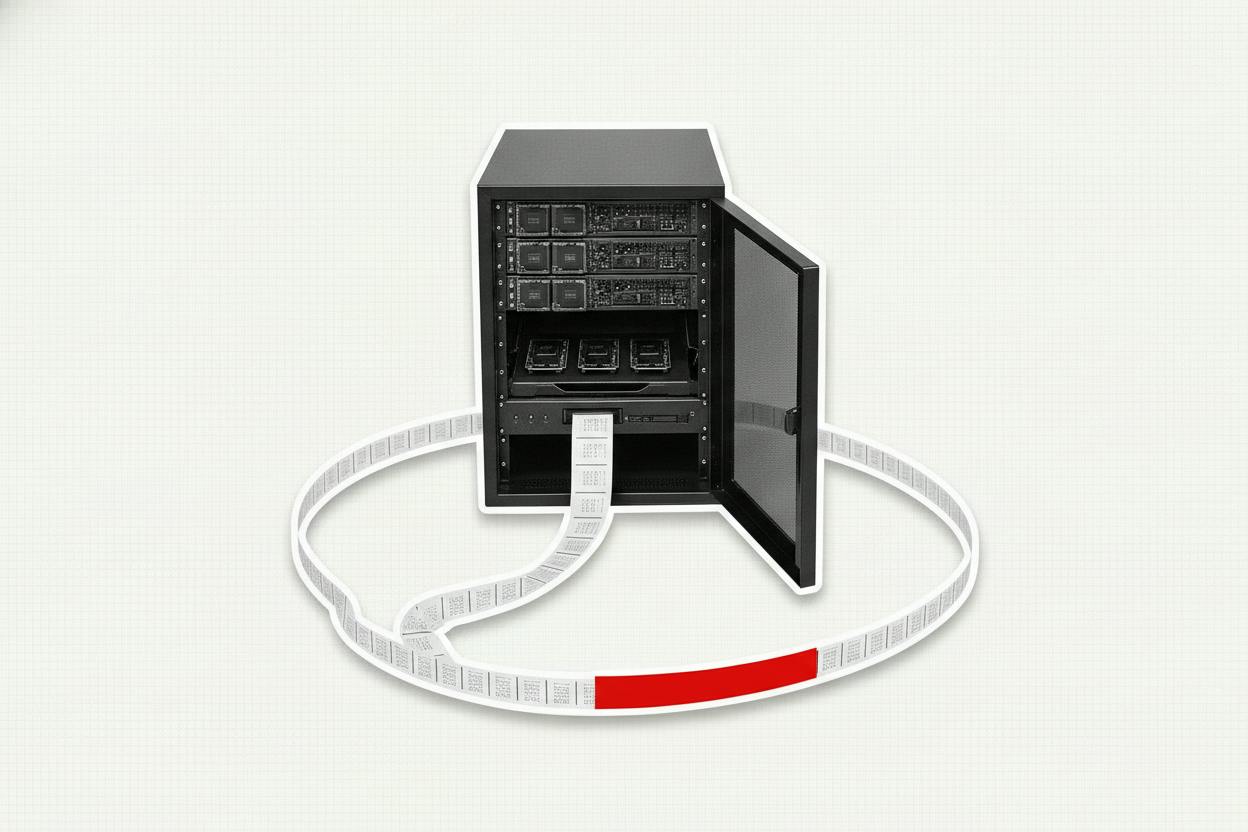
China's largest internet companies are racing to secure the most sought-after AI chips, but their massive orders are colliding with a hard reality: Nvidia simply cannot make them fast enough. According to a Bloomberg report, Alibaba, Tencent and ByteDance have collectively ordered roughly 6 million units of Nvidia's RTX Pro 5500 chip, yet they expect to receive only about 1% of that total over the next four months.
The numbers are staggering. Bloomberg estimates the combined orders are worth around $70 billion, with each chip priced above $11,000. But the near-term picture is one of rationing, not abundance. The report suggests only several thousand units will arrive by the end of this year, with tens of thousands more expected around February. That means the companies' AI ambitions will be throttled by delivery schedules, not by their willingness to spend.
Why supply is so tight
The RTX Pro 5500 is Nvidia's latest high-end processor designed for AI workloads. It belongs to a family of chips that have become the backbone of the AI boom, powering everything from large language models to image recognition systems. Demand for such chips has exploded as companies across the globe pour money into AI infrastructure, but production capacity has not kept pace.
Nvidia told Bloomberg that supply will remain limited for the foreseeable future due to production constraints and scheduling conflicts. In plain terms, the factories that make these chips—and the advanced packaging and memory components they rely on—are booked out. Even a company with unlimited cash cannot simply buy its way to the front of the line. Access is being decided by allocation and scheduling, not just price.
This is a familiar dynamic in the semiconductor industry. When a new chip generation launches, early supply is often scarce, and customers must wait their turn. But the scale here is unusual. A $70 billion order that takes years to fulfill shows how the AI supply chain is straining at every link.
What it means for the Chinese tech giants
For Alibaba, Tencent and ByteDance, the delay has direct consequences. These companies are investing heavily in AI to improve their cloud services, recommendation algorithms, and content generation tools. But "compute"—the raw processing power needed to train and run AI models—cannot be conjured with a bigger budget if the factories are already at capacity.
Chinese buyers cited by Bloomberg estimate that deliveries could reach roughly 700,000 units by the end of 2027. If that projection holds, the pace of their AI rollouts will be shaped by how quickly they can turn a place in the queue into working servers, rather than by how aggressively they place orders. In the meantime, they may have to rely on older chips or alternative suppliers, though Nvidia remains the dominant player in high-end AI hardware.
The situation also comes against a backdrop of policy support for Chinese markets and recent gains in Chinese equities, but the chip shortage is a reminder that not all headwinds can be solved by monetary policy or government encouragement.
What it means for investors
For investors following Nvidia and the broader AI supply chain, the headline demand number is only half the story. When delivery slots are scarce, reported orders can function like "reservations" that build a backlog, while near-term revenue and customers' AI progress depend on what actually ships. That dynamic can keep customers like Alibaba, Tencent and ByteDance tied to Nvidia's production timetable and make quarterly results and AI adoption trends more sensitive to capacity expansions and scheduling decisions than to end-demand alone.
In other words, a $70 billion order can still translate into a multi-year wait. For Nvidia, the backlog is a sign of robust demand, but it also means revenue recognition is spread out over time. For the Chinese tech firms, the delay could slow their AI initiatives and give competitors with better supply access an edge.
Investors should watch for updates on Nvidia's production capacity, as well as any signs that the company is expanding its manufacturing partnerships. Also worth monitoring are the quarterly earnings reports from Alibaba, Tencent and ByteDance (the latter is private, but its peers' results offer clues). If the companies mention supply constraints as a factor in their AI spending, that would confirm the trend.
For everyday investors, the key takeaway is that the AI boom is not just about demand—it's about the physical limits of chip production. Even the biggest buyers have to wait, and that wait has real financial implications. As China's services sector shows signs of cooling, the ability of these tech giants to deploy AI quickly could become even more important to their growth stories.
Ultimately, the chip shortage is a reminder that in the world of AI, the bottleneck is not money—it's manufacturing. And that is a constraint no amount of ordering can overcome.