China has launched its largest-ever auto recall, with 11 electric vehicle (EV) makers—including Tesla and Xiaomi—rolling out fixes after regulators raised a basic safety question: can passengers still get out if the car's power fails?
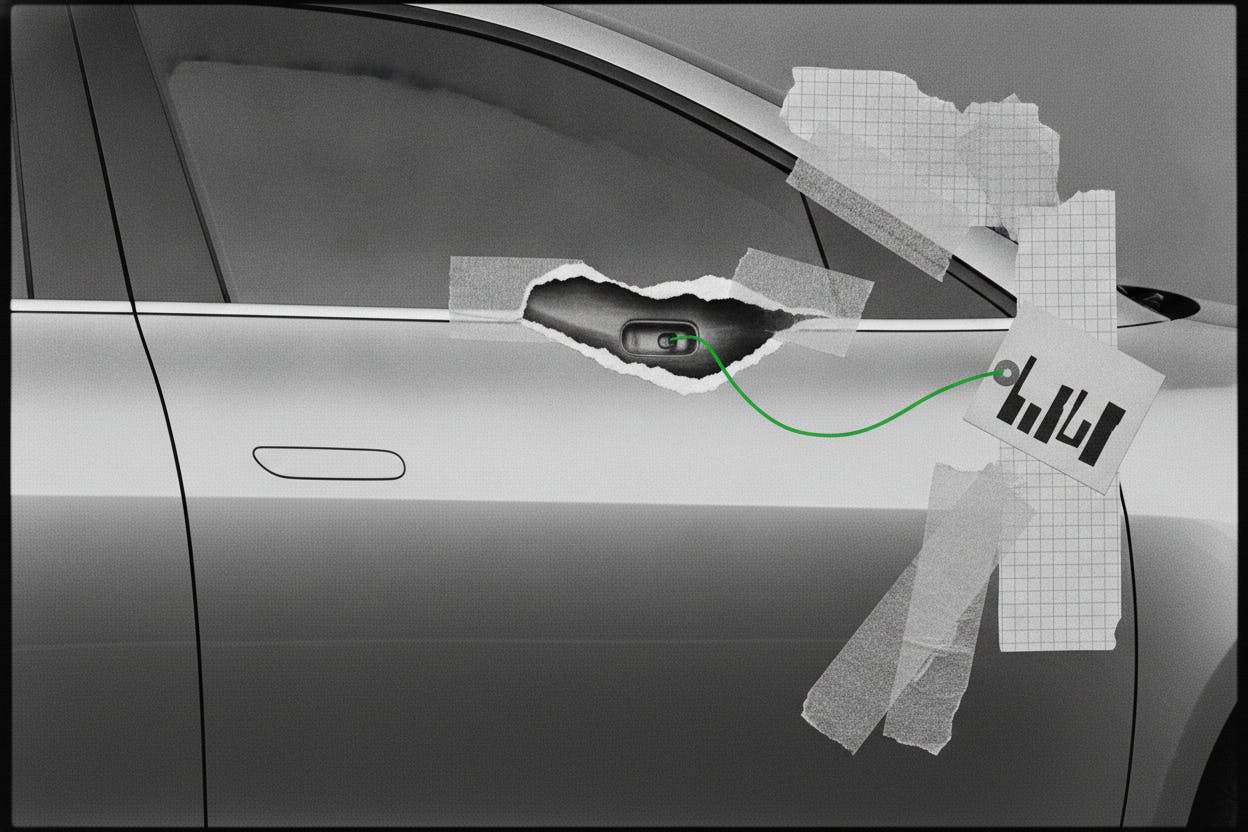
The recalls, overseen by the State Administration for Market Regulation (SAMR), China's product-safety watchdog, focus on emergency mechanical door-release handles. These are the manual levers that allow occupants to open a door when electronics are knocked out, such as after a crash or a battery failure. Most of the fixes involve adding labels to make the releases easier to spot and use, along with over-the-air software updates.
Why hidden handles became a problem
Modern EVs often feature flush, concealed door handles that pop out electronically—a design choice that improves aerodynamics and gives a sleek, futuristic look. But if the vehicle loses power, those handles may not deploy, leaving occupants reliant on a hidden mechanical release that can be hard to find in an emergency.
Regulators in China have been tightening rules on emergency exits, and they plan to ban concealed handles entirely from 2027. That timeline gives carmakers a few years to redesign their door systems, but the current recall wave is about addressing the immediate risk in vehicles already on the road.
The recall includes a broad swath of the EV market, from global leader Tesla to domestic challengers like Xiaomi, which entered the car business just a few years ago. The breadth of the action underscores how widespread the design trend has become—and how regulators are now treating it as a safety issue rather than a styling choice.
Safety takes priority in a price war
China's EV market is locked in a brutal price war, with manufacturers slashing prices to win share in the world's largest auto market. But the recall is a reminder that even as brands compete on cost and features, safety regulations set the floor for what they can sell.
For investors, the recall is a signal that regulatory scrutiny in China's auto sector is not easing. Carmakers that cut corners on safety—or that adopt designs that regulators later deem risky—could face costly fixes, reputational damage, and potential sales disruptions. On the other hand, companies that proactively address safety concerns may avoid more severe penalties down the road.
The use of over-the-air updates is notable. Many of the fixes can be delivered remotely, without requiring owners to visit a service center. That's a cost-effective approach for carmakers, but it also highlights how software is now central to vehicle safety—and how a simple software patch can address a physical design flaw.
What it means for investors
For everyday investors, this recall is a reminder that EV stocks carry regulatory risk. A single safety directive can force a company to spend millions on fixes, and the reputational hit can linger. But it also shows that regulators are paying close attention to EV-specific risks, which could lead to more uniform safety standards across the industry.
Investors should watch how the affected carmakers handle the recall—whether they communicate clearly, how quickly they roll out fixes, and whether any further regulatory actions follow. The 2027 ban on concealed handles gives a clear timeline for design changes, so companies that adapt early may gain a competitive edge.
This isn't the first time Tesla has faced regulatory scrutiny over its vehicles. In the U.S., the National Highway Traffic Safety Administration recently reopened a recall after fixes failed to resolve the issue, a reminder that recalls can be complex and drawn-out. In China, the current action is broad, but the fixes are relatively simple—labels and software updates—so the immediate financial impact may be limited.
Still, the recall could affect consumer confidence in EVs, especially among buyers who are already nervous about new technology. For the broader market, it's a sign that China's regulators are willing to act decisively on safety, even when it means hitting major global brands.
As the EV price war continues, safety will remain a key differentiator. Carmakers that can offer both affordable prices and robust safety features are likely to win over consumers and regulators alike. For investors, that means paying attention not just to sales numbers, but to how companies handle the inevitable safety challenges that come with new technology.