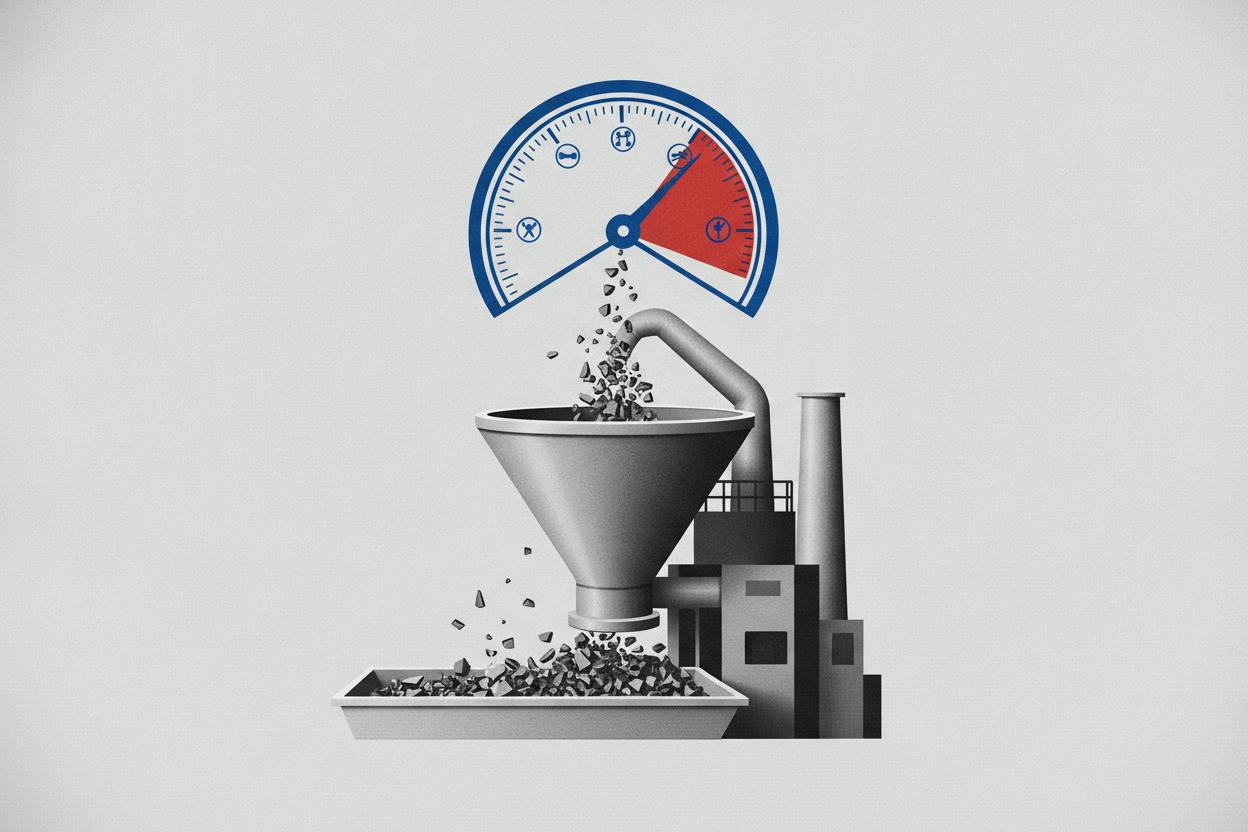
China's copper smelting industry is running up against a hard ceiling. The country's main metals industry group says smelting capacity is close to its limit, largely because there isn't enough copper concentrate—the raw material fed into smelters—to keep all the plants busy. The result: processing fees have turned negative, a sign of intense strain in the market.
Chen Xuesen, a vice president at the state-backed China Nonferrous Metals Industry Association (CNIA), told Reuters that the group wants to set up a capacity monitoring and early-warning system, working with government agencies. The idea is to help smelters adjust output more quickly when concentrate is scarce, rather than running flat out and bidding against each other for limited supplies.
What's behind the squeeze?
Copper smelters convert copper concentrate—a mix of copper and other minerals—into refined copper metal. They earn money in two ways: a treatment charge (TC) for processing the concentrate and a refining charge (RC) for purifying it. These fees, known together as TC/RCs, are set in contracts between smelters and concentrate suppliers. When concentrate is plentiful, smelters can demand higher fees; when it's scarce, they have to accept lower fees—or even pay suppliers to take the material.
Right now, spot TC/RCs have fallen into negative territory, meaning smelters are effectively paying to get concentrate. That's a rare and painful situation for the industry. It reflects a global shortage of copper concentrate, driven by a combination of factors: mine supply disruptions, slower-than-expected ramp-ups at new mines, and strong demand from smelters that expanded capacity in recent years.
China is the world's biggest copper smelter, and its plants have been built to process far more concentrate than the country's own mines can supply. That makes China heavily reliant on imports, and when global supply tightens, Chinese smelters feel the pinch first.
Why an early-warning system matters
The CNIA's proposal is essentially a coordination tool. If smelters know in advance that concentrate supplies are tightening, they can plan maintenance or cut output before the situation becomes acute. Without such a system, smelters may keep producing at full tilt, competing for scarce material and driving fees even lower—a lose-lose for the industry.
An early-warning system would also give regulators a clearer picture of capacity utilization, which could inform policy decisions on new smelter projects. China has been trying to rein in overcapacity in several industries, and copper smelting could be next on the list.
The move echoes broader efforts in China to manage industrial capacity more carefully, especially in sectors where rapid expansion has outpaced raw material supply. It's a sign that the copper industry is maturing from a growth-at-all-costs phase to one focused on stability and efficiency.
What it means for investors
For everyday investors, the key takeaway is that copper prices and copper-related stocks could stay volatile. The shortage of concentrate is a supply-side problem that affects the entire copper value chain, from miners to smelters to manufacturers of copper products.
If smelters are forced to cut output, that could reduce the supply of refined copper, potentially supporting copper prices. On the other hand, if the early-warning system leads to more disciplined production, it might ease the squeeze on processing fees and improve smelters' profitability.
Investors should also keep an eye on broader copper market trends. Copper is often seen as a bellwether for global economic health, and its price has been influenced by everything from AI demand doubts and a strong dollar to short squeezes in the futures market. The current concentrate shortage is another factor adding to the complexity.
For those with exposure to copper miners or smelters, the news underscores the importance of understanding where in the supply chain a company operates. Miners with their own concentrate supplies are in a stronger position, while smelters that rely on purchased concentrate face margin pressure.
Longer term, the copper market is also being shaped by demand from green energy and electric vehicles, which use significant amounts of the metal. That demand is expected to grow, but the immediate challenge is on the supply side. As China's smelting capacity reaches its limit, the world may need new mines—and new investments—to keep up.
In the meantime, the CNIA's push for an early-warning system is a practical step that could help stabilize the market. Whether it works will depend on how quickly smelters and regulators can coordinate. For investors, it's a reminder that copper is not just a commodity—it's a complex market where supply chain dynamics can shift quickly.



