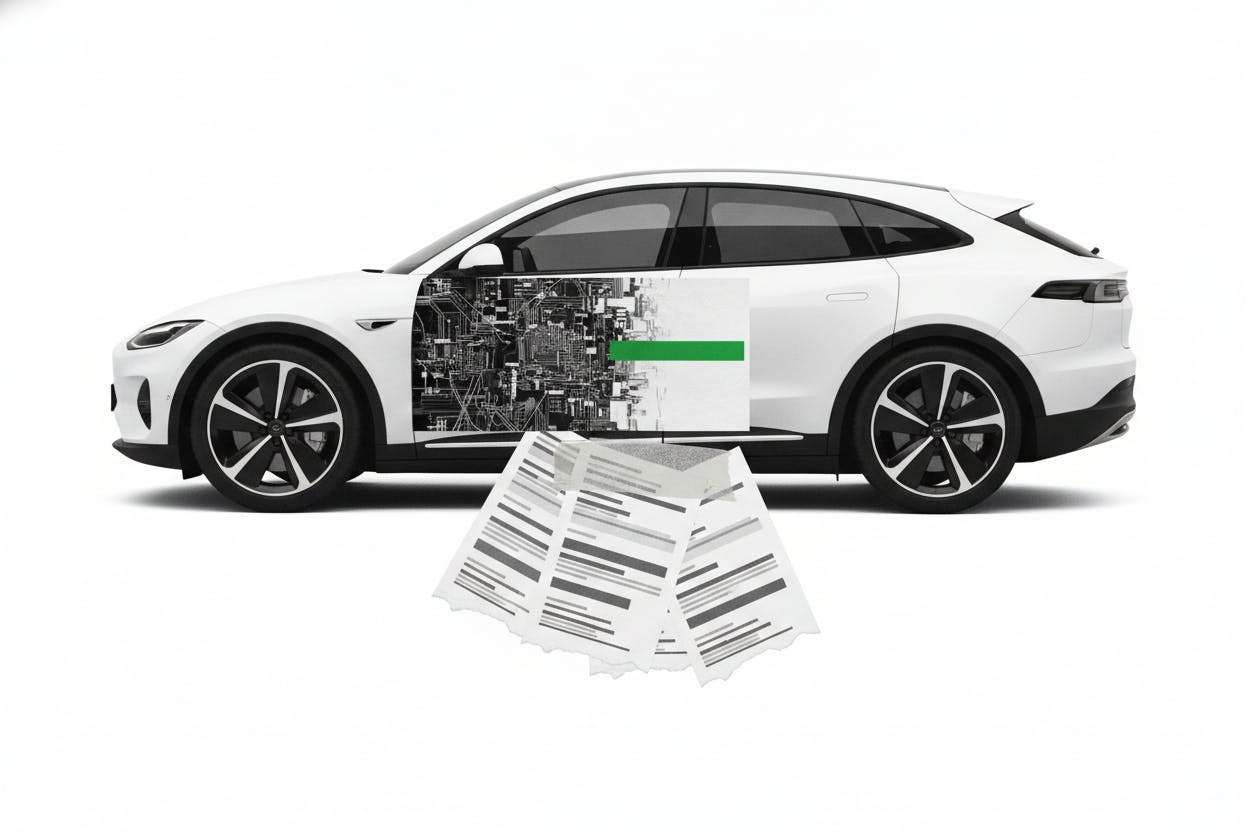
China has launched its largest-ever recall campaign, and for the first time, a significant portion of the fixes will be delivered not through physical repairs but through over-the-air (OTA) software updates. The campaign involves 11 automakers, including Tesla and Xiaomi, and targets emergency door-release systems—a critical safety component. This marks a turning point in how car recalls are executed, moving from the traditional hardware-centric approach to a software-first model.
The shift from hardware to software
Historically, the biggest recalls in the auto industry were rooted in mechanical or electrical failures. Ford's 1981 recall of 21 million vehicles for transmission issues and Toyota's 2012 recall of 7.43 million vehicles for power-window switches are prime examples. These required physical repairs at dealerships, often taking months or years to complete and costing billions.
Today, cars are increasingly "software-defined," meaning many functions are controlled by code rather than purely mechanical parts. When a software bug is found, automakers can often send a patch directly to the vehicle via OTA updates—similar to how a smartphone receives an app update. This approach is faster, cheaper, and less disruptive for owners, who no longer need to visit a service center for every issue.
China's current recall is a prime example of this shift. The emergency door-release system, which allows occupants to open doors in the event of a power failure, is now being fixed through software patches. This is a far cry from the days when a recall meant a physical part replacement.
Takata: the largest recall on record
Despite the scale of China's campaign, the largest recall in automotive history remains the Takata airbag crisis. That recall, which began in 2013 and continues to this day, involved tens of millions of vehicles worldwide. The defect—airbag inflators that could rupture and send shrapnel into the cabin—was a hardware problem that required physical replacement of the inflators. The Takata crisis led to the company's bankruptcy and highlighted the dangers of relying on a single supplier for critical safety components.
The contrast between Takata and China's current recall underscores the evolution of the industry. While Takata's crisis was a hardware nightmare, China's software-based recall is a sign of the times. However, software recalls come with their own challenges, including cybersecurity risks and the need for robust testing to ensure patches don't introduce new problems.
What it means for investors
For everyday investors, this shift has several implications. First, automakers that can effectively manage software recalls may face lower warranty costs and less reputational damage compared to those stuck in the hardware era. Companies like Tesla, which have built their vehicles around software, are well-positioned to handle such issues. Xiaomi, a relative newcomer to the auto industry, is also embracing this approach, which could be a competitive advantage.
Second, the rise of OTA recalls could change how investors assess risk in the auto sector. Traditional recalls often led to significant financial hits and long-term brand damage. Software fixes, by contrast, are quicker and cheaper, potentially reducing the financial impact of defects. However, they also require automakers to invest heavily in software engineering and cybersecurity, which could be a new cost center.
Third, this trend highlights the growing importance of software in the automotive industry, a theme that is already driving investment decisions. As cars become more connected and autonomous, the ability to update software remotely will be a key differentiator. Investors should watch how automakers manage this transition, as those that lag could face competitive disadvantages.
China's record recall is a clear signal that the auto industry is entering a new era where software is as critical as hardware. For investors, understanding this shift is essential to evaluating the long-term prospects of automakers and their suppliers.