Chinese tech shares took a hit at Thursday's open, as a hotter-than-expected US inflation reading reignited fears that interest rates will stay higher for longer. The selloff was broad-based, with mainland benchmarks all moving lower, but the pain was most acute in the technology-heavy indexes that investors treat as long-duration growth bets.
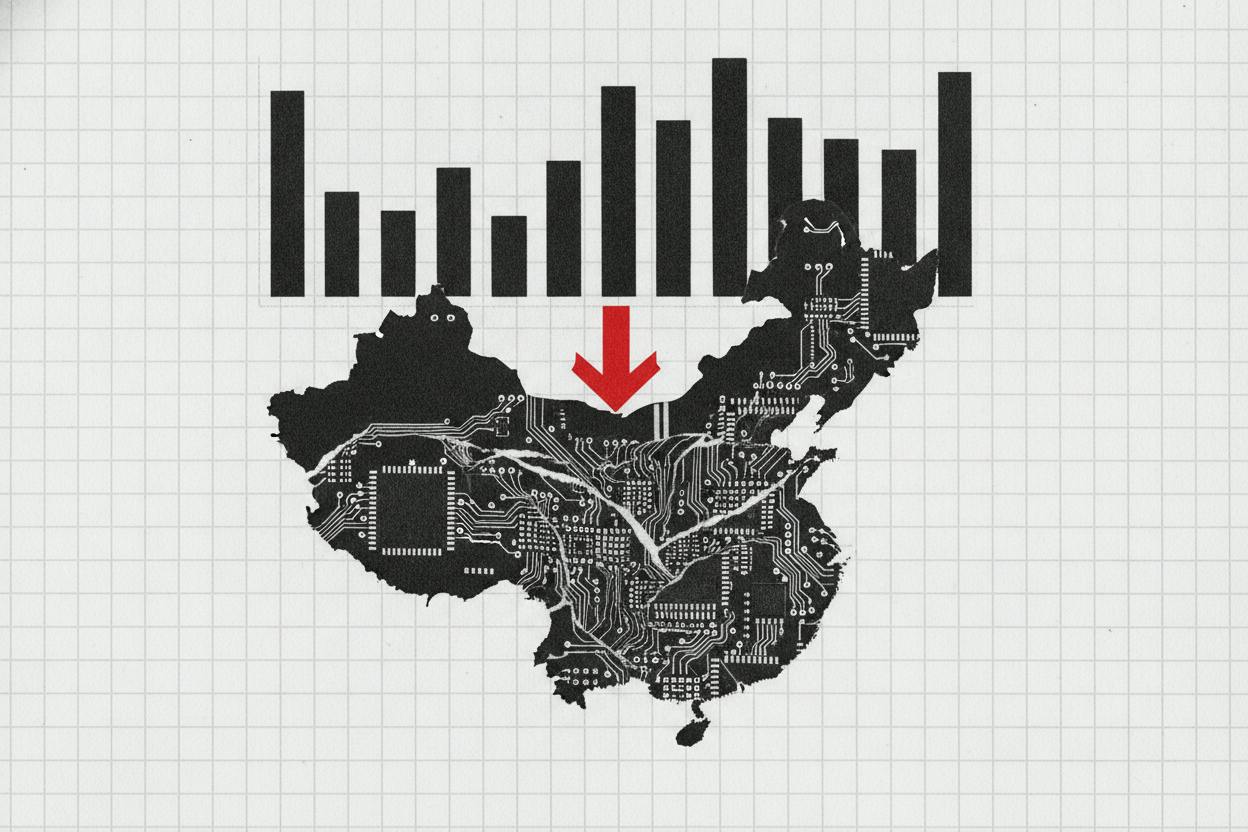
The Shanghai Composite fell 1.5%, the Shenzhen Component dropped 2.4%, and the SSE STAR 50 – a benchmark packed with China's listed science and tech firms – sank 3.9%. The trigger wasn't local news but the global mood after a firm US inflation reading pushed traders to rethink how soon the Federal Reserve might ease policy.
Why higher rates hit tech so hard
For everyday investors, the key concept here is the “discount rate.” When interest rates rise, the risk-free rate – the return you can get from a safe asset like a US Treasury bond – also rises. That higher risk-free rate becomes the baseline investors use to translate a company's future profits into today's prices. The math is simple: the further out those profits are, the more they get discounted.
That's why “long-duration” stocks – companies where most expected earnings are far in the future – tend to suffer the most when rates climb. AI-linked names often fall in that camp, because their current earnings are small relative to the massive profits they're expected to generate years down the road. When the discount rate goes up, those distant profits are worth less in today's money, and the stock price adjusts accordingly.
This dynamic isn't unique to China. It's the same reason hot inflation readings have hit AI stocks in the US and elsewhere. The STAR 50, with its heavy concentration of science and tech firms, is particularly sensitive to this valuation math.
China's lending data couldn't offset the global mood
China did have a supportive data point on Thursday. The People's Bank of China said new yuan loans rose to 1.08 trillion yuan in September, above the 1.03 trillion yuan consensus tracked by Investing.com. That suggests domestic credit demand is picking up, which is generally a positive sign for economic activity.
But when global rates are doing the heavy lifting, better domestic credit numbers can struggle to offset multiple compression in tech-heavy indexes. Multiple compression is the term for when investors are willing to pay less for each dollar of earnings, often because higher rates make future earnings less valuable. Even with stronger loan growth at home, the global rate environment can pressure the price investors are willing to pay for future-heavy earnings.
This is a reminder that China's AI- and tech-heavy benchmarks often trade like global growth stocks. They're not just responding to Beijing's policy moves or domestic data – they're also highly sensitive to the direction of US inflation and Fed expectations. As we've seen with other Asian tech markets, a hot US inflation print can ripple across the globe.
What it means for investors
For investors watching China tech, the big swing factor isn't only Beijing's support measures, but also the direction of US inflation and Fed policy. The STAR 50's 3.9% drop on Thursday shows that US rate worries can outweigh China's 1.08 trillion yuan lending pickup.
That's why the STAR 50 can underperform broader gauges like the Shanghai Composite and Shenzhen Component on “rates” days. Its mix is more sensitive to valuation math than to near-term liquidity. When rates rise, the STAR 50 tends to fall more; when rates fall, it can rally harder.
The broader lesson is that global markets are interconnected. A US inflation report can move stock prices in Shanghai just as easily as in New York. For everyday investors, this means diversification across geographies and sectors isn't just about spreading risk – it's also about understanding that different types of stocks respond differently to the same macroeconomic forces.
As the Fed continues to navigate between inflation and growth, expect more volatility in tech-heavy indexes around the world. The Fed's own Beige Book has shown a patchwork economy with persistent inflation pressures, suggesting the central bank may not be in a hurry to cut rates. That could keep the pressure on long-duration stocks, including China's tech names.
For now, the message from Thursday's session is clear: when it comes to China's tech sector, the US inflation story is just as important as anything happening in Beijing.