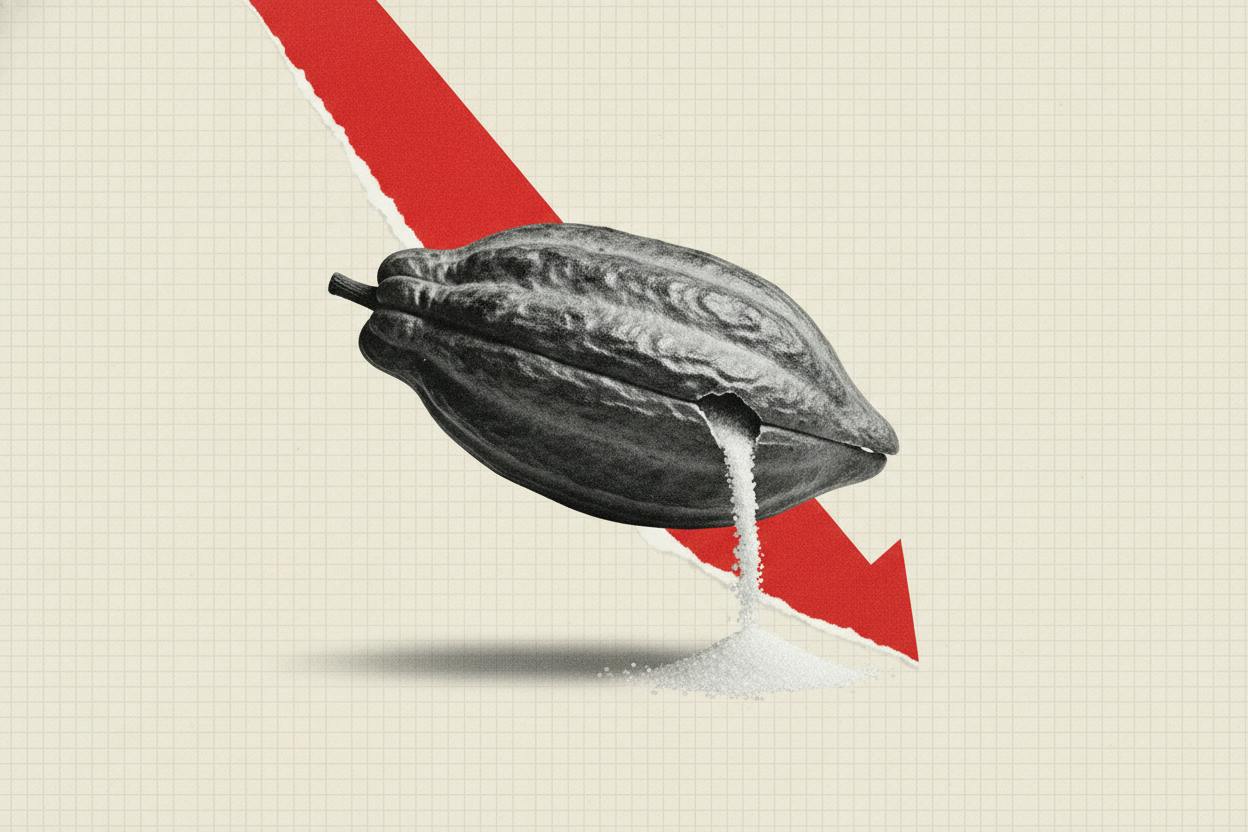
Cocoa and sugar futures fell sharply on Tuesday, with London cocoa dropping 5.5% to £3,687 a metric ton and raw sugar sliding to a five-week low. The moves came as hedge funds added to short positions and traders pointed to weak physical buying, fueling worries that demand for chocolate and sweets is cooling.
The selloff hit both major cocoa benchmarks. New York cocoa fell 6.6% to about $4,784 a ton, while London futures touched a four-month low during the session. Traders said the momentum has turned negative after London cocoa closed below £4,000 on Monday, a level that can trigger trend-following funds to pile into shorts and deepen declines.
Why are prices falling?
Several factors are combining to push cocoa and sugar lower. First, the physical market—where manufacturers actually buy beans and sugar—has been quiet. When buyers step back, it signals that end-demand may be softening, which puts downward pressure on futures prices.
Second, hedge funds have been increasing their short positions, betting that prices will keep falling. This type of speculative activity can amplify moves, especially after a key technical level like £4,000 is broken. As more funds join the selling, the decline can feed on itself.
The broader backdrop also matters. Cocoa prices have already slid to a four-month low as funds piled into shorts, and Tuesday's action extends that trend. For sugar, the five-week low reflects similar concerns about demand, even as supply-side factors like weather and harvests remain in focus.
What does this mean for investors?
For everyday investors, the immediate takeaway is that commodity prices are signaling a potential slowdown in consumer spending on discretionary items like chocolate and sugary drinks. When people tighten their belts, they often cut back on treats, and that shows up in the physical demand for these raw ingredients.
For those with exposure to food and beverage companies, softer cocoa and sugar prices could be a mixed bag. On one hand, lower input costs might help profit margins for manufacturers. On the other, if the demand weakness is broad-based, it could signal that sales volumes are under pressure.
For investors in commodity-focused funds or ETFs, the slide in cocoa and sugar is a reminder that these markets can be volatile and heavily influenced by speculative flows. Palm oil also slid recently as traders awaited key inventory data, showing that soft commodities are all reacting to similar demand and supply signals.
What to watch next
Traders will be watching whether physical buying picks up in the coming weeks, especially as we approach key holiday seasons when chocolate demand typically rises. If manufacturers start restocking, that could stabilize prices. Conversely, if demand remains weak, further declines are possible.
Also on the radar are weather conditions in West Africa, the main cocoa-growing region, and in major sugar-producing countries like Brazil and India. Any supply disruptions could quickly reverse the current bearish sentiment.
For now, the market is firmly in risk-off mode for these commodities. European stocks are near record highs as oil slides on easing Iran tensions, but the soft commodity complex is telling a different story—one of cautious consumers and cautious traders.
As always, it's important to remember that commodity prices are just one piece of the puzzle. For investors, the key is to focus on the underlying fundamentals of the companies they own, rather than getting caught up in day-to-day price swings.