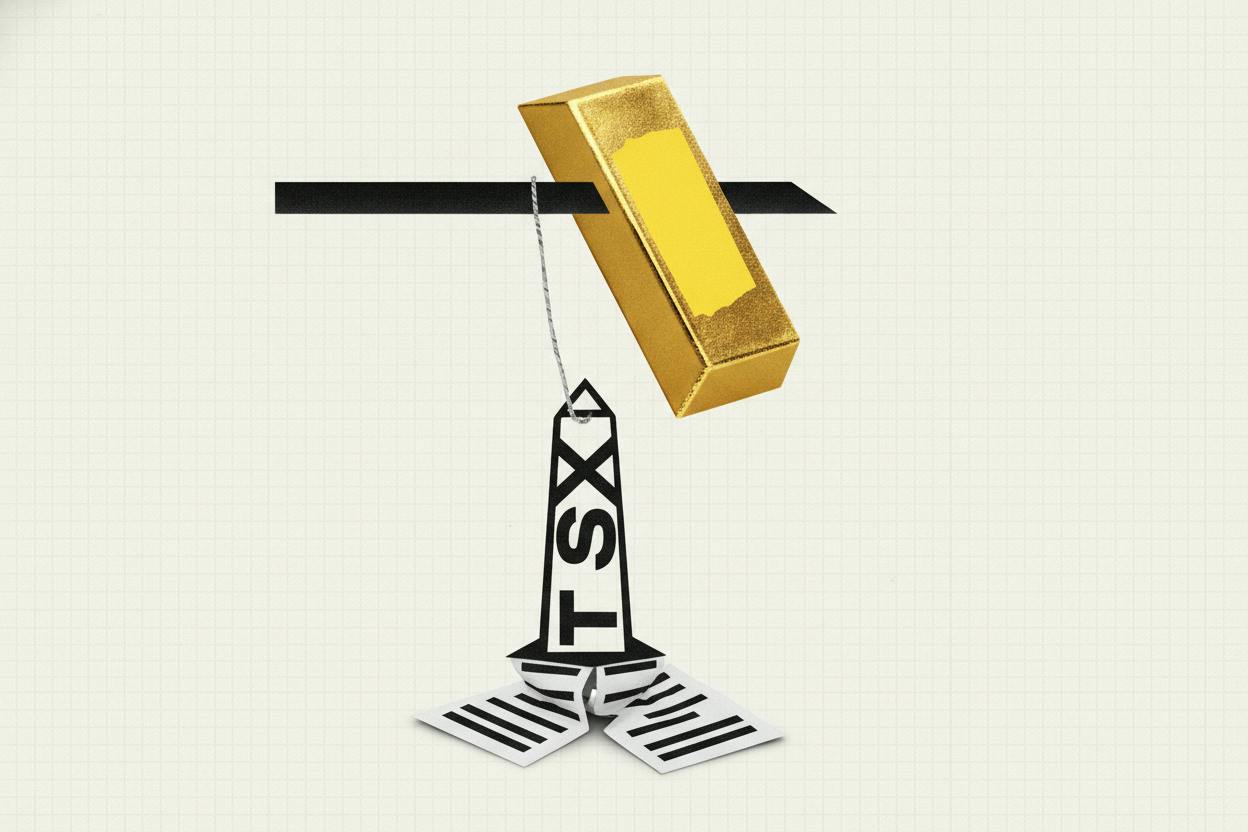
Canada's main stock index slipped on Wednesday after a hotter-than-expected US inflation report weighed on gold prices and sent gold-mining shares tumbling. The S&P/TSX Composite Index fell 0.4%, with the materials sector—home to many of the country's biggest miners—dropping 3%.
The trigger was the latest US Consumer Price Index (CPI) reading, which showed prices rose 0.4% last month, ahead of the 0.3% forecast in a Reuters poll. That surprise prompted traders to adjust their expectations for interest rates, with money markets now fully pricing in a quarter-point rate hike by the Federal Reserve in December, according to the CME FedWatch tool.
Why hot inflation hits gold
Gold is often seen as a hedge against inflation, but in the short term, hotter inflation can actually hurt the metal. That's because higher inflation raises the likelihood that central banks will keep interest rates elevated—or even raise them further. When rates go up, so do "real yields," which are bond returns after accounting for inflation.
Gold pays no interest, so when real yields rise, the opportunity cost of holding gold increases. Investors can earn a better return in bonds, making the metal less attractive. That dynamic played out on Wednesday, with gold prices sliding and pulling down the shares of companies that mine it.
For Canadian investors, the effect was amplified because the TSX is heavily weighted toward materials stocks. Gold miners are among the largest companies on the index, and their profits are closely tied to the price of the metal. When gold moves, their earnings—and their share prices—tend to swing even more.
What it means for the broader market
The modest decline in the TSX masks a much sharper move in one corner of the market. While the overall index fell just 0.4%, the materials sector dropped 3%, showing how a single macro data point can create outsized moves in commodity-linked stocks.
For everyday investors, this is a reminder that index-level moves don't always tell the full story. A day like Wednesday can be painful for those heavily exposed to gold miners, even if their diversified portfolio barely budges. It also highlights how sensitive Canadian markets are to US economic data, given the country's large resource sector.
The inflation report also has implications for the Bank of Canada, which has been navigating its own rate path. While the Fed's decisions don't directly dictate Canadian policy, they influence global financial conditions and the Canadian dollar. A more hawkish Fed can put pressure on the loonie, which in turn affects import prices and inflation expectations in Canada.
What investors should watch next
With markets now pricing a December Fed hike, the focus shifts to upcoming economic data and central bank commentary. If inflation continues to run hot, rate expectations could rise further, keeping pressure on gold and other non-yielding assets. Conversely, a cooler inflation print could ease those concerns and provide relief for miners.
For those with exposure to gold stocks, it's worth remembering that these companies can be volatile. Their earnings are tied to commodity prices, which are influenced by a range of factors—from interest rates to geopolitical events. While gold is often seen as a safe haven, its price can be just as unpredictable as any other asset.
The TSX's performance on Wednesday also comes after a recent stretch of gains. Earlier this week, the index hit a two-month high as falling oil prices lifted miners while weighing on energy stocks. That volatility underscores the importance of diversification, especially in a market where a single sector can drive the entire index.
For now, the key takeaway is that inflation remains the driving force for markets. Until there's clearer evidence that price pressures are cooling, investors should expect more of these sharp, sector-specific moves.