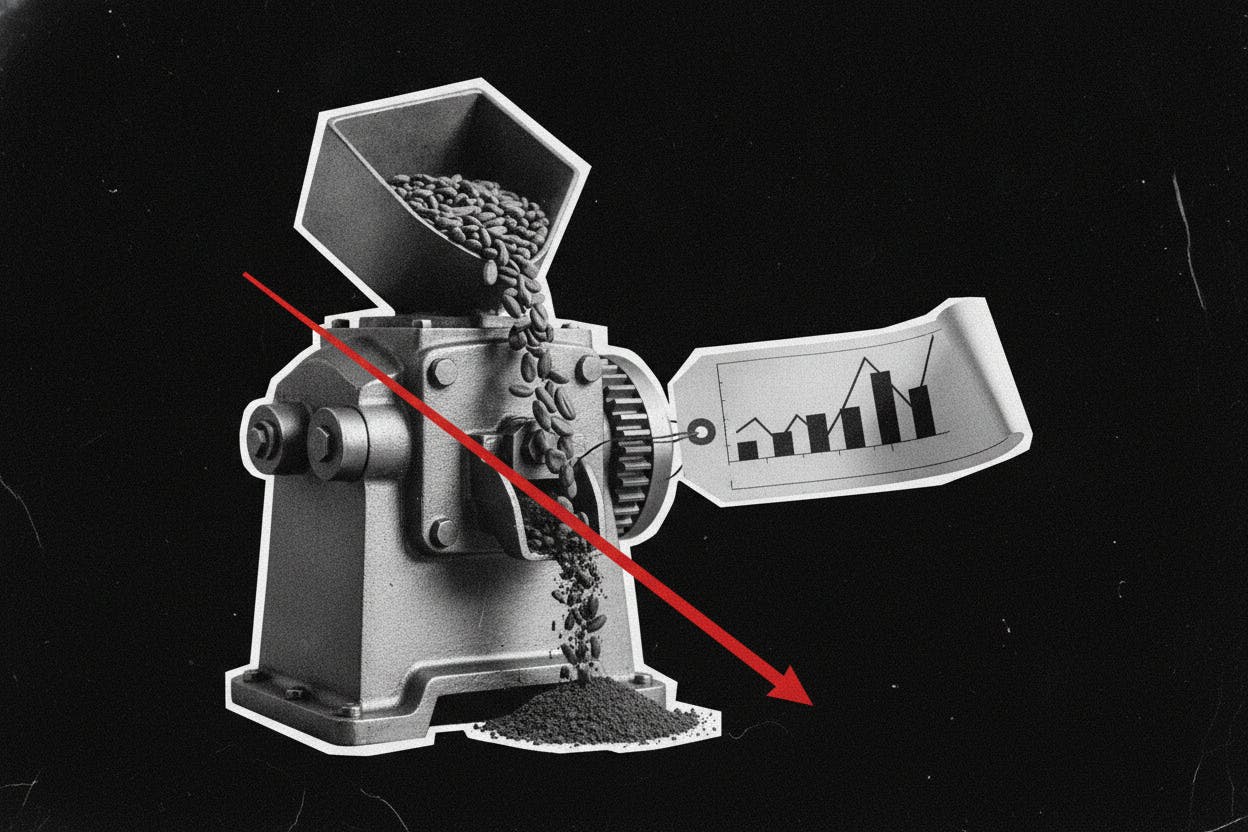
Cocoa prices took a sharp hit this week, with London futures falling 5% after a key measure of chocolate demand in Europe came in weaker than expected. The drop highlights how high prices and shifting consumer habits may be starting to cool the global appetite for cocoa.
London cocoa futures settled at about £4,145 per metric ton, and New York prices followed a similar path lower. The trigger was the European Cocoa Association's report that the region's second-quarter cocoa grind—the amount of cocoa beans processed into butter, powder, and liquor—fell 4.6% from a year earlier to 316,366 tons. That's the lowest quarterly total since 2020, a period still shadowed by pandemic-era disruptions.
What a 'Grind' Tells Us About Chocolate Demand
For everyday investors, the cocoa grind is a vital temperature check on the chocolate industry. Processors buy raw cocoa beans and grind them into the ingredients that chocolate makers use. When grind volumes drop, it often means that manufacturers are either sitting on ample inventories or expecting weaker demand ahead. In this case, the decline suggests that Europe's chocolate makers—who account for a large share of global consumption—are pulling back, possibly because high cocoa prices have made their products more expensive or because consumers are tightening their belts.
The broader backdrop matters too. Cocoa prices have been elevated for much of the past year, driven by supply concerns in West Africa, where poor harvests and disease have squeezed output. But the latest grind data raises questions about whether demand is finally starting to buckle under those higher costs.
Mixed Signals from Other Regions
Not all the news was gloomy. Asia's grind rose 25% year-on-year, pointing to robust demand in that region. North America's figures were still pending at the time of the report, leaving traders to weigh a clear European slowdown against pockets of strength elsewhere. That split makes it harder to call a definitive global trend, but Europe's heft in the cocoa market means its data carries outsized weight.
Timing also played a role in the price slide. The July ICE London cocoa contract was expiring, with open interest of 3,781 lots—equivalent to about 37,810 tons—still outstanding as of July 15th. That forced many traders to either close their positions or roll them into later months over a short window. Such expiry deadlines can concentrate trading activity in the front-month contract and the spread between it and the next month, making prices more volatile than the underlying demand news might justify on its own.
What It Means for Investors
For those watching the commodity markets, the combination of a weak European grind and a contract expiry created a perfect storm for cocoa futures. The 5% drop in London was sharper than the grind data alone might have produced, because the expiry squeezed liquidity and amplified moves. Investors should be aware that such technical factors can distort short-term price action, even if the longer-term demand story remains unclear.
The cocoa market's next focus will be on North American grind data and any updates from top producers like Ivory Coast and Ghana. If other regions also show signs of softening, it could confirm a broader demand slowdown. But if Asia's strength persists and North America holds up, the European dip may prove to be a regional blip rather than a global shift.
For now, the message is that high cocoa prices are starting to test consumer tolerance, and the industry is watching closely to see whether the trend spreads. Investors in chocolate stocks or cocoa-focused funds should keep an eye on upcoming grind reports and supply forecasts, as these will shape the market's direction in the months ahead.



