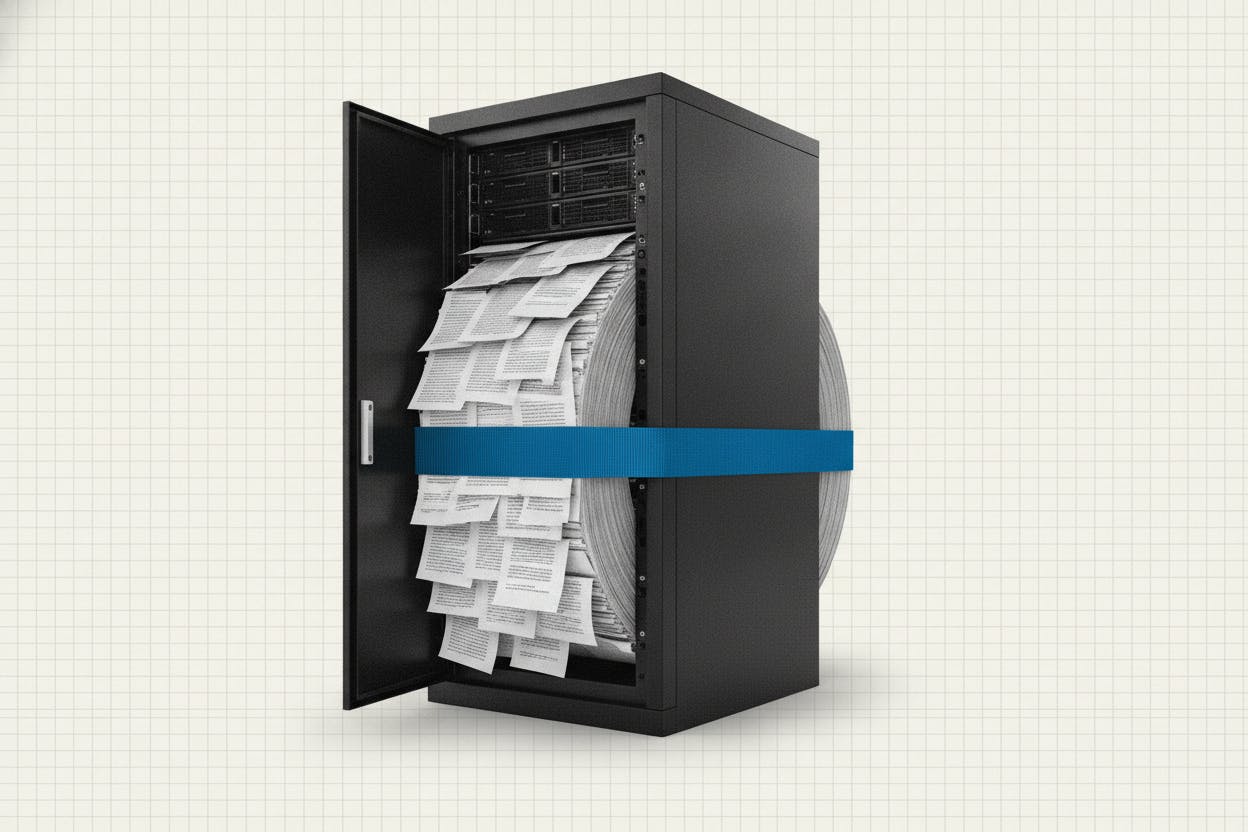
CoreWeave, a fast-growing "neocloud" provider, has landed another major Wall Street client. Hudson River Trading, a quantitative trading firm, will use CoreWeave's Nvidia-powered cloud infrastructure to train AI models. The multi-year deal adds to CoreWeave's already massive backlog of contracted revenue, which now stands at $104.2 billion.
For Hudson River Trading, the move is about speed and scale. Instead of building and maintaining its own data centers packed with expensive graphics processing units (GPUs), the firm is renting that capacity from CoreWeave. That lets it quickly access top-tier chips and high-speed networking to shuffle huge datasets with low latency—critical for a firm that relies on algorithms to trade markets.
What is a neocloud?
CoreWeave is part of a new breed of cloud providers built specifically for AI workloads. Unlike traditional clouds like Amazon Web Services or Microsoft Azure, which serve a broad range of computing needs, neoclouds focus on high-performance GPU clusters. They typically buy Nvidia chips in bulk and rent them out to companies that need massive computing power for training and running AI models.
This model has proven attractive to AI startups and increasingly to financial firms. Hedge funds and trading desks are using AI for everything from pattern recognition to natural language processing. But building the infrastructure to support that is costly and time-consuming. Renting from a neocloud lets them scale up quickly without a huge upfront investment.
CoreWeave's backlog—the total value of future contracts it has signed—gives it a clear revenue runway. The company plans to use that certainty to fund between $35 billion and $39 billion in capital expenditures (capex), mostly to buy more GPUs and expand its data centers. That spending is a bet that demand for AI computing will keep growing.
What it means for investors
For everyday investors, this deal is a signal that the AI infrastructure boom is broadening beyond tech giants. Financial firms are now willing to commit billions to rent computing power, which could support demand for Nvidia chips and for companies like CoreWeave that package them into cloud services.
CoreWeave's reliance on a large backlog is a double-edged sword. On one hand, it provides revenue visibility that justifies heavy spending. On the other, it means the company is highly dependent on a handful of large customers. If any of them cut back, the impact could be significant.
Investors should also note that CoreWeave is not yet profitable. Its heavy capex spending is a sign that it is prioritizing growth over near-term earnings. That's typical for companies in this phase, but it carries risk if the AI boom cools.
The deal also highlights a broader trend: other AI cloud providers are raising big money to expand, and major tech companies are seeing AI cloud revenue surge. Competition is intensifying, which could pressure prices over time.
What to watch next
Investors will be watching CoreWeave's next earnings report for updates on its backlog and capex plans. They'll also look for signs that the company is diversifying its customer base beyond a few big names. And they'll keep an eye on Nvidia's sales, since CoreWeave's growth depends on its ability to get chips.
For Hudson River Trading, the deal is a bet that renting AI infrastructure is more efficient than owning it. If that proves true, other financial firms may follow suit, which could be a tailwind for neoclouds. But if the economics don't work out, it could also be a cautionary tale.
In the meantime, the deal is another sign that AI is becoming a core part of Wall Street's toolkit—and that the companies providing the underlying computing power are in high demand.