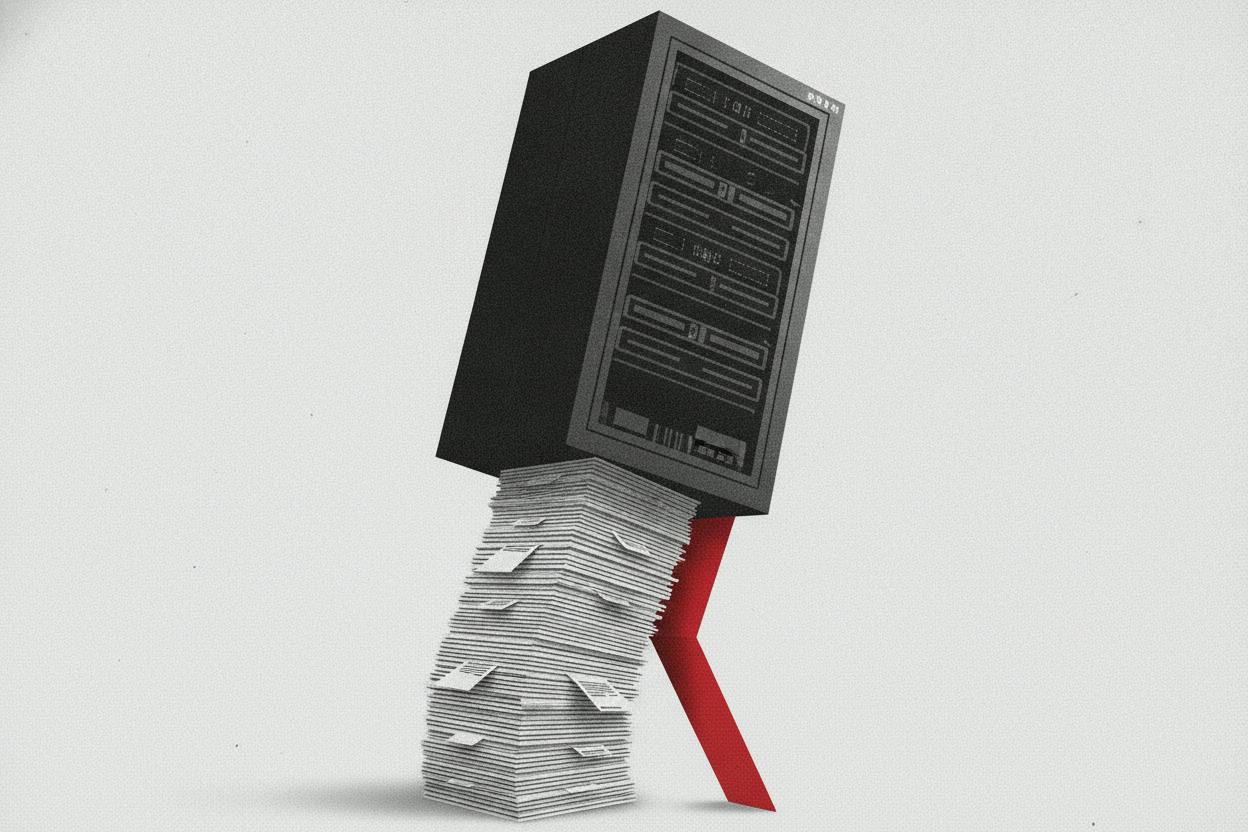
When CoreWeave reports third-quarter results on November 11th, investors may be looking past the revenue line. Bank of America Securities says the real question is how the AI cloud-infrastructure provider will pay for the next phase of its massive buildout.
The bank estimates CoreWeave still needs roughly $20 billion in fresh funding to deliver on a backlog of contracted work worth about $129 billion. That backlog, known in accounting terms as remaining performance obligations, represents signed customer commitments for AI-computing capacity that hasn't been delivered yet.
Growth story meets financing story
CoreWeave has become a key player in the race to build data centers and rent out powerful chips for artificial intelligence. The company has signed long-term deals with major tech firms that need massive computing power to train and run AI models. But fulfilling those contracts requires enormous upfront spending on data centers, servers, and networking gear.
Bank of America's note suggests that CoreWeave's expansion is now as much a financing story as a growth story. The company is spending heavily to build capacity before it can recognize revenue from those contracts. That's typical for infrastructure businesses, but the scale here is unusual.
The bank forecasts CoreWeave will report Q3 revenue of $3.66 billion and an operating margin of 6.7%. But it also expects capital expenditures of $12.5 billion in the quarter. In other words, the business is scaling fast, but the bill for that scaling is arriving even faster.
Why financing terms matter
The cost of borrowing is becoming a central concern for AI-infrastructure companies. Credit spreads—the extra interest lenders demand above safer government bonds—have been widening for AI infrastructure debt. When spreads widen, new debt comes with tougher terms, which can eat into future profits.
That's why the earnings call may focus less on revenue growth and more on borrowing costs, funding sources, and whether management leans on debt or equity. Each choice has different implications for shareholders.
More debt adds interest expense, which can compress already-thin operating margins. More equity brings in cash without fixed payments, but it dilutes existing shareholders' claim on the company's future earnings and backlog.
For a company spending heavily to fulfill contracts, the cost of capital can matter as much as demand. If financing gets more expensive, the bar for turning data-center spending into profit rises.
What it means for investors
CoreWeave's $20 billion financing need could easily outweigh its $3.66 billion quarterly revenue estimate. That gap highlights the capital-intensive nature of the AI-computing boom.
November 11th could move the stock on financing details, not just the top-line print. Investors will listen for how management plans to bridge the funding gap, whether through debt markets, equity offerings, or other sources.
CoreWeave is also a bellwether for the broader rented-AI-compute market. Its financing terms can influence how investors value AI-infrastructure risk across the sector. If CoreWeave struggles to raise capital cheaply, that could signal trouble for other companies with similar business models.
For everyday investors, the takeaway is that fast-growing companies sometimes face a trade-off between growth and financial health. A company can be winning contracts and still face pressure if it can't fund the work profitably. Watching how CoreWeave manages its balance sheet may be just as important as watching its revenue growth.
The company's results will also be watched in the context of broader AI spending. Data center demand is reshaping capital plans across industries, and CoreWeave's experience could offer clues about the sustainability of that trend.
Investors should also keep an eye on how CoreWeave's financing choices compare with other capital-intensive businesses. Companies often turn to bond markets to fund big projects, but the terms depend on market conditions.
Ultimately, CoreWeave's Q3 report is about more than one quarter's numbers. It's a test of whether the AI-infrastructure boom can be funded at a cost that makes sense for shareholders. The answer will likely shape how the market values not just CoreWeave, but the entire sector.