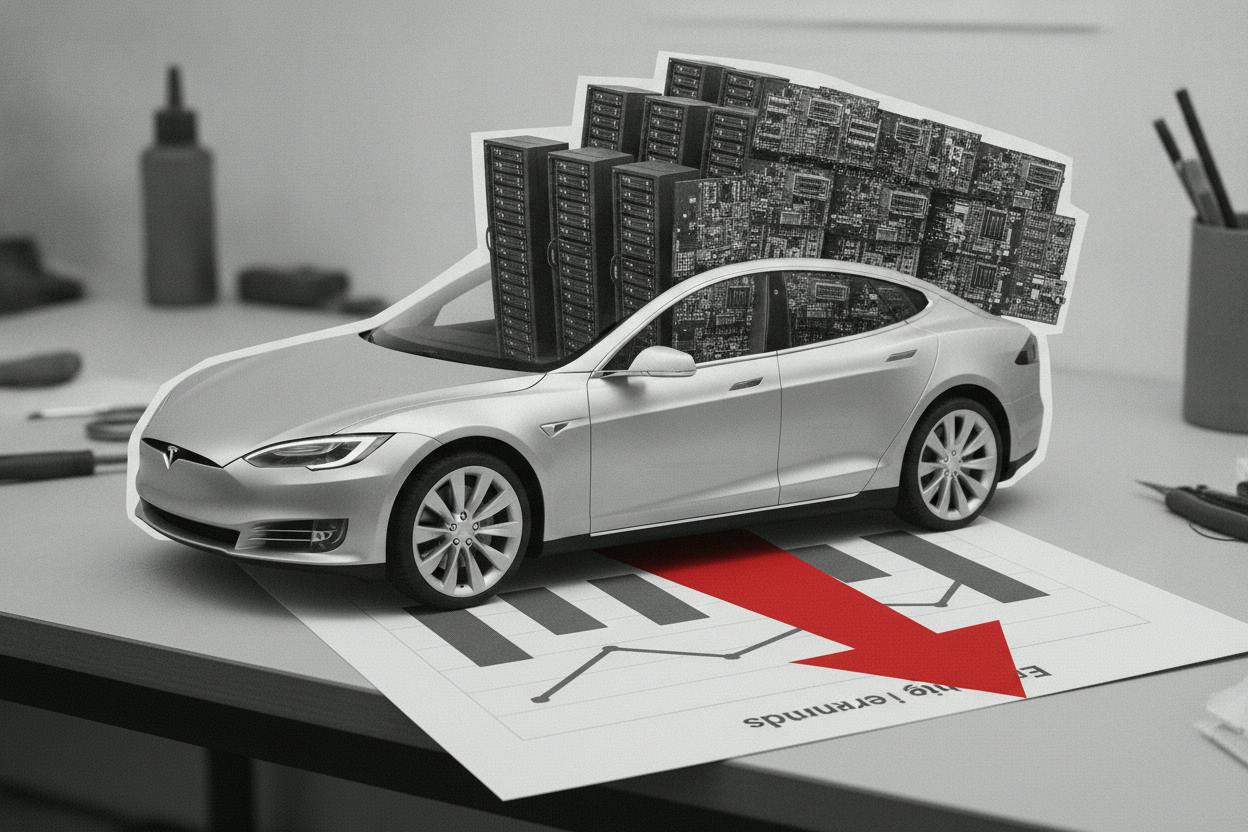
Tesla's latest earnings report showed a thinner operating margin than Wall Street had hoped, and analysts at Truist Securities say a surge in AI-related spending is a key reason. The electric-vehicle maker posted a 6.1% operating margin for the September quarter, well below consensus estimates, as operating expenses climbed 39% year-over-year to $4.78 billion.
That jump in spending is not a one-off. Management has said much of the increase is going toward research and development, plus pre-production costs for three big projects: the Optimus humanoid robot, the Megapack 3 energy storage unit, and the Semi truck. Chief Financial Officer Vaibhav Taneja has warned that these costs will keep rising until the products are commercialized, meaning the pressure on margins could persist for several more quarters.
Why the spending mix matters
Investors often focus on capital expenditures (capex) as a measure of how much a company is investing in future growth. But Tesla's latest move is more nuanced. The company lowered its 2026 capex outlook to about $20 billion, down from a previous forecast of more than $25 billion. At first glance, that might look like a pullback in investment. But Truist's read is different: Tesla is trimming some buildout spending that would normally sit on the balance sheet and instead taking more of the AI and ramp-up bill through the income statement as operating expenses.
In plain English, capex is typically spread out over time through depreciation, so it hits profits gradually over several years. Operating expenses, on the other hand, reduce profit immediately in the quarter they are incurred. So even if the headline capex number is smaller, shifting more spending into opex can weigh on near-term margins and the earnings figures investors use to value the stock.
This is a common pattern for companies in heavy investment phases, but it can be jarring for shareholders who are used to seeing Tesla's industry-leading margins. The company's operating margin has already been under pressure from price cuts and increased competition in the EV market, and now the AI buildout is adding another layer of cost.
What it means for investors
For markets, the key takeaway is that Tesla's $4.78 billion operating expense line is hitting profits faster than a $20 billion capex plan would. When spending runs through operating expenses, it shows up immediately in quarterly results, which can make Tesla's operating margin and earnings look weaker during an AI-heavy buildout. That can keep pressure on how the market values the company off forward earnings until those Optimus, Megapack 3, and Semi programs shift from "ramp costs" to revenue-generating products.
The broader market has been jittery about AI spending across the tech sector. Nasdaq futures slid recently as investors worried that heavy AI investments might not pay off quickly enough. Tesla is not alone in this, but its situation is unique because it is spending on hardware products with long development timelines, not just data centers and chips.
Truist's analysis suggests that Tesla's margin compression is not a sign of weakening demand, but rather a deliberate choice to accelerate spending on future products. The question is how long investors will be patient. Reports of delays in Optimus production have already raised concerns about the timeline for these projects to start generating revenue.
Looking ahead
Investors will be watching Tesla's quarterly reports closely to see if operating expenses continue to climb and whether the company can eventually convert its AI and product ramp spending into sales. The lower capex guidance might offer some comfort on the balance sheet, but the immediate hit to margins is what matters for near-term earnings.
For everyday investors, the key is to understand that Tesla's profit picture is being shaped by a deliberate trade-off: spend now on ambitious projects, accept thinner margins, and hope the payoff comes later. That strategy can work, but it also means the stock's valuation, which is often based on forward earnings, could stay under pressure until those products start contributing to the bottom line.
As global markets have shown, AI spending doubts can ripple beyond individual companies. Tesla's situation is a reminder that even the most innovative companies face a trade-off between investing for the future and delivering profits today.