Costco Wholesale has been a quiet presence in many portfolios for the past year. Its shares have essentially gone nowhere, which might frustrate investors looking for excitement. But for those who own the stock, the lack of drama is precisely the appeal. The company's latest results, reported in May, were reassuring without being thrilling: traffic grew, members renewed, and membership income kept climbing. It's the same old story—and with Costco, that's exactly the story you want.
The business model: sell cheap, charge for access
Costco's investment case has never been complicated. The company sells goods at prices close to what it pays for them, making only a thin margin on merchandise. Instead, it earns the bulk of its profit from membership fees. Shoppers pay an annual fee—currently starting at $60 in the US for a basic Gold Star membership—for the right to shop in its warehouses. Those fees are cheap to collect, require little ongoing effort, and contribute a huge share of operating profit. In fact, membership income typically accounts for the majority of Costco's operating earnings.
This model creates a virtuous cycle. Low prices attract members, and members pay fees that fund the company's ability to keep prices low. It's a flywheel that has turned consistently for decades, through economic booms and busts. Even when inflation squeezes household budgets, Costco tends to benefit because shoppers look for value. The company's ability to keep prices competitive is a key reason why traffic keeps growing.
Why the stock has stalled
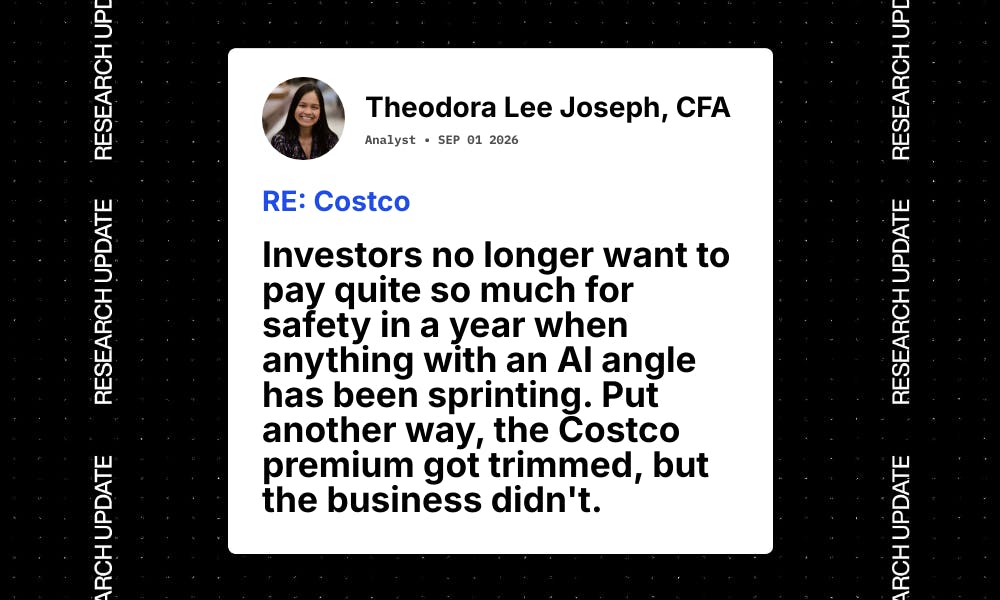
So why have the shares gone nowhere for a year? The market often prices in future growth well in advance. After a strong run, Costco's valuation had become rich, and investors may have decided that the good news was already reflected in the price. When a stock trades at a premium, it doesn't take much bad news—or even just a lack of better news—to keep it flat.
But a flat stock price doesn't mean the business is stagnant. The underlying metrics—membership renewals, foot traffic, and fee income—continue to move in the right direction. For long-term investors, that's what matters. The stock price eventually follows earnings, and earnings are being driven by a steadily growing base of loyal members.
What it means for investors
For everyday investors, Costco offers a lesson in the value of boring. In a market often obsessed with the next hot tech stock or a sudden commodity spike—like the recent jump in oil prices on US-Iran tensions—a steady compounder can be easy to overlook. But boring businesses that generate predictable cash flow and have a clear competitive moat are often the ones that build wealth over time.
Costco's membership model is a classic example of a recurring revenue stream. Unlike a retailer that depends on each individual sale, Costco gets paid before you even walk in the door. That upfront fee provides a cushion against economic downturns and gives management a stable base to plan from. It's a structure that many other companies envy, and it's why the stock has historically been a reliable holding.
Of course, no stock is without risk. Costco faces competition from other warehouse clubs and online retailers, and its premium valuation means the stock could be vulnerable if growth slows. But for investors who are comfortable with a buy-and-hold approach, the current flatness might be an opportunity to accumulate shares at a more reasonable price.
The bigger picture: boring can be beautiful
In a market where AI is reshaping entire industries and rising bond yields are rattling global equities, it's easy to get distracted by the noise. But Costco's story is a reminder that steady, unglamorous businesses can be the backbone of a diversified portfolio. The company doesn't need to hit home runs every quarter; it just needs to keep doing what it's been doing—growing membership, keeping prices low, and collecting fees.
For the Finimize Portfolio, which holds Costco, the decision to keep the stock is a vote for patience. The shares may not have moved in a year, but the business has quietly gotten stronger. That's the kind of boring that can be beautiful for investors who are willing to wait.