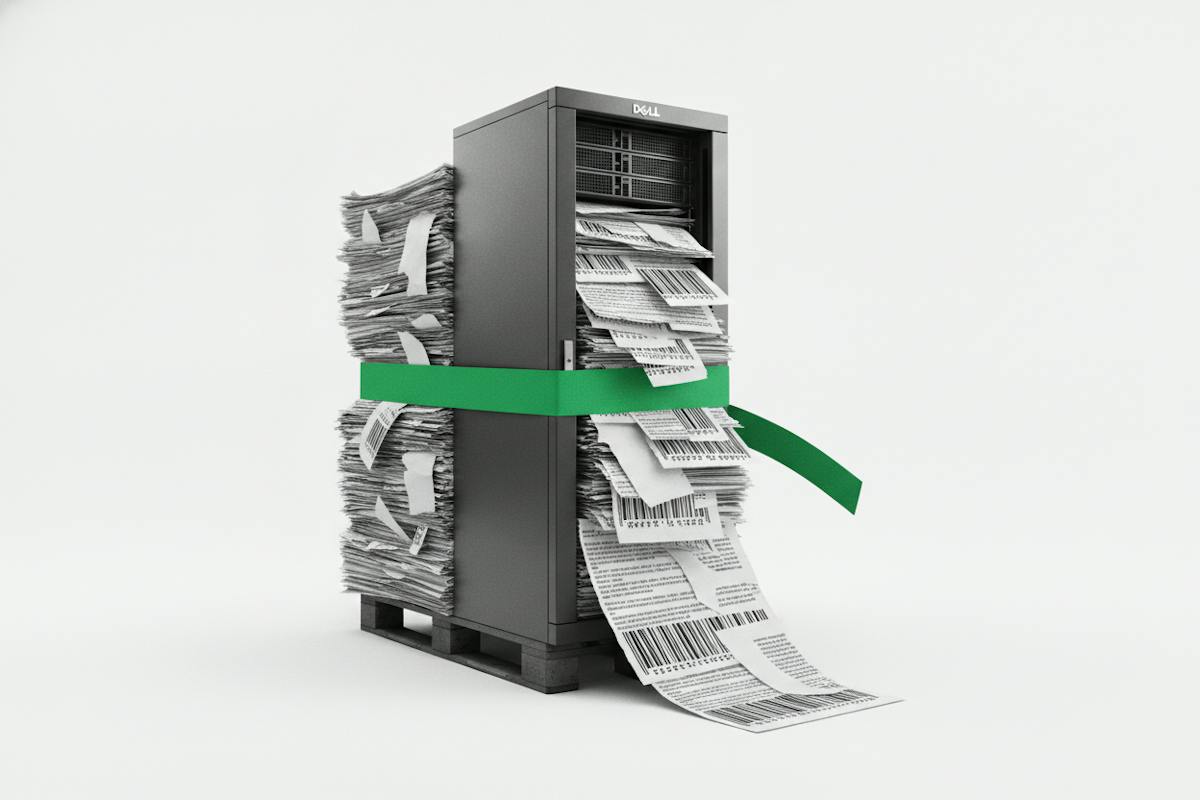
Dell Technologies continues to ride the artificial intelligence wave, reporting that its AI server orders have climbed to $60.2 billion and its total backlog has swelled to $132.3 billion. The figures, disclosed alongside the company's fiscal third-quarter results, underscore the relentless demand for the powerful computers that train and run AI models.
Yet even with those eye-popping numbers, not everyone is convinced the party will last. UBS, a global investment bank, wrote Friday that the update does not settle the core debate: whether AI infrastructure spending could peak sooner than many expect.
What Dell reported
Dell said late Tuesday that fiscal third-quarter revenue more than doubled year over year to $54.94 billion, a surge driven largely by its AI-optimized server business. The company also raised its outlook for AI server revenue, signaling that demand remains robust for the machines that are central to the AI boom.
AI-optimized servers are specialized computers designed to handle the massive calculations required to train and run AI models. They are typically packed with high-end graphics processing units (GPUs) from companies like Nvidia, and they are in high demand as businesses across industries race to adopt AI.
Dell's backlog figure of $132.3 billion represents the total value of orders the company has received but not yet shipped. That backlog includes not just AI servers but also other products, though AI is clearly the growth engine.
The doubt from UBS
Despite the strong numbers, UBS analysts said investors remain wary. The concern is that the AI infrastructure cycle—the wave of spending on data centers, servers, and chips—could peak sooner than the current order books suggest. If that happens, Dell's growth could slow sharply once the backlog is worked through.
This is a familiar worry in the tech sector. Historically, big technology spending cycles have often been followed by periods of digestion, when companies pause to absorb what they've bought before making new purchases. The AI boom has been so rapid that some investors are asking whether it can sustain its current pace.
UBS's note highlights that even a company with Dell's order visibility cannot fully dispel those fears. The market is looking beyond the current quarter and trying to gauge how long the AI infrastructure buildout will last.
What it means for investors
For everyday investors, Dell's results are a window into the health of the AI trade, which has been a major driver of stock market gains over the past couple of years. When companies like Dell report strong AI demand, it tends to lift sentiment across the tech sector. But when analysts raise doubts about the cycle's longevity, it can inject volatility.
Dell's stock has been a beneficiary of the AI boom, but it has also been sensitive to any signs that demand is cooling. The company's ability to convert its massive backlog into revenue will be a key metric to watch in coming quarters.
Investors should also keep an eye on the broader AI supply chain. Nvidia, the dominant maker of AI chips, has been a bellwether for the sector. Recent reports of Nvidia halting shipments to some markets and rating watch actions have added to the uncertainty. These developments can ripple through companies like Dell that depend on Nvidia's chips.
Another factor to consider is the broader M&A environment. As companies invest in AI, they often look to acquire or partner with smaller players. The global M&A market remains active, though pricing gaps can slow deals. This could affect how quickly AI infrastructure expands.
The bigger picture
The AI infrastructure boom is not just about Dell. It reflects a massive wave of capital spending by cloud providers, enterprises, and governments. Data centers are being built at a record pace, and the demand for AI chips and servers shows no immediate signs of slowing.
However, history suggests that such booms can be cyclical. If the economy weakens or if companies find that AI investments are not delivering the expected returns, spending could be pulled back. That is the risk UBS is highlighting.
For now, Dell's numbers are strong, and the company's raised outlook suggests management sees continued demand. But the market's skepticism is a reminder that even the most impressive growth stories can face questions about sustainability.
As always, investors should focus on the long-term fundamentals rather than short-term noise. The AI revolution is likely to reshape many industries, but the path may not be a straight line.