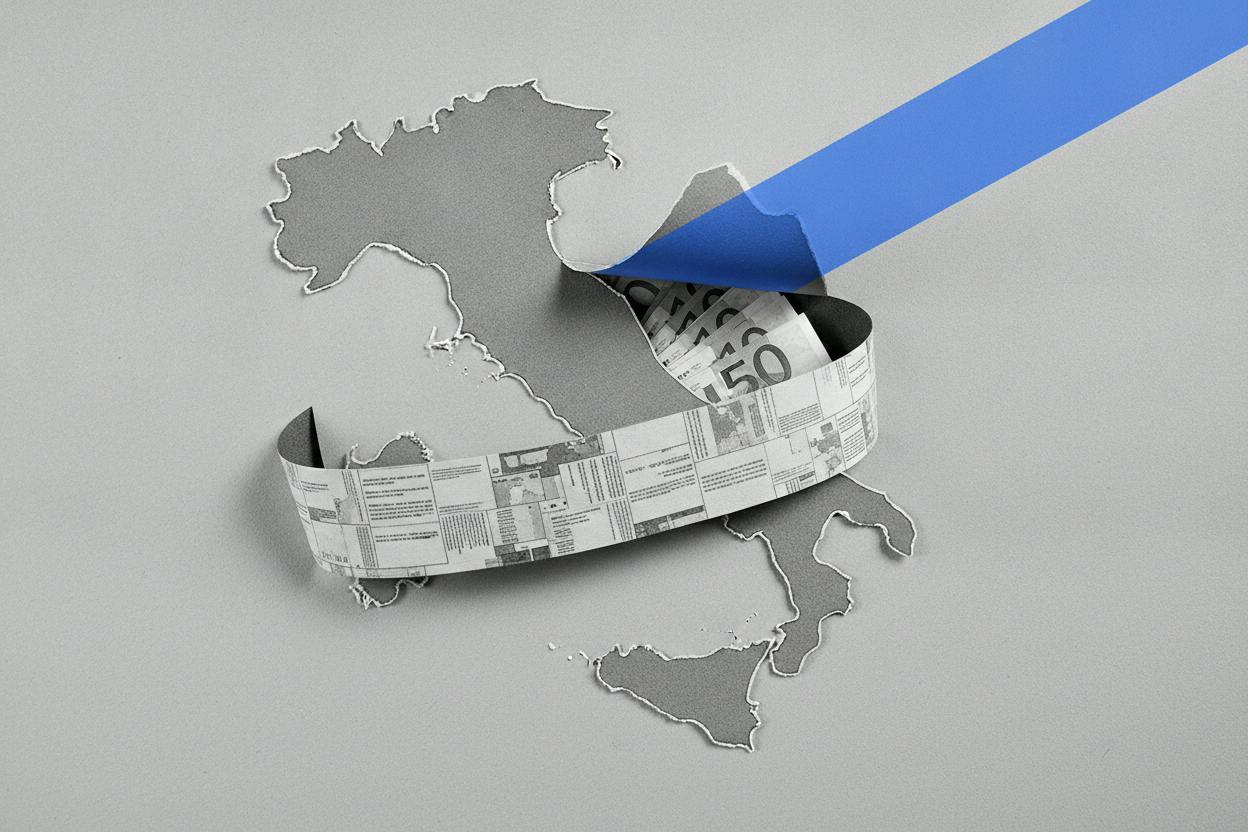
Deutsche Bank's Italian unit allegedly concealed up to €800 million in mortgage losses for more than a decade, according to a Financial Times report citing leaked documents. The report says staff used derivatives and accounting adjustments to mask the shortfalls, a practice that may have helped the unit hit profit targets but also raises serious questions about internal controls and transparency.
What the report alleges
The Financial Times says an internal investigation, code-named Project Aetos, found that employees relied on a hidden reserve nicknamed the “tesoretto” (Italian for “little treasure”) to smooth performance and meet profit goals. The report also says the unit built roughly €900 million in derivatives positions that had no clear business purpose, which were used to offset or delay the recognition of losses.
According to the paper, Deutsche Bank told the European Central Bank (ECB) in 2020 that it had “crystallized” €522 million of losses, with potential losses rising to €779 million. The leaked documents suggest the total could be as high as €800 million.
Context: Deutsche Bank's regulatory history
Deutsche Bank is one of Europe's largest lenders and is directly supervised by the ECB, which oversees the biggest banks in the eurozone. The bank has spent years trying to shed a reputation for compliance failures and legal troubles, including past fines for money-laundering controls and sanctions violations. This latest report, if accurate, could reignite concerns about the bank's internal governance and its ability to detect misconduct in its own ranks.
The news also comes as Deutsche Bank has been in the spotlight for other reasons. Earlier this year, the bank's shares dropped after it flagged €7 billion in costs related to control improvements, and it has faced scrutiny over its operations in Colombia. These issues, taken together, paint a picture of a bank still wrestling with legacy problems even as it tries to project stability.
What it means for investors
For everyday investors, the key takeaway is that hidden losses, if confirmed, could affect Deutsche Bank's financial health and its stock price. Banks are required to hold capital against potential losses, and undisclosed losses mean that capital may have been overstated. If the losses are now being recognized, the bank may need to set aside more money, which could eat into profits.
Investors should also watch how regulators respond. The ECB has been increasing its focus on risk management and internal controls at major banks. A finding that Deutsche Bank's Italy unit deliberately masked losses could lead to fines, stricter oversight, or even demands for management changes. That could create uncertainty for the bank's shares, which have already been volatile.
It's worth noting that the report is based on leaked documents and an internal investigation, and Deutsche Bank has not yet publicly confirmed the details. The bank may dispute the findings or argue that the losses were properly disclosed in later periods. Still, the allegations highlight the importance of transparency in banking and the risks that can lurk in complex financial instruments like derivatives.
Broader market context
The news comes at a time when European banks are generally facing headwinds from higher interest rates and economic uncertainty. While higher rates can boost lending margins, they also raise the risk of loan defaults, especially in areas like mortgages. If Deutsche Bank's Italian mortgage book had hidden losses, it could signal broader stress in the European property market.
Investors in European financial stocks have already been cautious. For example, financial stocks slipped recently even as retail sales beat forecasts, showing how sensitive the sector is to macro data. And Deutsche Bank's shares fell sharply in a recent market rout, underscoring its vulnerability to external shocks.
What to watch next
Investors will be looking for official statements from Deutsche Bank and the ECB. The bank may release its own findings from Project Aetos, or regulators could announce an investigation. Any news about fines, capital requirements, or management changes would be significant.
Also worth watching is how this affects Deutsche Bank's relationship with the ECB. The bank has been under the ECB's supervision since 2014, and any breach of trust could lead to more intrusive oversight. That could mean higher compliance costs, which the bank has already said will be substantial.
For now, the story is a reminder that even large, regulated banks can have hidden problems. Investors should always consider the quality of a bank's earnings and the strength of its internal controls, not just its headline profits.