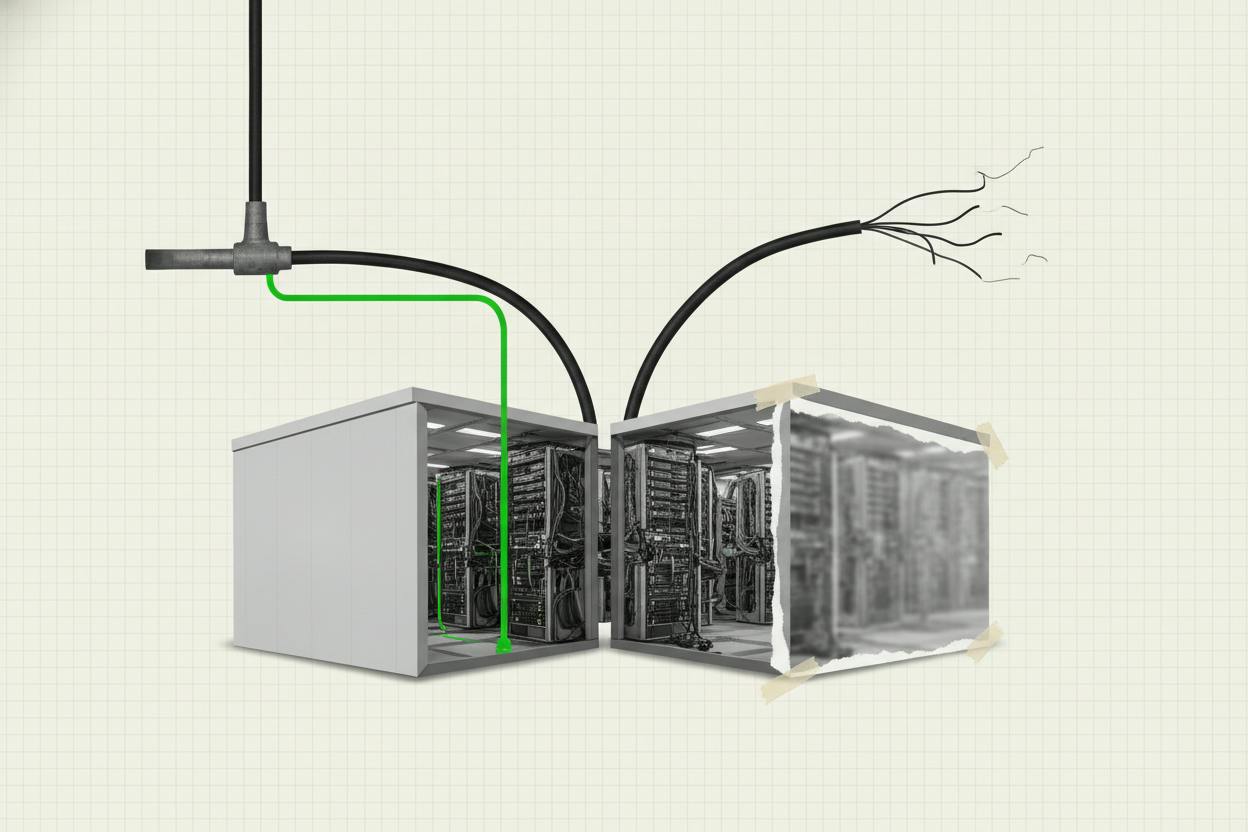
Canadian data center and crypto infrastructure firm DMG Blockchain Solutions is pivoting its British Columbia facility toward artificial intelligence. In an update on Monday, the company said it is converting its Christina Lake data center into an AI colocation site, where it will host third-party AI servers. The move is part of a broader industry trend as crypto miners look for new revenue streams amid shifting market conditions.
What is DMG announcing?
DMG said it is moving ahead with plans to host AI servers at Christina Lake. The near-term goal is to sign a definitive agreement tied to a 50 megawatt (MW) letter of intent, with tenant servers targeted to be operating by year-end. The company also reported that it now has 60 MW of non-firm power and 15 MW of firm power available at the site, giving it more capacity to support the expansion.
For context, a megawatt is a measure of electricity capacity. A 50 MW data center can power roughly 10,000 to 15,000 homes, though AI servers are energy-intensive and may use more power per square foot than typical residential use. The distinction between firm and non-firm power matters: firm power is guaranteed under contract, while non-firm power is interruptible and may be curtailed during peak demand. Having both types gives DMG flexibility, but non-firm power is less reliable for continuous AI workloads.
Why is a crypto miner moving into AI?
DMG is not alone. Many cryptocurrency miners, which operate large data centers to secure blockchain networks, have been repositioning their facilities to host AI and high-performance computing workloads. The reasons are straightforward: AI companies need massive computing power, and miners already have the infrastructure—power, cooling, and secure facilities—that AI workloads require. This trend has accelerated as crypto mining profitability has become more volatile and as demand for AI compute has surged.
The shift also reflects a broader boom in data center construction. Tech giants and startups alike are racing to build capacity for AI, and that has driven up demand for power and real estate. In some regions, data center developers are competing for electricity and land, which has led to longer lead times and higher costs. Companies like DMG that already own and operate facilities may have an advantage in speed and cost.
What does this mean for investors?
For everyday investors, this news is a reminder that the AI boom is not just about chipmakers and software companies. It also benefits the companies that provide the physical infrastructure—data centers, power, and cooling. DMG's move is a bet that it can capture some of that demand by converting its existing facility.
However, there are risks. The 50 MW deal is still only a letter of intent, not a final contract. Letters of intent are non-binding and can fall through. The company also faces competition from larger, better-capitalized data center operators. And the reliance on non-firm power could be a limitation, as AI workloads typically require reliable, always-on electricity.
Investors should also consider the broader context. The data center buildout has been a major theme in markets, with companies like ByteDance securing massive loans to fund AI expansion, and SK Group weighing a tenfold expansion of its AI data center capacity. These moves highlight the scale of investment flowing into AI infrastructure, but they also mean intense competition for power and customers.
What to watch next
Investors will be watching for a few key milestones. First, whether DMG converts the 50 MW letter of intent into a definitive agreement, and on what terms. Second, whether the tenant servers actually come online by year-end, as targeted. Third, how the company manages its power mix—specifically, whether it can secure more firm power to support reliable AI operations.
DMG's stock is likely to react to these developments, but as always, it's important to look beyond the headlines. The company's ability to execute on its plans, and the financial terms of any deal, will matter more than the announcement itself.
For those interested in the broader trend, the Z.AI's $5 billion raise and Starbucks' unrelated cost-cutting are reminders that capital is flowing into AI infrastructure from many directions, while other sectors are trimming spending. The data center buildout is a multi-year story, and companies like DMG are trying to position themselves to benefit.
The bottom line
DMG Blockchain Solutions is making a strategic pivot from crypto mining to AI colocation, a move that could open new revenue streams but also carries execution risk. The company has lined up power and is pursuing a 50 MW customer deal, but nothing is guaranteed until contracts are signed. For investors, this is a story about the AI infrastructure boom and the opportunities—and challenges—it creates for smaller players.