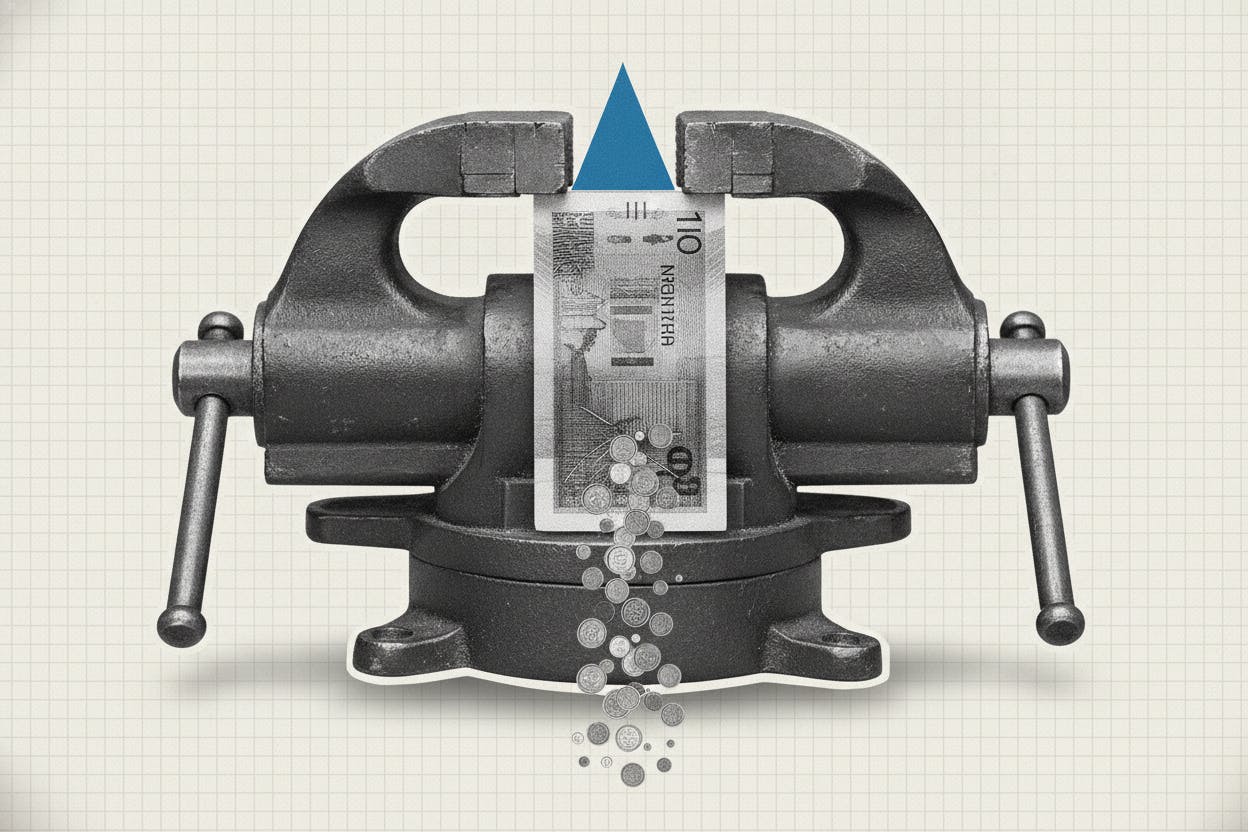
Norway's largest bank, DNB, reported a slight miss in second-quarter profit on Thursday, as the money it earns from lending versus what it pays savers continued to tighten. The results underscore the competitive pressures facing Norwegian banks, even as the central bank considers further rate hikes.
What the Numbers Show
DNB said net profit fell 6% from a year earlier to 9.82 billion Norwegian crowns ($920 million), just below analysts' consensus estimate of 9.85 billion crowns. The bigger disappointment came from net interest income — the difference between what a bank earns on loans and what it pays out on deposits — which came in at 15.13 billion crowns versus the 15.40 billion crowns analysts had expected.
That gap matters because it suggests that competition among Norwegian banks is forcing DNB to offer higher rates on deposits while accepting tighter margins on loans. In a rising-rate environment, banks typically benefit from widening spreads, but DNB's results show that dynamic is being constrained.
Why Net Interest Income Matters
Net interest income is a core measure of a bank's profitability, especially in a period of rising interest rates. When central banks raise rates, banks can often increase loan rates faster than they raise deposit rates, boosting their margins. However, DNB's miss indicates that this so-called "pass-through" is not working as smoothly as hoped.
"The net interest income miss is a clear sign that competition is eating into margins," said one analyst. "Banks are having to pay up for deposits to retain customers, and that's squeezing the benefit of higher rates."
This trend is not unique to Norway. Banks across Europe and the US have faced similar pressures as deposit competition heats up. For example, JPMorgan and Wells Fargo both reported strong net interest income in their recent quarters, but smaller banks have struggled more. In Germany, a recent HDE survey highlighted how rising costs are squeezing retailers, a parallel dynamic in a different sector.
What Could Change the Mood
Despite the profit miss, two factors could shift sentiment around DNB. First, Norges Bank, Norway's central bank, has signaled it may raise interest rates further to combat inflation. A rate hike would typically boost banks' net interest income, though the extent depends on competitive dynamics.
Second, DNB announced a new share buyback program of up to 1% of its outstanding shares. Buybacks reduce the number of shares in circulation, which can boost earnings per share and support the stock price. For investors, this signals management's confidence in the bank's capital position and future cash flows.
What It Means for Investors
For everyday investors, DNB's results offer a window into the broader banking environment in Norway and beyond. The profit miss is modest, but the net interest income shortfall is a reminder that higher interest rates don't automatically translate into higher bank profits. Competition for deposits, loan demand, and regulatory costs all play a role.
The potential rate hike from Norges Bank is a double-edged sword: it could improve margins, but it also risks slowing the economy and increasing loan defaults. Investors should watch for the central bank's next decision and any commentary on the health of the Norwegian economy.
The buyback program is a positive signal, but it's small in scale. A 1% buyback is unlikely to dramatically change the stock's trajectory on its own, but combined with a rate hike, it could help restore confidence.
Overall, DNB remains a well-capitalized, dominant player in Norway. The profit dip is a speed bump, not a crisis. But it highlights the challenges facing banks in a competitive, high-rate environment.