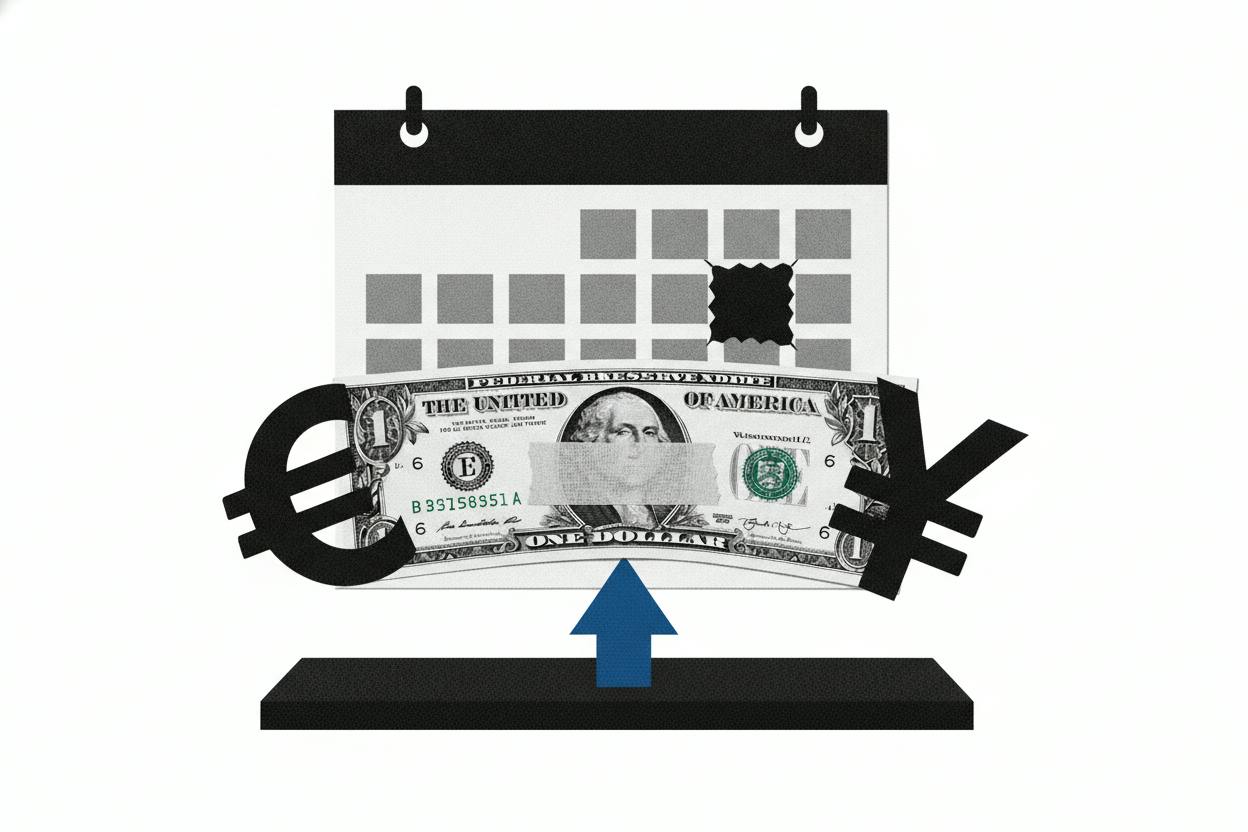
The US dollar began the trading week on a mixed note, edging higher against the euro and the Japanese yen while giving up ground against the British pound and the Canadian dollar. The moves come as Federal Reserve officials enter their customary quiet period ahead of the Federal Open Market Committee (FOMC) meeting scheduled for October 27-28.
During the quiet period, Fed policymakers refrain from public speeches and interviews, a practice designed to avoid signaling policy intentions in the days leading up to a rate decision. For currency markets, this means the usual stream of commentary that helps traders gauge the central bank's thinking goes silent, leaving economic data as the primary guide.
What the quiet period means for the dollar
When the Fed is in its quiet period, investors lose a valuable source of guidance. Normally, remarks from Fed officials—whether hawkish or dovish—can move the dollar by shifting expectations for interest rates. Without that input, currency traders tend to focus more heavily on upcoming economic releases, such as inflation reports, employment figures, and retail sales data.
This week, the dollar's mixed performance reflects the absence of clear directional signals. The greenback's strength against the euro and yen suggests some continued demand for US assets, while its weakness against the pound and Canadian dollar points to regional factors supporting those currencies. For instance, the Canadian dollar often benefits from firm oil prices, and the pound has been sensitive to UK economic data and Brexit-related news.
Investors are now looking ahead to the FOMC's October meeting, where the central bank is widely expected to hold interest rates steady. However, the bigger question is what the Fed signals about future moves. With inflation still above the central bank's 2% target, any hints about the pace of rate cuts—or the possibility of further hikes—will be closely watched.
Why the dollar's moves matter for everyday investors
Currency fluctuations can have a direct impact on the portfolios of ordinary investors, even those who never trade foreign exchange. A stronger dollar tends to make US exports more expensive for foreign buyers, which can weigh on the earnings of multinational companies. Conversely, a weaker dollar can boost the competitiveness of US goods abroad and increase the value of overseas profits when converted back into dollars.
For investors holding international stocks or mutual funds, a weaker dollar can enhance returns, as foreign assets become worth more in dollar terms. On the other hand, a stronger dollar can drag on those same investments. The dollar's direction also influences commodity prices, particularly gold and oil, which are typically priced in dollars. When the dollar rises, commodities often become more expensive for holders of other currencies, potentially dampening demand.
In recent weeks, the dollar has shown some signs of softening, with gold edging up as the dollar posted its first weekly drop in five weeks. That trend, if it continues, could provide some relief to emerging market currencies and assets that have been under pressure from a strong dollar.
What to watch next
With the Fed quiet, the market's attention will turn to a busy calendar of US economic data. Reports on inflation, consumer spending, and the labor market will be scrutinized for clues about the Fed's next move. A stronger-than-expected inflation reading could reinforce expectations that the Fed will keep rates higher for longer, potentially supporting the dollar. Conversely, weak data could fuel bets on rate cuts, putting downward pressure on the greenback.
Currency markets are also keeping an eye on developments abroad. For example, the Australian dollar climbed to $0.6978 as China data lifted sentiment, while the euro slid. Such cross-currency moves can influence the dollar's overall trajectory.
Additionally, the dollar's performance has broader implications for global markets. A softer dollar often supports commodity prices, as seen in copper steadying near $14,384 as the dollar slipped and supply tightened. For investors in resource-linked sectors, these dynamics are worth monitoring.
The bottom line
The dollar's mixed start to the week is a reminder that currency markets are driven by a complex web of factors, including central bank policy, economic data, and global risk sentiment. With the Fed in its quiet period, the near-term direction of the dollar will likely hinge on the upcoming data releases. For everyday investors, understanding these dynamics can help in assessing the potential impact on their portfolios, from international holdings to commodity-linked investments.
As always, it's important to remember that currency movements are just one piece of the investment puzzle. A well-diversified portfolio can help mitigate the effects of currency swings, and staying informed about the broader economic backdrop is key to making sound investment decisions.



