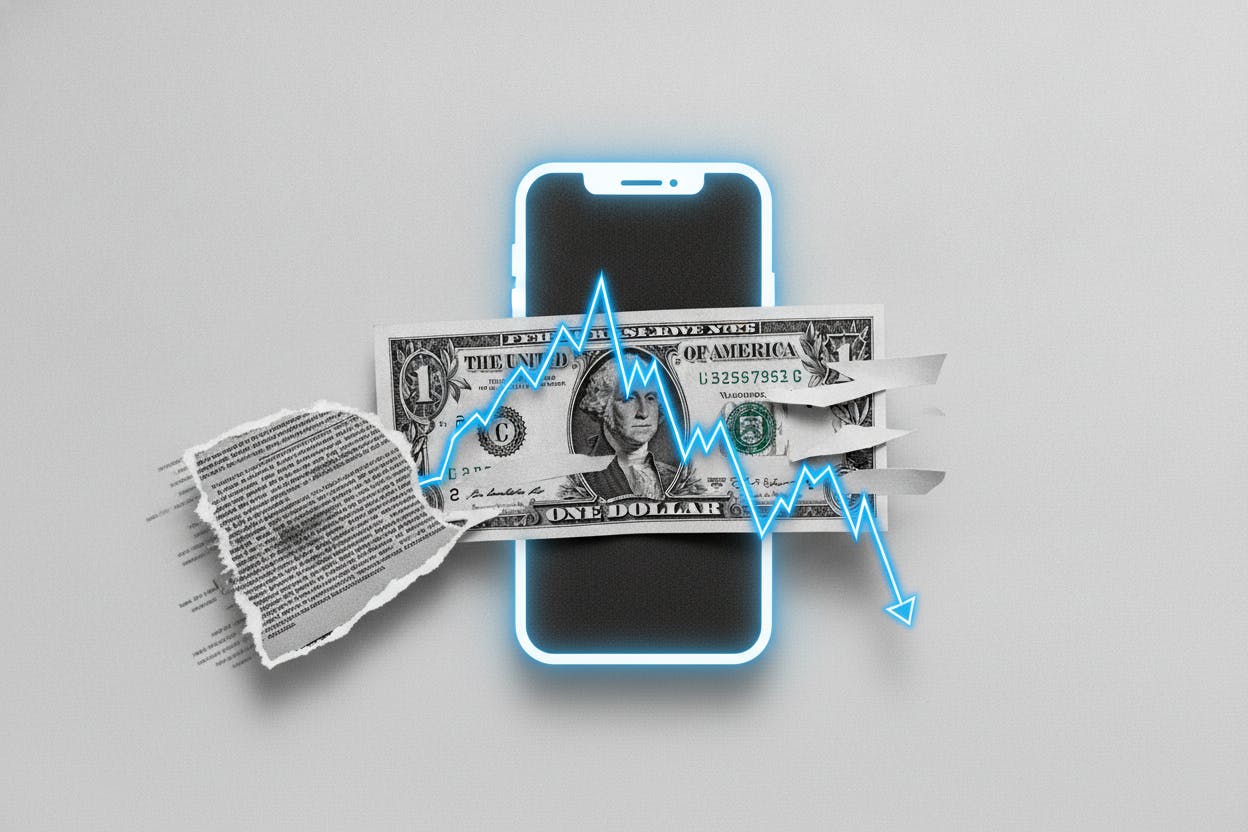
For decades, the US dollar has been the world's ultimate safe haven — the asset investors flock to when uncertainty strikes. But a new analysis from Deutsche Bank suggests that dynamic may be changing. The bank argues that the dollar is increasingly behaving like a risk asset, with its value now more closely tied to the fortunes of the US stock market, particularly the tech sector.
From Bonds to Stocks: A Shift in Foreign Capital
Deutsche Bank's core observation is straightforward: foreign investors are redirecting their money away from US government bonds — traditionally the bedrock of global finance — and into US equities. This shift matters because the United States relies on foreign capital to finance its large external deficits, the gap between what the country imports and what it exports.
Historically, foreign central banks and private investors bought US Treasuries in large quantities, providing a stable, predictable source of funding. That stability helped keep the dollar relatively steady. But as the allure of American tech stocks — especially those tied to artificial intelligence — has grown, the composition of that foreign money has changed.
“The US is leaning more on foreign money flowing into its stock market, not its Treasury market, to help fund big external deficits,” the bank noted. That shift ties the dollar's risk profile more closely to AI-driven market swings.
What This Means for the Dollar's Behavior
If the dollar is now more correlated with the stock market, it could become more volatile. When tech stocks rally on AI optimism, the dollar might strengthen as foreign money pours into US equities. But when those stocks sell off — as they did during recent AI-related jitters — the dollar could weaken, amplifying the market's moves.
This is a notable departure from the traditional pattern, where the dollar often rose during times of global stress as investors sought safety in US government debt. Now, the currency may be more exposed to the same boom-and-bust cycles that drive the tech sector.
Deutsche Bank's analysis comes at a time when the AI trade has already shown its capacity for dramatic swings. The recent rally in chip stocks, for instance, has drawn comparisons to the dot-com era, with some investors questioning whether valuations have become stretched. Meanwhile, the broader market has been navigating a complex backdrop of interest rate expectations and geopolitical uncertainty.
Implications for Everyday Investors
For ordinary investors, this shift has several practical consequences. First, it means that the dollar's value may no longer provide the same cushion during market downturns. If the dollar weakens when stocks fall, it could amplify losses for US-based investors holding foreign assets, since a weaker dollar makes those foreign holdings worth less in dollar terms.
Second, it could affect the returns on international investments. A dollar that moves in tandem with US stocks reduces the diversification benefit of holding foreign equities or bonds. Historically, a falling stock market often led to a rising dollar, which helped offset some losses for globally diversified portfolios. That hedge may be eroding.
Third, the shift could influence how the Federal Reserve responds to market stress. If the dollar is more tightly linked to risk appetite, a sharp sell-off in stocks could trigger a dollar decline, potentially complicating the Fed's efforts to manage inflation or support the economy.
Broader Market Context
Deutsche Bank's warning fits into a broader narrative about the changing nature of global capital flows. The rise of AI has created a powerful new magnet for investment, drawing money into US tech stocks from around the world. At the same time, the relative attractiveness of US Treasuries has been diminished by the Federal Reserve's interest rate policy and the shifting outlook for inflation.
Other analysts have noted similar trends. For example, the recent strength in Asian tech stocks, as seen in the rally of Korean chipmakers, reflects the global appetite for AI-related investments. Meanwhile, the dollar's recent weakness has been a factor in gold's rebound, as a softer greenback makes the precious metal cheaper for foreign buyers.
The key question for investors is whether this shift is temporary or structural. If AI continues to drive productivity gains and corporate profits, the dollar may remain tied to tech stock performance for years to come. But if the AI trade falters, the dollar could face a period of sustained weakness as foreign capital retreats.
What to Watch Next
Investors should keep an eye on capital flow data from the US Treasury and the Federal Reserve to track whether the shift from bonds to stocks is accelerating. Also watch for comments from central banks, particularly in Asia and the Middle East, which are major holders of US Treasuries. Any signs that they are diversifying away from dollar-denominated assets could amplify the trend Deutsche Bank has identified.
In the meantime, the dollar's new personality — as a risk asset rather than a safe haven — is a development that every investor should understand, even if it doesn't change their immediate strategy. The days of the dollar as a steady, predictable anchor may be giving way to a more volatile, stock-like currency.



