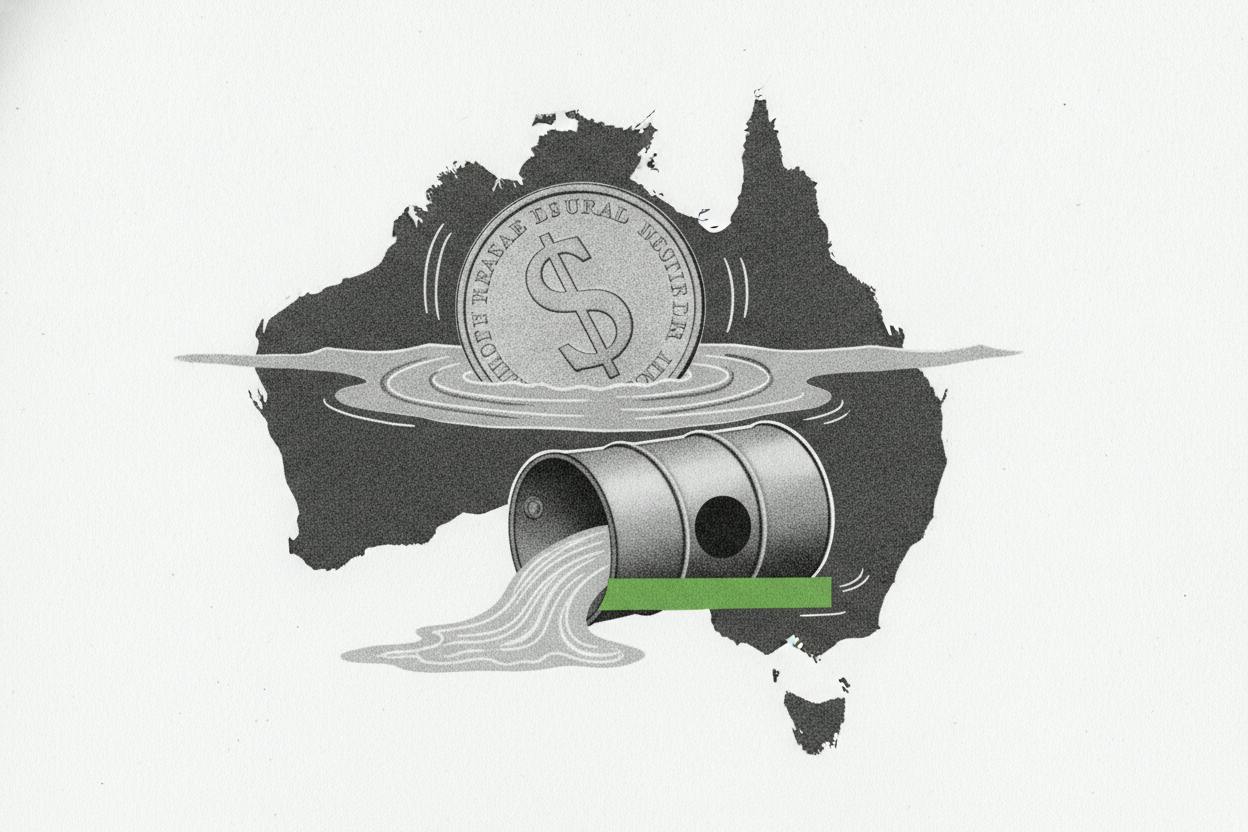
The US dollar traded in a tight range during Asian hours on Tuesday, as a bounce in oil prices offset lingering safe-haven demand. Brent crude steadied after a sharp drop in the previous session, following US military strikes on Iran's Qeshm Island. The strikes raised concerns about potential supply disruptions, but traders appeared to see limited near-term fallout, keeping energy prices from spiking further.
Meanwhile, the Australian dollar slipped after the Reserve Bank of Australia (RBA) raised its cash rate by 0.25 percentage points to 4.85%. The move was widely expected, but the narrow 6-3 vote in favor of the hike signaled that the central bank's tightening cycle may be close to a pause. That shift in expectations weighed on the Aussie, as currency markets tend to react more to where rates are headed than to the headline decision itself.
Geopolitics and oil: a delicate balance
The US strikes on Iran's Qeshm Island, a strategic location in the Strait of Hormuz, initially raised fears of supply disruptions in the world's most important oil shipping lane. However, Brent crude stabilized after a sharp drop the prior session, suggesting that traders saw the event as unlikely to significantly reduce near-term supply. The market's calm reaction reflects a broader pattern: geopolitical tensions often cause brief price spikes, but unless actual supply is disrupted, prices tend to revert to fundamentals.
For the US dollar, the interplay between oil and geopolitics creates a familiar tug-of-war. On one hand, safe-haven demand tends to support the dollar during times of uncertainty. On the other, lower energy costs can cool inflation over time, which could reduce the need for the Federal Reserve to keep interest rates high. That dynamic leaves the dollar index little changed, as investors weigh these opposing forces.
Oil prices have been volatile recently, with sharp drops in crude often lifting the dollar against commodity-linked currencies. But the current stabilization suggests the market is waiting for more clarity on both the geopolitical situation and the global supply outlook.
The RBA's split decision and the Aussie
The RBA's decision to raise rates to 4.85% was in line with market expectations, but the 6-3 vote was not. A close vote typically signals that policymakers are divided on the need for further tightening, which can be a precursor to a pause. Investors quickly adjusted their expectations for the peak of Australia's rate cycle and the likely timing of any future cuts.
This shift in expectations is what moved the Australian dollar. When a central bank delivers a hike that markets had already priced in, the surprise usually lies in the details. A narrow vote suggests less conviction to keep raising rates, which shows up in short-term interest-rate markets, such as overnight index swaps, where traders price the policy path. If those prices imply a lower peak rate or earlier cuts, the expected interest-rate gap between Australia and the US narrows. That typically weighs on AUD/USD, which is why the currency fell even though the RBA did raise rates.
The RBA's situation is not unique. Many central banks around the world are grappling with how much more tightening is needed to bring inflation back to target without tipping their economies into recession. As the split vote signals a possible pause, investors will be watching for any further clues from the RBA's commentary or future data releases.
What it means for investors
For everyday investors, the key takeaway is that central bank decisions are about more than just the headline rate move. The details—such as the vote split, the accompanying statement, and the projected path of rates—can have a bigger impact on markets than the decision itself. This is especially true in currency markets, where expectations about future interest rates drive exchange rates.
For those with exposure to Australian assets or the Australian dollar, the RBA's split vote is a reminder that the era of aggressive rate hikes may be ending. That could have implications for Australian bank stocks, which often benefit from higher interest rates, as well as for anyone holding AUD-denominated investments.
For US investors, the dollar's steadiness suggests that the market is still trying to figure out the Fed's next move. With oil prices stabilizing, inflation pressures may ease, but the geopolitical situation remains uncertain. As past episodes have shown, oil price swings can quickly shift the dollar's direction, especially when they coincide with major economic data or central bank meetings.
Looking ahead, investors will be watching for further developments in the Middle East, as well as any signs of how the RBA's internal debate evolves. The calm in some currency markets could prove misleading if new shocks emerge. For now, the dollar's steadiness and the Aussie's slip reflect a market that is cautiously balancing geopolitical risks against the prospect of easier monetary policy.