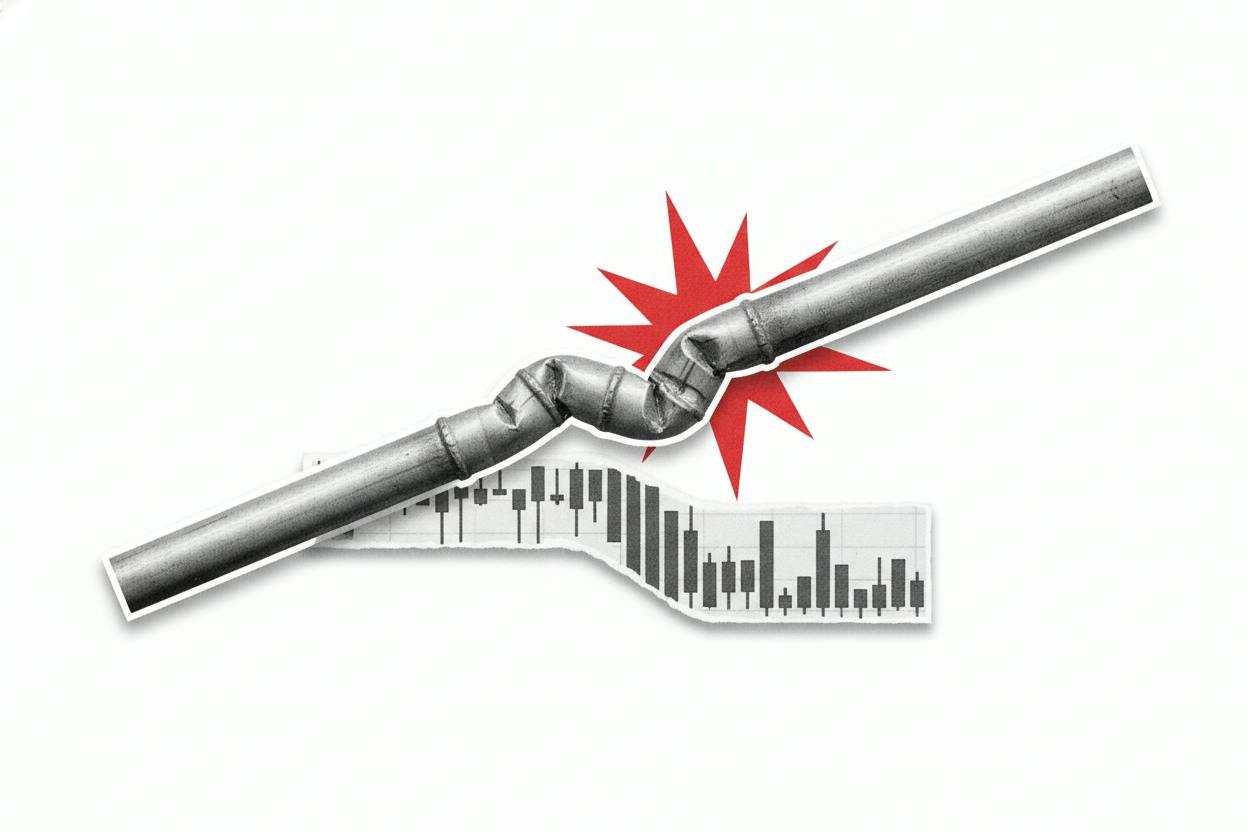
Equinix, the world's largest data center landlord, saw its shares fall 3% on Thursday after the company issued a third-quarter revenue outlook that came in just shy of Wall Street expectations. The dip came despite Equinix raising its longer-term growth targets, highlighting how near-term guidance can sometimes overshadow a more optimistic future.
What happened
Equinix reported second-quarter revenue of $2.63 billion, comfortably above the $2.58 billion analysts had expected. But when the company guided for third-quarter revenue in the range of $2.53 billion to $2.58 billion, the midpoint fell just under the same $2.58 billion consensus figure. That slight miss was enough to spook investors, even as Equinix raised its 2026 forecast and laid out plans for faster growth through 2029.
The company, which operates as a real estate investment trust (REIT), rents out secure space and power for companies' servers and also sells connectivity services that let customers plug into cloud providers and each other. Its business has boomed in recent years as demand for data center capacity has surged, driven by the rise of cloud computing and artificial intelligence.
Why the market reacted negatively
Public markets tend to focus on the next few quarters, and a revenue forecast that falls even slightly short can trigger a sell-off. For Equinix, the third-quarter guidance suggests a temporary slowdown in leasing activity or a shift in the timing of customer deployments. Investors may also be concerned about rising competition from other data center providers and the potential for oversupply in some markets.
However, the company's long-term outlook remains strong. Equinix raised its 2026 revenue target and outlined a plan for faster growth through 2029, signaling confidence in the sustained demand for data center space. The company benefits from a global network of facilities that are interconnected, making it a critical hub for cloud providers, enterprises, and financial firms.
What it means for investors
For everyday investors, the Equinix story illustrates a common tension in the stock market: near-term guidance versus long-term potential. A company can have a bright future but still see its stock drop if the next quarter's numbers don't meet expectations. That doesn't necessarily mean the business is in trouble—it could simply reflect timing issues or temporary factors.
Equinix is a REIT, which means it must distribute most of its income to shareholders as dividends. That makes it a popular choice for income-focused investors. The company's ability to raise its long-term targets suggests that the underlying demand for data centers remains robust, driven by trends like cloud migration, AI workloads, and the growth of the internet of things.
Investors should also consider the broader context. The data center industry has seen explosive growth, but it's also capital-intensive and subject to competition from tech giants like Amazon, Microsoft, and Google, which are building their own facilities. Equinix differentiates itself by offering a neutral platform where customers can connect to multiple cloud providers and networks, a model that has proven sticky.
For those looking at the stock, the key question is whether the near-term weakness is a buying opportunity or a sign of deeper issues. The company's raised long-term targets suggest management sees a clear path to growth, but investors should watch for signs of slowing demand or rising costs in the coming quarters.
Broader market context
The data center sector has been a bright spot in the broader market, with companies like Equinix benefiting from the AI boom. However, the sector is not immune to economic headwinds. Rising interest rates can increase borrowing costs for REITs, and a slowdown in corporate spending could reduce demand for data center services.
Equinix's performance also ties into trends in cloud computing and enterprise IT spending. Companies like Microsoft have reported strong growth in their cloud businesses, which bodes well for data center demand. Similarly, Carrier Global has cited data center demand as a driver of its own growth, underscoring the sector's importance.
On the other hand, some companies have faced challenges. Carvana recently saw its stock slide after a disappointing profit forecast, showing that even in a strong market, individual companies can stumble. For Equinix, the key will be executing on its long-term strategy while navigating short-term headwinds.
What to watch next
Investors will be watching Equinix's third-quarter results closely to see if the company can beat its own guidance. They'll also look for updates on leasing activity, pricing power, and capital expenditure plans. The company's ability to maintain its dividend growth will be important for income investors.
In the meantime, the stock's dip could present an opportunity for those with a long-term horizon. But as always, it's important to do your own research and consider how Equinix fits into your overall portfolio. The data center story is far from over, but the path forward may have some bumps along the way.