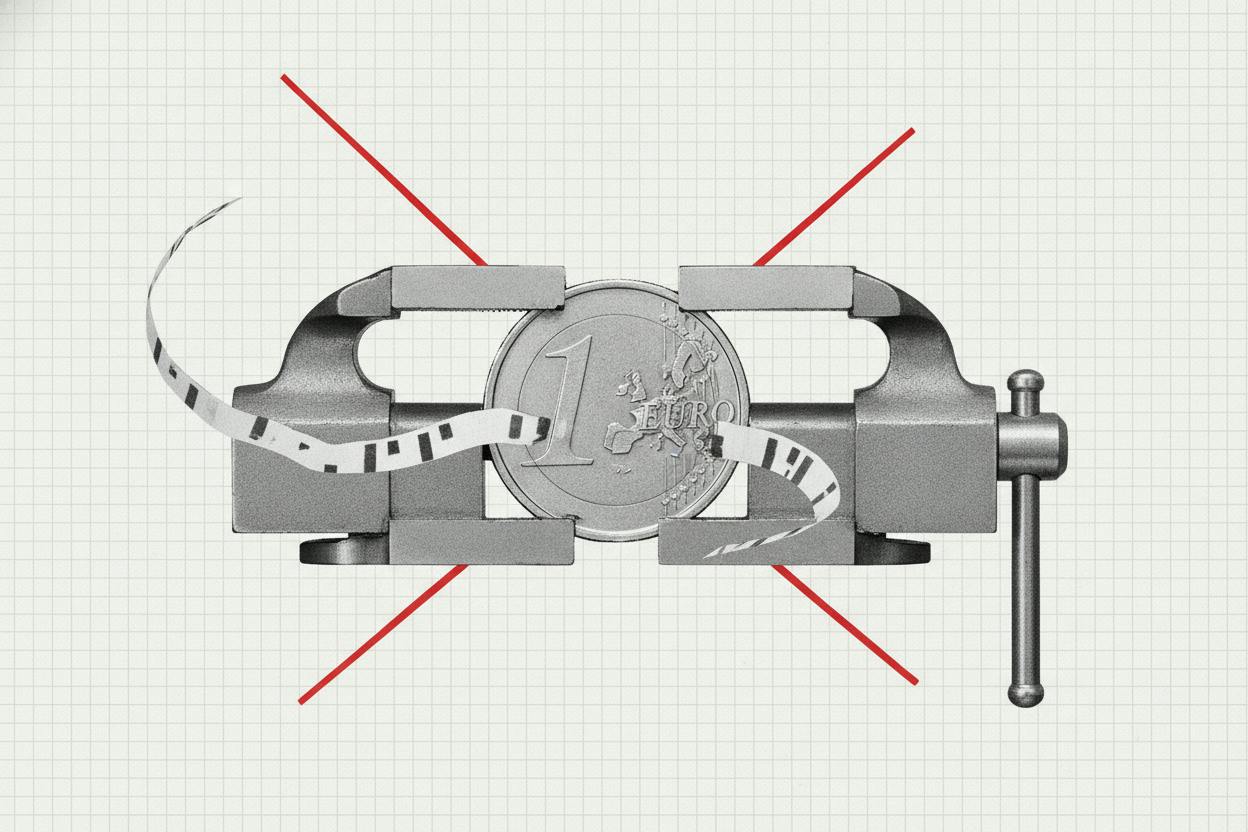
The euro is trading near $1.1145 against the dollar as investors position for a widely expected interest-rate hold from the European Central Bank (ECB) on Thursday. But the real action is elsewhere: French government bonds are under pressure, and fresh data from U.S. regulators show speculators have built a massive $18.89 billion net short position against the single currency.
When a central bank decision is fully priced in, markets tend to focus on the risks around it. For Europe, the key risk is whether France's debt troubles start to spill over to other highly indebted euro-area countries, pushing their borrowing costs higher relative to Germany's and tightening financial conditions across the bloc.
Why French bonds matter
France is the euro area's second-largest economy, and its government bonds are a benchmark for European debt. When investors worry about a country's fiscal health, they demand higher yields to compensate for the added risk. That gap between French and German bond yields — often called the spread — is a closely watched gauge of stress in the euro zone.
If French yields rise sharply, it can make borrowing more expensive for the French government and, by extension, for other countries with high debt levels. That could tighten financial conditions across the region, slowing growth and complicating the ECB's policy path. It's a dynamic that has echoes of the euro-area debt crisis of the early 2010s, though the current situation is far less severe.
For now, the euro has held its ground, but the underlying anxiety is clear. Traders are not just watching the ECB's rate decision — they're watching whether France's problems stay contained.
A record short position
According to data from the U.S. Commodity Futures Trading Commission (CFTC), speculators are holding the largest net short position in the euro in a decade. That means many traders are betting the currency will fall further. The euro has already slid about 5.1% against the dollar this year, and the one-sided positioning reflects that bearish sentiment.
But crowded trades can be dangerous. When everyone is on the same side, there's little room for new sellers, and any piece of good news can force a rapid reversal. This is known as a 'short squeeze' — short sellers rush to buy back the currency to limit losses, pushing the price up faster than the underlying news would normally justify.
With an $18.89 billion net short position outstanding, the euro is set up for asymmetric reactions. Bad news may not push the currency down much because many traders are already positioned for it. But a small upside surprise — say, a less dovish-than-expected tone from ECB President Christine Lagarde — could trigger stop-losses and a wave of buying.
What to watch at the ECB meeting
Thursday's ECB meeting is less about the rate decision itself and more about Lagarde's tone. If she sounds even slightly less worried about the economic outlook than traders expect, it could be enough to spark short covering and a bigger move in the euro than the economic data alone would suggest.
That's why currencies can look jumpy around central-bank events even without fresh data. In this case, a euro bounce wouldn't automatically signal improving European fundamentals; it could simply reflect positioning being unwound as traders reduce risk.
Investors should also keep an eye on the broader central-bank landscape. The Federal Reserve is also expected to hold rates steady, and traders are watching for signals about a possible December move. That dynamic is similar to what's happening in Europe, where the focus is on the path ahead rather than the immediate decision.
What it means for investors
For everyday investors, the key takeaway is that currency moves can be driven as much by positioning as by economic fundamentals. A sharp euro rally after the ECB meeting might not mean Europe's economy is suddenly stronger — it could just be traders unwinding bets.
That's important for anyone with international exposure, whether through foreign stocks, bonds, or a holiday budget. A stronger euro makes European assets more expensive for dollar-based investors, while a weaker euro can boost the returns of U.S. investors holding European stocks.
The French bond situation is also worth watching. If spreads widen further, it could signal broader stress in the euro zone, which might affect European equities and bond funds. On the other hand, if the ECB's tone reassures markets, the euro could see a short-term bounce even if the longer-term trend remains bearish.
As always, the best approach is to stay diversified and avoid making big bets based on a single central-bank meeting. The euro's fate will be shaped by a mix of economic data, political developments, and market positioning — and Thursday's decision is just one piece of that puzzle.