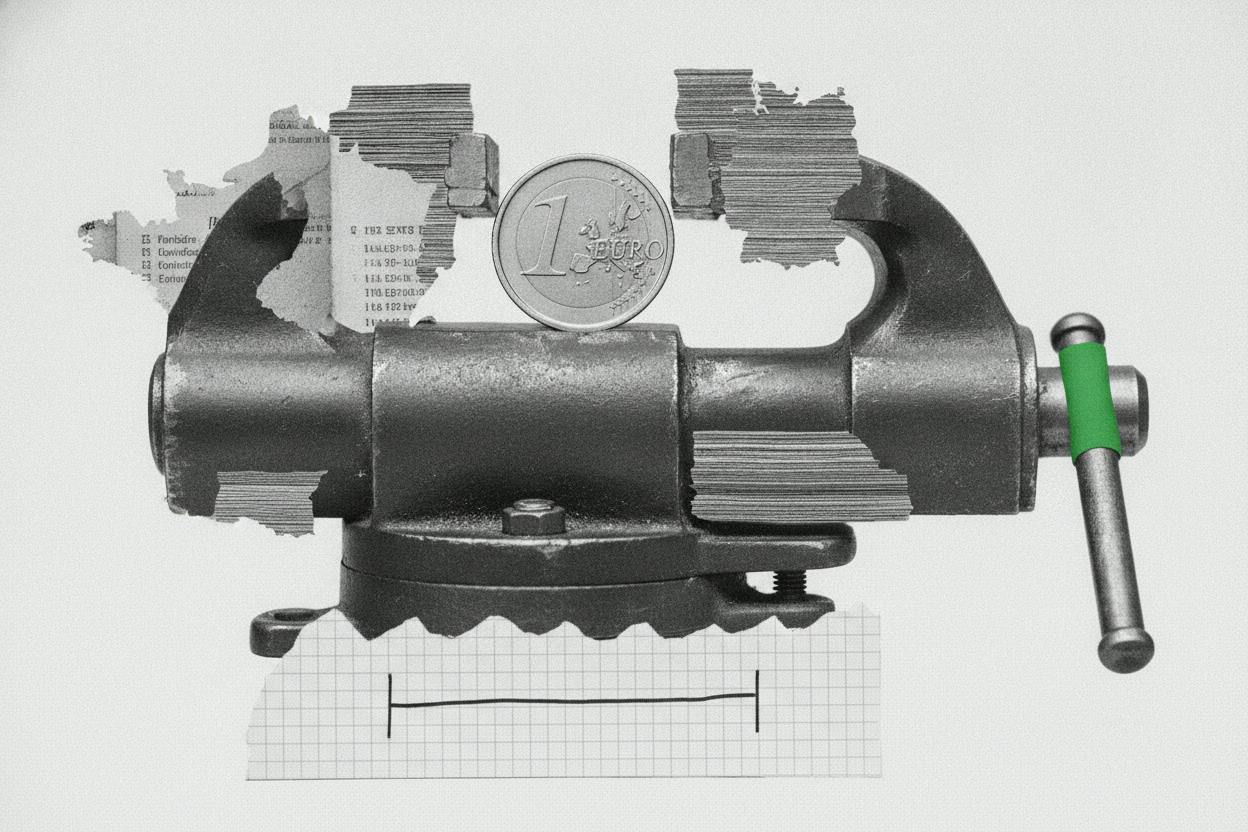
The euro held its ground on Tuesday as investors braced for a week packed with central-bank decisions, finding support from falling oil prices and a steadier outlook for French government debt. The single currency had wobbled in recent sessions after a selloff in French bonds, but it found some footing when Moody's left France's credit rating unchanged and French bonds recovered, according to Reuters.
That pullback in French debt helped narrow the yield gap between French government bonds (known as OATs) and German Bunds – a common stress gauge for the eurozone – to about 160 basis points. Last week, that spread had touched 176 basis points, its widest since 2011. A wider spread typically signals growing concern about a country's fiscal health relative to its peers, so the recent narrowing suggests some of that anxiety is easing.
Why France's bonds matter
France is the eurozone's second-largest economy, and its government bond market is one of the most closely watched in the region. When investors demand a higher yield on French debt compared with Germany's, it often reflects worries about political instability, fiscal deficits, or the overall health of the eurozone economy. The recent spike in the OAT-Bund spread had raised eyebrows, as it pointed to renewed stress in the bloc's core.
The fact that Moody's kept France's credit rating unchanged – rather than downgrading it – came as a relief to markets. A downgrade could have pushed French borrowing costs higher and added to the pressure on the euro. Instead, the steadier outlook helped calm nerves and allowed the currency to stabilize.
Falling oil prices also played a role. Crude oil is a major import for the eurozone, so cheaper energy tends to reduce inflationary pressure and can support consumer spending. It also eases the burden on the European Central Bank, which has been fighting to bring inflation back to its 2% target. Lower oil prices make that job a little easier, which in turn can support the euro by reducing the need for aggressive rate hikes.
The ECB decision ahead
All eyes are now on the European Central Bank's policy meeting on Thursday. While the ECB is widely expected to hold interest rates steady, investors will be listening closely for any signals about the future path of policy. The central bank has been navigating a tricky balance: inflation has cooled from its peaks, but it remains above target, and the economy has shown signs of weakness.
A more dovish tone – suggesting rate cuts could come sooner than expected – might weigh on the euro, while a hawkish stance could give it a boost. The recent moves in oil and French bonds have given the ECB a bit more breathing room, but the decision will still be closely scrutinized.
This week is also busy for other central banks. The Federal Reserve and the Bank of Japan are both scheduled to meet, and their decisions could ripple through global markets. For a look at how Asia is navigating this pivotal week, see our piece on Asia's central bank week.
What it means for investors
For everyday investors, the euro's stability is a good sign, but it's not a reason to get complacent. Currency moves can affect the value of international investments, the cost of imported goods, and the returns on foreign assets. A steadier euro means less volatility for those with exposure to European stocks or bonds, but it doesn't eliminate risk.
The narrowing of the French-German bond spread is particularly relevant for bond investors. It suggests that the market's fear about French fiscal stability is receding, at least for now. However, the spread is still historically wide, and any negative surprise – such as a downgrade from another agency or a political shock – could send it soaring again.
For those holding European assets, the ECB's tone on Thursday will be key. If the central bank signals that rate cuts are on the horizon, it could boost European stocks and bonds, but it might also weaken the euro. That's a trade-off investors should watch.
Oil prices are another factor to keep an eye on. Cheaper oil is generally positive for the eurozone economy, but it can also reflect weaker global demand, which is not necessarily good news. As we've noted in our coverage of Saudi Arabia's trade surplus, falling oil sales can have wide-ranging effects.
In the meantime, the euro's resilience is a reminder that markets can quickly shift focus. The calm today could be disrupted tomorrow by a surprise in the ECB's statement or a fresh bout of political uncertainty. For investors, staying diversified and keeping an eye on central bank signals remains the best approach.