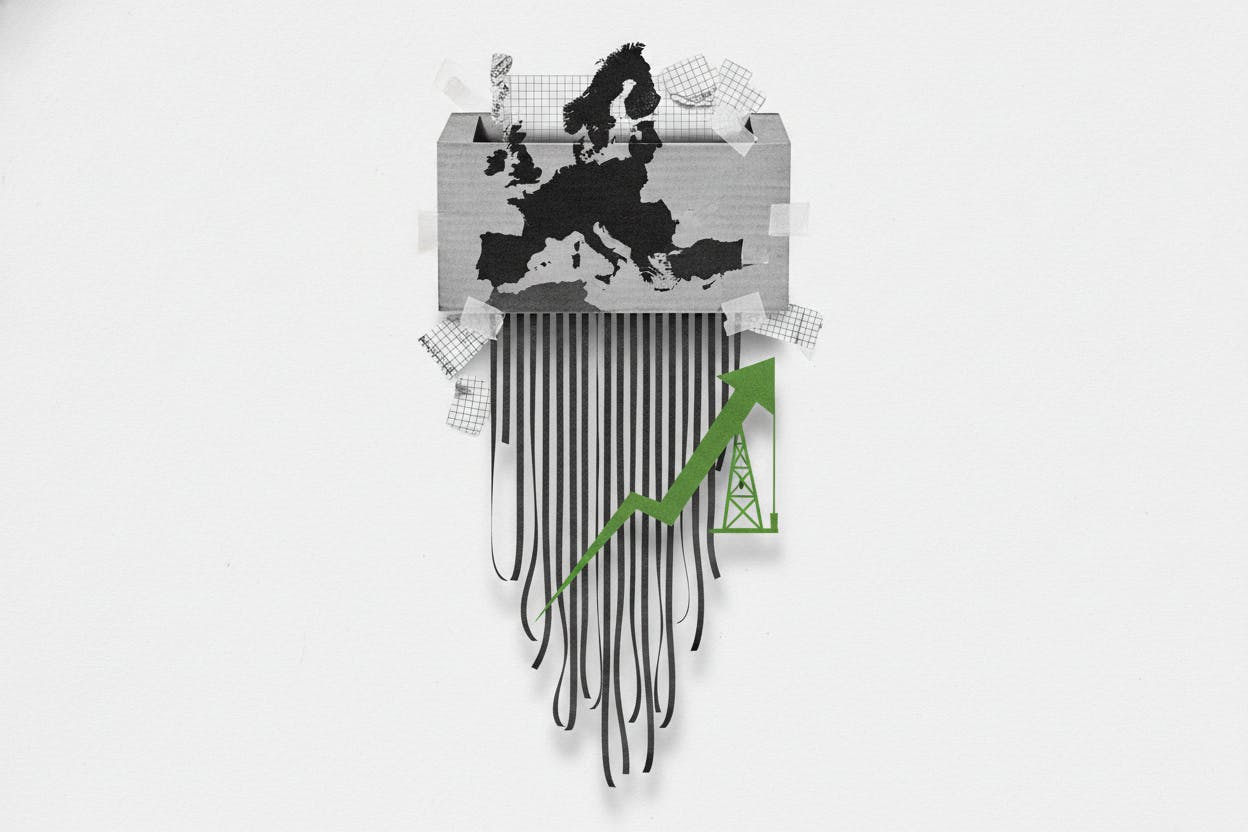
European stocks that trade on US exchanges slipped Friday morning, as a broad decline in technology shares outweighed a strong rally in energy names. The S&P Europe Select ADR Index fell 0.6% to 1,899.52, according to MT Newswires, even as oil and gas companies posted solid gains.
An ADR, or American Depositary Receipt, is a way for US investors to buy shares of foreign companies without dealing with overseas exchanges. Each ADR represents a specific number of underlying shares in the company, and its price reflects both the stock's local performance and currency exchange rates.
Energy Stocks Shine
Energy stocks were the standout performers on Friday. Norwegian oil giant Equinor jumped 4.1%, while Italy's Eni rose 3.1%. Shell added 2.3%, and BP gained 1.4%. The rally came amid rising oil prices, as geopolitical tensions in the Middle East continued to stoke supply concerns. For context, energy stocks have been volatile recently, with crude oil prices swinging on news of potential disruptions to production or shipping routes. Energy stocks have shown resilience even when oil prices dip, as investors weigh long-term demand and dividend yields.
The gains in energy were not enough to lift the overall index, however, because the heaviest-weighted sectors—technology and semiconductors—moved in the opposite direction.
Tech and Chip Stocks Drag
Dutch semiconductor equipment maker ASML fell 2.6%, and Franco-Italian chipmaker STMicroelectronics also dropped 2.6%. German software giant SAP slid 1.8%. These declines reflect a broader selloff in tech stocks this week, as investors worry about high valuations and the impact of rising interest rates on growth companies. European stocks have slipped as a tech selloff deepened, with oil prices rising ahead of the European Central Bank's next meeting.
The tech sector's weakness is not unique to Europe. US markets have also seen a rotation out of high-growth tech names into more defensive sectors like energy and utilities. This pattern often emerges when investors anticipate slower economic growth or higher borrowing costs.
What This Means for Investors
For everyday investors, the divergence between energy and tech stocks highlights the importance of diversification. A portfolio that leans too heavily on one sector can be vulnerable to sharp swings. The ADR index's decline, despite strong energy performance, shows how sector concentration can mask underlying moves.
Investors holding European ADRs should pay attention to currency risk. Because ADRs are priced in US dollars, a strengthening dollar can reduce returns for US-based investors, even if the local stock price rises. Conversely, a weaker dollar can boost returns.
Looking ahead, market participants will be watching for the European Central Bank's next policy decision, as well as corporate earnings reports from major European companies. Europe's STOXX 600 faces a busy earnings week with reports from Ryanair, Novartis, SAP, and Volkswagen, which could provide further direction.
The energy sector's strength may continue if oil prices remain elevated, but tech stocks could rebound if valuations become more attractive. For now, the market is sending a clear signal: sector rotation is in full swing, and investors should stay alert to shifting trends.



