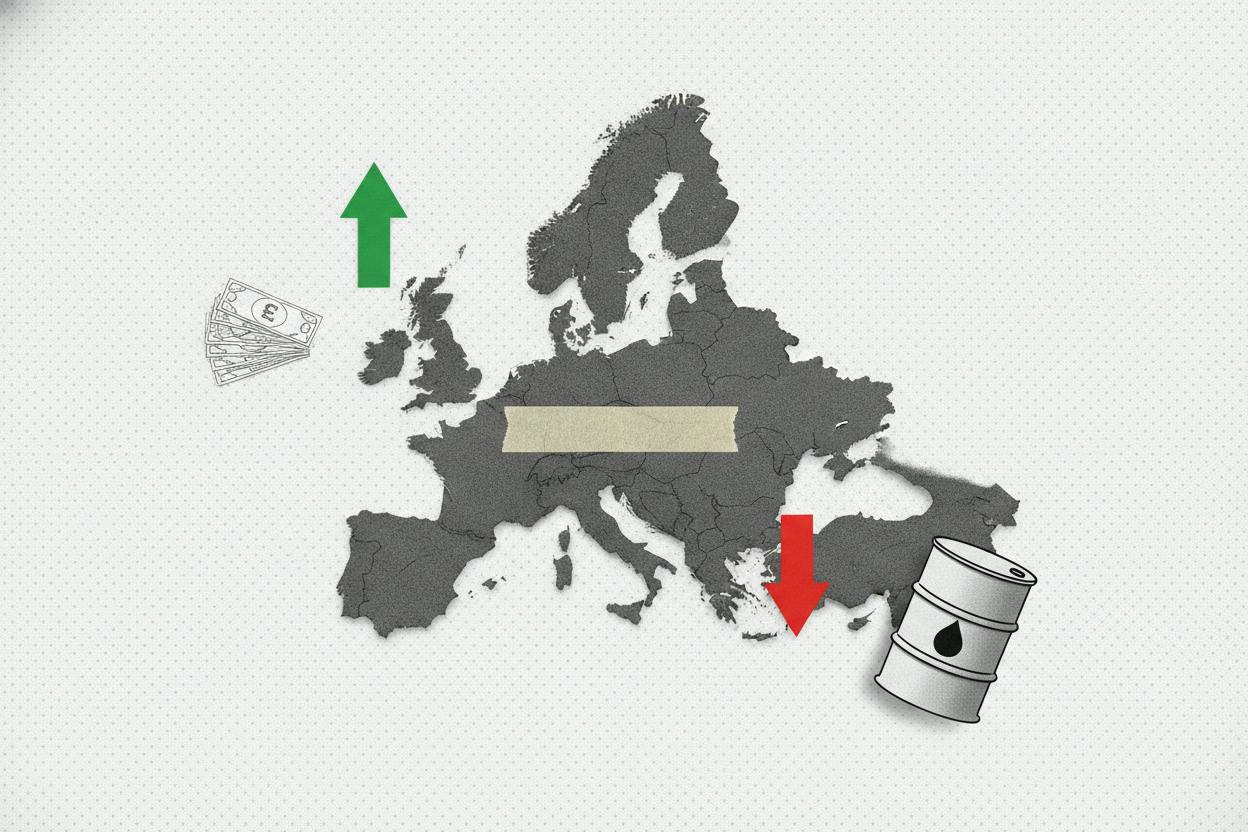
European shares that trade in the US as American depositary receipts (ADRs) kicked off the week on a positive note, with the S&P Europe Select ADR Index rising 0.42% to 1,894.78 on Monday morning. The advance was led by Spanish banks, while energy heavyweights pulled in the opposite direction.
ADRs are US-traded receipts that represent shares of overseas companies, giving investors a convenient way to buy foreign stocks without dealing with foreign exchanges or currency conversions. They also provide a second venue for price discovery during US market hours, which can offer clues about global investor sentiment before European markets open.
Banks lead, energy lags
Spain's Banco Santander gained 3.7% and Banco Bilbao Vizcaya Argentaria (BBVA) rose 3.1%, making them the standout performers in the index. The rally in European banks comes amid a broader backdrop of higher interest rates, which typically boost lenders' net interest margins—the difference between what they pay on deposits and earn on loans.
On the other side, energy stocks weighed on the index. Norway's Equinor and UK's BP both fell, reflecting softer oil prices and a cautious outlook for the sector. When crude prices decline, energy producers' earnings expectations tend to follow, and that often shows up in their share prices.
The divergence between banks and energy highlights how sector rotation can drive index moves. On any given day, a handful of large companies can overshadow the broader trend, which is why it's important to look beyond the headline number.
What this means for investors
For everyday investors, the ADR index is a useful barometer of European market sentiment without having to track dozens of individual stocks. A modest gain like Monday's suggests cautious optimism, but the mixed sector performance reminds us that not all parts of the market move together.
If you hold European stocks or funds, you might notice that your portfolio's performance can be influenced by currency swings as well. ADRs are priced in US dollars, so a stronger dollar can dampen returns even if the underlying European shares rise in local currency.
The banking sector's strength could be a sign that investors expect interest rates to stay elevated for longer, which would be positive for lenders but potentially negative for rate-sensitive sectors like real estate or utilities. Meanwhile, the energy weakness might reflect concerns about global demand or increased supply.
Looking ahead, market watchers will be paying attention to upcoming economic data and corporate earnings from Europe. The region has faced challenges from high energy costs and uneven factory recovery, as noted in Central Europe's factory recovery. However, some sectors, like autos, have shown resilience, as seen in Forvia's flat Q3 sales.
For those with a broader European exposure, the ADR index's move is a small piece of the puzzle. It's worth remembering that daily fluctuations are normal, and long-term investors should focus on fundamentals rather than short-term noise.
As always, diversification remains key. A mix of sectors and geographies can help smooth out the bumps, whether it's a bank-led rally or an energy-driven dip.