European stocks trading on US exchanges slipped late Wednesday morning, as a decline in major energy companies outweighed gains in a handful of biotech names. The S&P Europe Select ADR Index fell 0.83% to 1,868.68, highlighting how sector concentration can distort the picture for everyday investors.
American depositary receipts, or ADRs, allow US investors to buy shares of foreign companies on American exchanges without dealing with cross-border complexities. Each ADR represents a specific number of shares in a non-US company, making it easier to diversify internationally from a standard brokerage account.
Energy heavyweights lead the decline
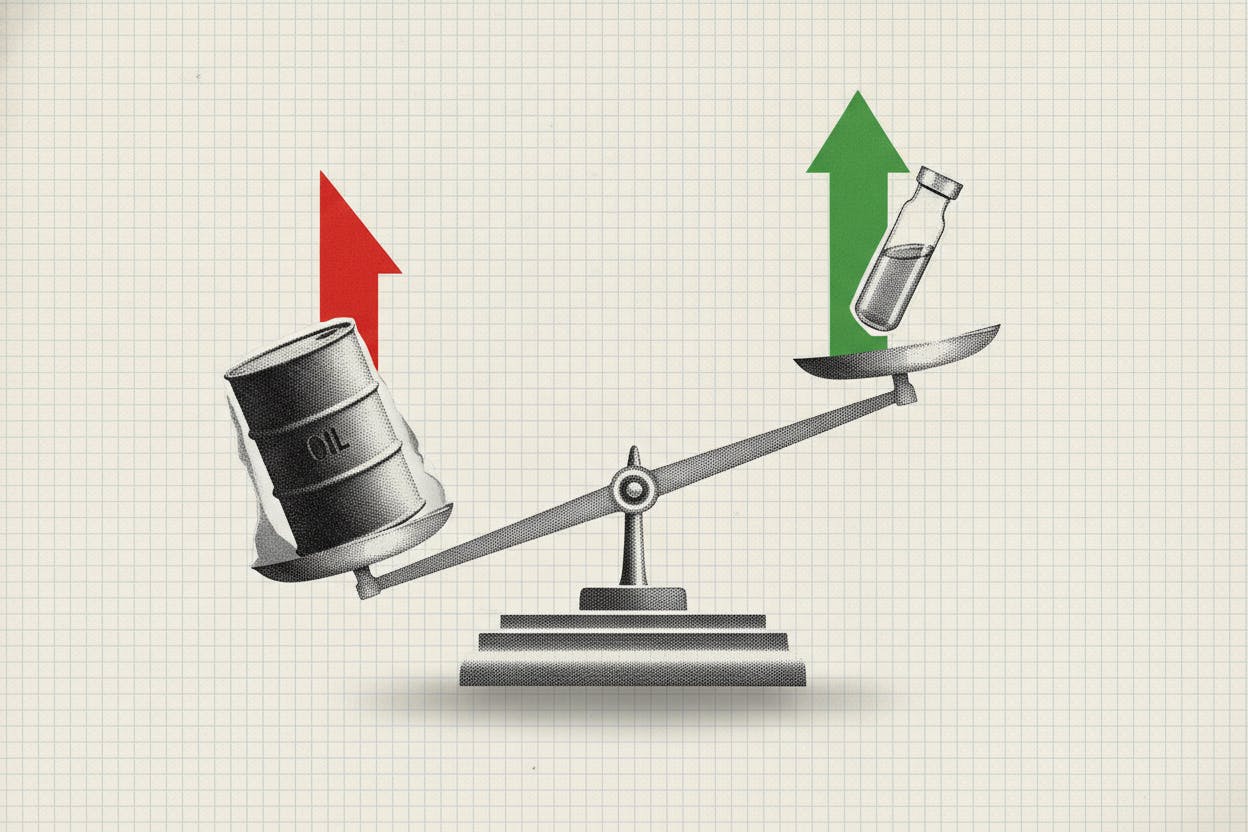
The index's drop was driven largely by weakness in the energy sector. Norway's Equinor fell 3.5%, Italy's Eni slid 3.1%, and UK-based BP dropped 3.1%. These three companies are among the largest components of the Europe ADR index, so their moves carry outsized weight in the overall calculation.
The broader energy sector has been under pressure recently, with oil prices declining amid concerns about global demand and supply dynamics. For context, a similar pattern was seen in other markets: the TSX dropped 0.55% as oil plunged to $70.34, dragging energy and metals lower. And energy stocks tumbled as oil dropped 4% on Strait of Hormuz shipping relief, showing how sensitive these stocks are to crude prices.
Other notable losers included Cellectis, a French biopharmaceutical company, which fell 5.4%, and Ericsson, the Swedish telecom equipment maker, which declined 1.8%.
Biotech bright spots
Despite the index's decline, several smaller healthcare names posted strong gains. Silence Therapeutics, a UK-based biotech firm focused on RNA-based therapies, jumped 15%. Trinity Biotech, an Irish diagnostics company, gained 9.3%. Materialise, a Belgian 3D printing software and services provider, rose 5.5%, and EDAP TMS, a French medical device company, climbed 4.8%.
These moves illustrate an important point: a headline index decline doesn't mean all stocks are falling. In a market-cap-weighted benchmark, a few large ADRs can dominate the day's return. When energy giants like Equinor, Eni, and BP fall in sync, they can pull the whole gauge lower through simple math, even while many smaller stocks are rising.
What it means for investors
For everyday investors using Europe-listed ADRs as a quick read on sentiment, Wednesday's action is a reminder to look beyond the headline number. Sector skews can make the index look weak even when there are plenty of stocks rising under the surface.
Investors should also consider the broader context. The energy sector's weakness may reflect concerns about global economic growth and oil demand, but it doesn't necessarily signal a broader downturn in European equities. Meanwhile, the strong performance of biotech and healthcare ADRs suggests that company-specific factors and sector trends can create opportunities even in a down market.
For those holding ADRs or considering international diversification, it's worth understanding how index composition affects performance. A 3% slide in a heavyweight can outweigh a 15% jump in a small cap, so tracking individual positions rather than just the index can provide a clearer picture of portfolio health.
Looking ahead, investors will likely watch energy prices and any further developments in the oil market, as well as earnings reports from major European companies. The Bank of Canada held its rate at 2.25% recently, citing energy inflation and trade risks, a reminder that central banks are also monitoring the sector's impact on the broader economy.
As always, the key takeaway is that a single day's move in an index doesn't tell the whole story. For investors with a long-term horizon, understanding the drivers behind the numbers is more important than reacting to short-term fluctuations.