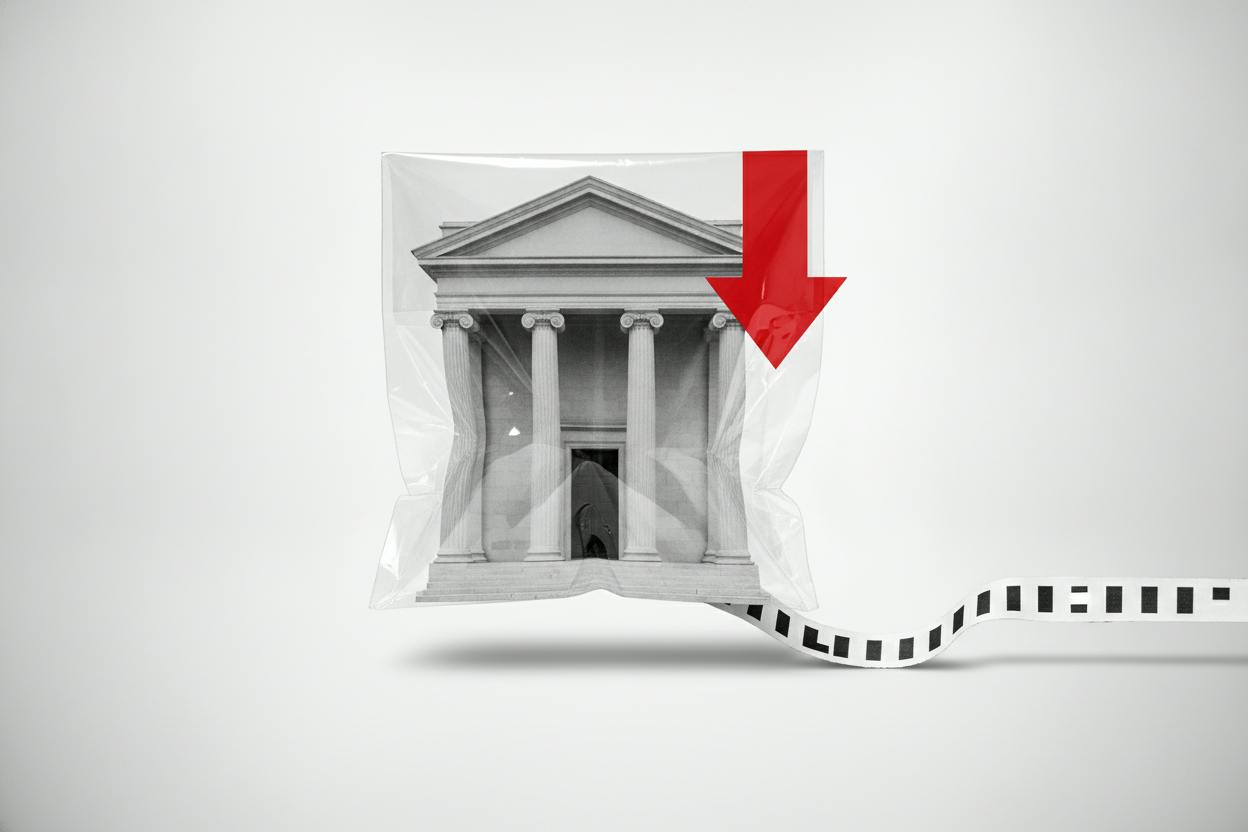
European stocks trading in the United States slipped on Wednesday morning, with the S&P Europe Select ADR Index down 1.2% as bank shares led the drop. The decline was broad but concentrated in financials, with several of the region's largest lenders falling more than 3%.
Among the biggest movers, Spain's BBVA fell 3.9%, Santander dropped 3.3%, ING of the Netherlands was down 3.2%, and UK-based HSBC slid 4%. Those losses outweighed modest gains in healthcare names like Sanofi (+0.8%) and Novo Nordisk (+0.6%).
What are ADRs and why do they matter?
American depositary receipts, or ADRs, are a way for US investors to buy shares of foreign companies without dealing with overseas exchanges. Each ADR represents a certain number of shares in the underlying company, and they trade on US exchanges during regular US market hours. Because of that, ADR prices can offer a real-time glimpse into how European stocks are being treated by global investors, even before the home markets open.
When ADRs fall sharply, it often signals that investors are worried about something specific to the company, the sector, or the broader economy. In this case, the message was straightforward: lenders were being marked down, and the selling was not limited to one country or one bank.
Why are bank stocks under pressure?
Banks are especially sensitive to interest rates and the shape of the yield curve. When long-term bond yields rise, it can squeeze the profit margins that banks earn from borrowing short-term and lending long-term. A steep rise in yields, like the one seen in recent weeks, can also raise fears about the value of banks' bond portfolios and the health of borrowers who may struggle with higher debt costs.
This is not an isolated move. European bank stocks have been volatile lately, and the sector has been hit by a combination of global bond selloffs and worries about economic growth. As European bank stocks slid 3.5% earlier amid a global bond selloff, the pattern is familiar to market watchers.
HSBC, in particular, has been in the spotlight for reasons beyond interest rates. The bank has been considering AI-driven job cuts in its UK wealth unit, a move that could signal cost pressures or strategic shifts. While that news is not directly tied to Wednesday's drop, it adds to the narrative of a bank navigating a challenging environment.
What does this mean for investors?
For everyday investors, the decline in European bank ADRs is a reminder that international diversification comes with its own set of risks. When you own ADRs, you are exposed not only to the company's fundamentals but also to currency movements, regional economic conditions, and local regulatory changes.
The fact that healthcare stocks rose while banks fell suggests that investors are rotating within the European market rather than selling everything. That kind of sector rotation can offer clues about where investors see relative value. Defensive sectors like healthcare often hold up better when growth worries surface, while cyclical sectors like banks tend to suffer.
If you hold European bank ADRs directly or through a mutual fund or ETF, it is worth watching how bond yields move in the coming days. The 10-year Treasury yield has been climbing, and that trend has been a key driver of bank stock performance. Higher yields can be a double-edged sword: they can boost net interest income for banks, but they can also raise funding costs and increase the risk of loan defaults.
It is also important to remember that ADR prices can be influenced by the dollar-euro exchange rate. If the dollar strengthens, ADRs can fall even if the underlying European shares are flat. That currency effect is something US investors should keep in mind when interpreting daily moves.
What to watch next
Investors will be watching for any further moves in global bond markets, as well as upcoming economic data and central bank signals. The Federal Reserve's meeting minutes, due later this week, could provide clues about the path of US interest rates, which in turn affects global yields and bank stocks. As investors await the Fed minutes for rate clues, the mood across markets remains cautious.
For now, the message from the ADR market is clear: European banks are facing headwinds, and investors are pricing in a more challenging environment for lenders. Whether this is a short-term blip or the start of a longer trend will depend on how interest rates and the broader economy evolve.
As always, it is wise to keep a long-term perspective. Daily market moves, even sharp ones, are part of the normal rhythm of investing. The key is to understand what is driving the moves and how they fit into your overall portfolio strategy.