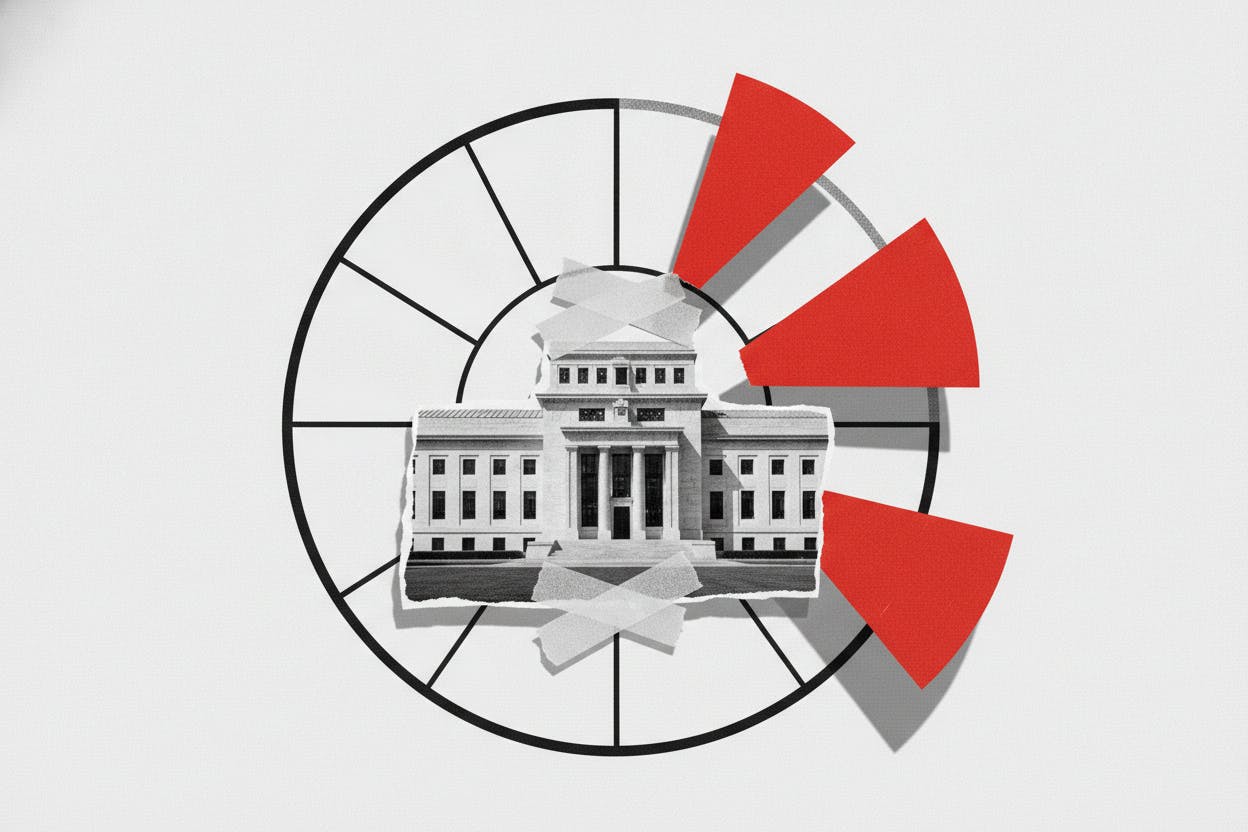
The Federal Reserve left interest rates unchanged at its latest meeting, but the decision was far from unanimous. Three officials voted for a quarter-point hike, a rare display of dissent that suggests the central bank is still wrestling with stubborn inflation.
The split vote caught markets off guard, even though the majority held the line. For everyday investors, the message is clear: the Fed is not yet ready to declare victory over inflation, and the next few months of data could determine whether rates go higher or finally start to fall.
What happened at the meeting
The Federal Open Market Committee (FOMC), the Fed's policy-setting body, voted to keep the federal funds rate in its current range. A majority of members judged that holding steady was the right move, given recent progress on inflation and a still-solid economy.
But three officials disagreed. They wanted a 0.25% increase, arguing that inflation remains too high and that the risk of easing too soon outweighs the risk of overtightening. Such dissents are unusual — most Fed decisions in recent years have been unanimous or nearly so.
The last time three or more officials dissented was during the early stages of the current tightening cycle, when the committee was deeply divided over how fast to raise rates. Today's split shows that the debate is far from settled.
Why the dissents matter
A unanimous hold would have signaled that the committee is comfortable waiting for more data. The dissents tell a different story: a significant minority believes inflation risks are still high enough to warrant further tightening, even if they didn't get their way this time.
That makes the next few inflation reports — especially the Consumer Price Index (CPI) and the Personal Consumption Expenditures (PCE) price index — even more important. If inflation stays sticky, the hawks could gain more support at future meetings. If it continues to cool, the doves may prevail.
Markets initially took the hold as modestly reassuring, but the mixed vote made the outlook harder to read. The 10-year Treasury yield, which moves inversely to bond prices, ended the day higher at 4.643%, reflecting lingering uncertainty. The dollar index slipped to 101, suggesting some investors see a less aggressive Fed ahead.
What it means for investors
For everyday investors, the key takeaway is that interest rate uncertainty is not going away anytime soon. The Fed's split decision means that bond yields, stock prices, and borrowing costs could remain volatile as markets react to each new data point.
Higher-for-longer rates tend to pressure growth stocks, especially in the tech sector, because future earnings are worth less when discounted at higher rates. On the other hand, sectors like financials and energy can benefit from a strong economy and elevated rates.
The dollar's slight decline could be a tailwind for international investments and commodities priced in dollars, such as oil and gold. But the move was modest, and the broader trend will depend on whether the Fed ultimately cuts rates or is forced to hike again.
Investors should also keep an eye on the bond market. The rise in the 10-year yield suggests that bond traders are pricing in a higher-for-longer scenario, which could ripple into mortgage rates, corporate borrowing costs, and even stock valuations.
What to watch next
All eyes are now on the next inflation reports, due in the coming weeks. If they show continued progress, the case for rate cuts later this year will strengthen. If they surprise to the upside, the three dissenting votes could become a majority.
The Fed's next meeting is in September, and the decision will depend heavily on the data between now and then. Markets are currently pricing in a roughly even chance of a cut or a hold, with a small but real possibility of another hike.
For now, the message from the Fed is one of caution: inflation is coming down, but not fast enough to declare mission accomplished. Investors should brace for more uncertainty, but also recognize that the end of the tightening cycle may be in sight.