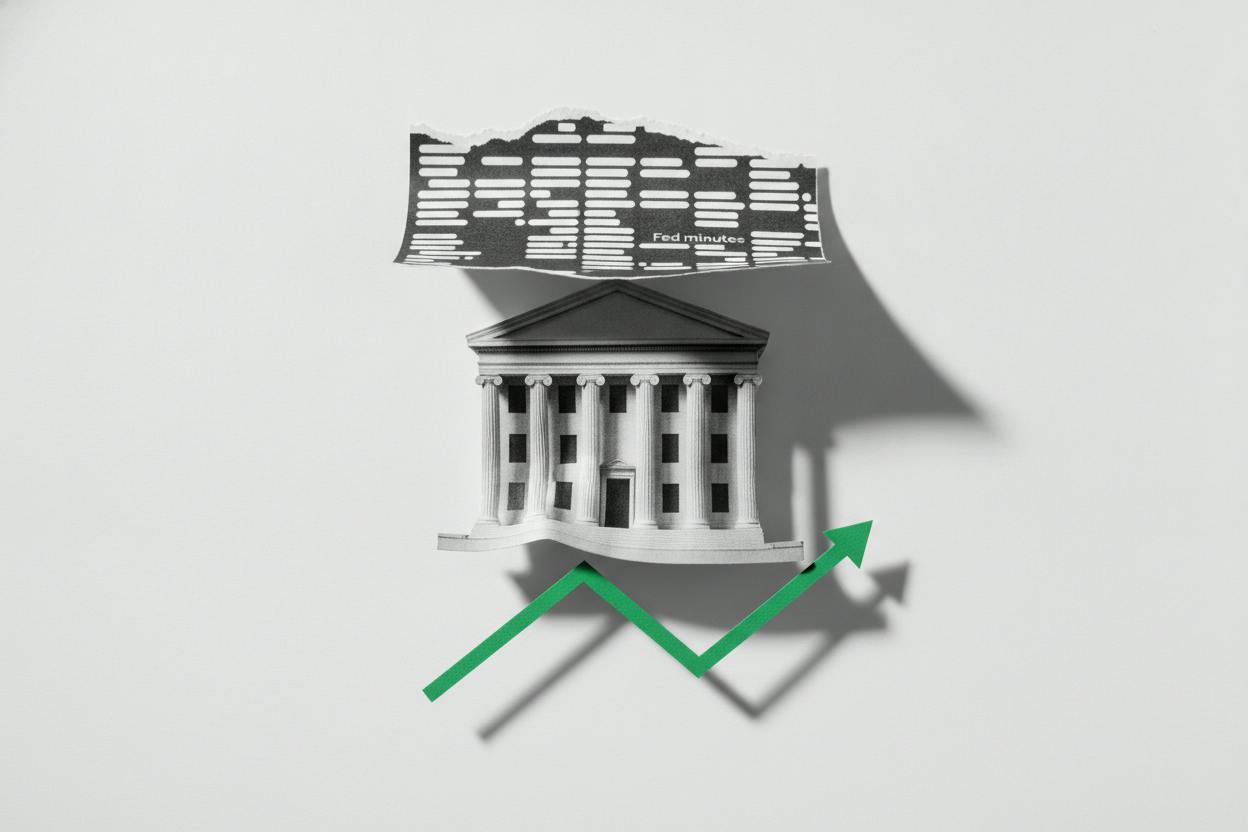
US bank stocks took a hit on Wednesday after the release of Federal Reserve minutes suggested that interest rates could remain elevated for longer than many investors had hoped. The minutes, from the Federal Open Market Committee (FOMC) meeting held on October 27-28, revealed an "overwhelming agreement" among officials that more tightening may be necessary to cool inflation. Some policymakers even floated the possibility of a half-point rate increase at the December 8-9 meeting, a more aggressive move than the quarter-point hikes seen recently.
The hawkish tone weighed heavily on the financial sector. The Financial Select Sector SPDR Fund (XLF), an exchange-traded fund that tracks large banks and financial institutions, fell 1.1%. Among the biggest decliners, JPMorgan Chase dropped 1.8% and Wells Fargo slipped 2%. These moves came even as Treasury yields eased, which typically benefits banks by lowering borrowing costs, but the prospect of higher-for-longer rates overshadowed that positive.
Why bank stocks are sensitive to rate expectations
Banks are particularly sensitive to interest rate changes because their core business—lending—depends on the spread between what they pay depositors and what they charge borrowers. When rates rise, banks can often earn more on loans, but the market's reaction is more nuanced. Higher rates can also slow economic growth, increase the risk of loan defaults, and reduce demand for mortgages and other credit. That is why a signal of more hikes can spook investors, even if the immediate effect on bank margins seems positive.
The Fed's minutes also highlighted a broader concern: inflation remains stubbornly above the central bank's 2% target. The "overwhelming agreement" on the need for more tightening suggests that the Fed is willing to accept some economic pain to bring prices under control. For everyday investors, this means that borrowing costs—from credit cards to auto loans to mortgages—could stay elevated for a while, and the stock market may continue to face headwinds from rate uncertainty.
Housing data adds to the gloom
Adding to the downbeat mood, pending home sales fell 4.7% in October, according to data released the same day. Pending home sales measure signed contracts for existing homes, so they are a leading indicator of future closings. The decline suggests that the housing market, already struggling with high mortgage rates and limited inventory, is losing further momentum. For banks, this is a double-edged sword: fewer home sales mean less mortgage origination business, but it also reduces the risk of a housing bubble.
The housing weakness is part of a broader pattern of cooling in interest-rate-sensitive sectors. As the Fed has raised rates over the past year, affordability has deteriorated, and potential buyers have pulled back. This trend is likely to continue if the Fed follows through on its hawkish signals. Investors should watch upcoming housing data and Fed communications for clues about the pace of future hikes.
What it means for investors
For ordinary investors, the key takeaway is that the Fed's fight against inflation is far from over. The possibility of a half-point hike in December, while not certain, is a real risk. This could lead to more volatility in stocks, particularly in rate-sensitive sectors like banks, real estate, and utilities. It also means that cash and short-term bonds may continue to offer attractive yields, as the Fed keeps rates high.
Investors should also note that the market's reaction to the minutes was not uniform. While bank stocks fell, other sectors may have fared differently. For instance, gold slid 3.2% to a one-year low as the hawkish stance boosted the dollar, and Nvidia slipped as rate fears rattled tech stocks. The broader market is clearly on edge, and investors should brace for continued swings.
For those with exposure to bank stocks, it's important to remember that these companies are generally well-capitalized and can weather higher rates, but the short-term outlook is clouded by uncertainty. Rather than making drastic moves, investors might consider diversifying across sectors and maintaining a long-term perspective. As always, it's wise to consult with a financial advisor to tailor decisions to your individual circumstances.
The Fed's next meeting on December 8-9 will be closely watched. If the central bank does opt for a half-point hike, it would mark a significant acceleration in tightening. Until then, expect more volatility as traders digest every piece of economic data and Fed commentary. The hawkish debate over rate hikes is likely to dominate market sentiment in the coming weeks.
In the meantime, the housing market's weakness is a reminder that higher rates are already having real economic effects. For investors, this could signal slower growth ahead, which might eventually prompt the Fed to pause its hiking cycle. But for now, the message from the minutes is clear: the Fed is committed to bringing inflation down, even if it means more pain for markets and the economy.