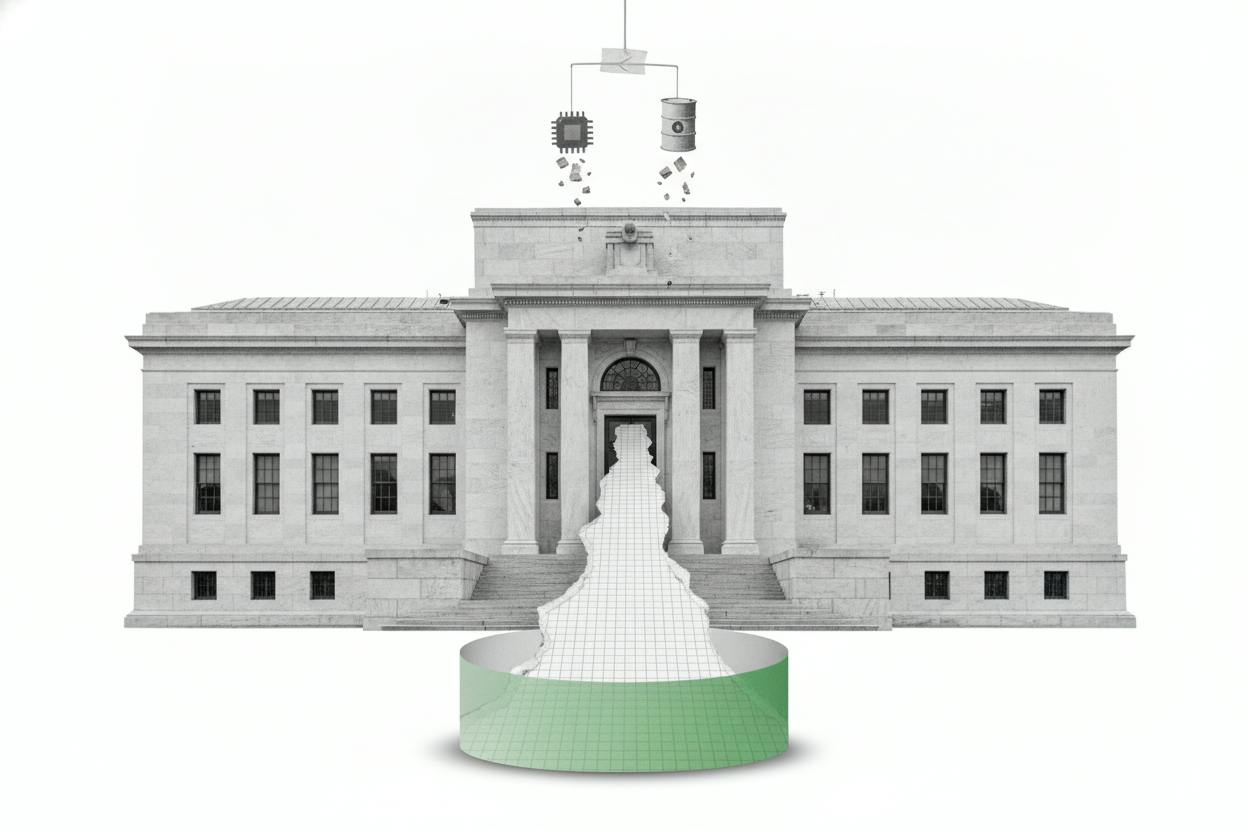
Federal Reserve Governor Michelle Bowman said inflation remains above the central bank's 2% target, but she does not see a case for additional interest-rate increases right now. Speaking at the Council on Foreign Relations in Washington, D.C., Bowman argued that financial conditions have already tightened — in effect doing some of the Fed's work — and that several recent sources of price pressure should fade over the coming year.
Her comments offer a window into how at least one policymaker is weighing the trade-off between stubborn inflation and an economy that continues to show resilience. Bowman estimated that core PCE inflation, the Fed's preferred gauge that excludes volatile food and energy costs, likely rose 3.3% in October. That is down from the peaks seen during the post-pandemic inflation surge, but still well above the Fed's goal.
Why the Fed watches core PCE
Core PCE is closely followed by economists and investors because it strips out the categories that swing most sharply from month to month, giving a cleaner read on underlying price trends. The Fed uses it as its primary inflation benchmark when setting interest rates. A reading in the low-3% range suggests inflation is cooling but has not yet returned to normal.
Bowman pointed to two specific forces keeping prices elevated: investment demand tied to artificial intelligence and the conflict in the Middle East. Both have the potential to push up costs in the short term — AI spending boosts demand for chips, data-center equipment and electricity, while geopolitical instability can disrupt energy supplies and shipping routes. Bowman's view is that these pressures are likely to ease next year rather than persist indefinitely.
She also noted that the job market "appears to be firming," a phrase that matters because a strong labor market can support consumer spending and, in turn, keep inflation from falling as quickly as the Fed would like. The Fed has been trying to cool the economy just enough to bring inflation down without triggering a sharp rise in unemployment — a delicate balance often called a soft landing.
What it means for investors
For ordinary investors, Bowman's remarks matter less for what they say about October's inflation number and more for what they signal about the path of interest rates. If the Fed holds rates steady rather than raising them further, borrowing costs for mortgages, credit cards and business loans are likely to stay near current levels rather than climb. That can be a relief for households and companies carrying variable-rate debt.
At the same time, the absence of further hikes does not mean rate cuts are imminent. Bowman's comments suggest the Fed wants to see more evidence that inflation is heading toward 2% before considering any easing. Markets often react to this kind of message by adjusting expectations for when the first cut might arrive — pushing them further into the future.
Investors will also be watching how the Fed's stance affects different parts of the market. When rate-cut hopes fade, shorter-term Treasury yields tend to stay elevated, which can weigh on rate-sensitive sectors like technology and real estate. A rise in Treasury yields often pressures growth stocks because their future earnings are worth less in present value terms. Meanwhile, a Fed that is done hiking but not yet cutting can be supportive for quality bonds, as investors lock in yields that are higher than they have been in years.
The dollar is another channel to watch. If U.S. rates stay higher for longer relative to other countries, the greenback tends to strengthen, which can pressure oil and gold prices and make U.S. exports more expensive abroad. For investors with international holdings, currency swings can meaningfully affect returns.
Small businesses, which are especially sensitive to financing costs, may also take some comfort from the idea that the hiking cycle is over. Recent surveys have shown that inflation is testing small-business confidence even as consumers keep spending. A steady Fed would remove one source of uncertainty for owners planning to invest or hire.
What to watch next
The most important data point on the near horizon is the official core PCE report, which will confirm or revise Bowman's 3.3% estimate. Investors will also parse speeches from other Fed officials to see whether Bowman's view is widely shared or represents a minority position on the committee. Any signs that inflation is proving stickier than expected could revive talk of another hike, while softer readings would reinforce the case for holding steady.
For now, the takeaway is that the Fed appears to be in a waiting mode — not declaring victory on inflation, but not tightening further either. That stance leaves markets to do the work of adjusting to a world where rates stay higher than they were in the 2010s, a shift that has broad implications for how investors think about risk, income and diversification.



