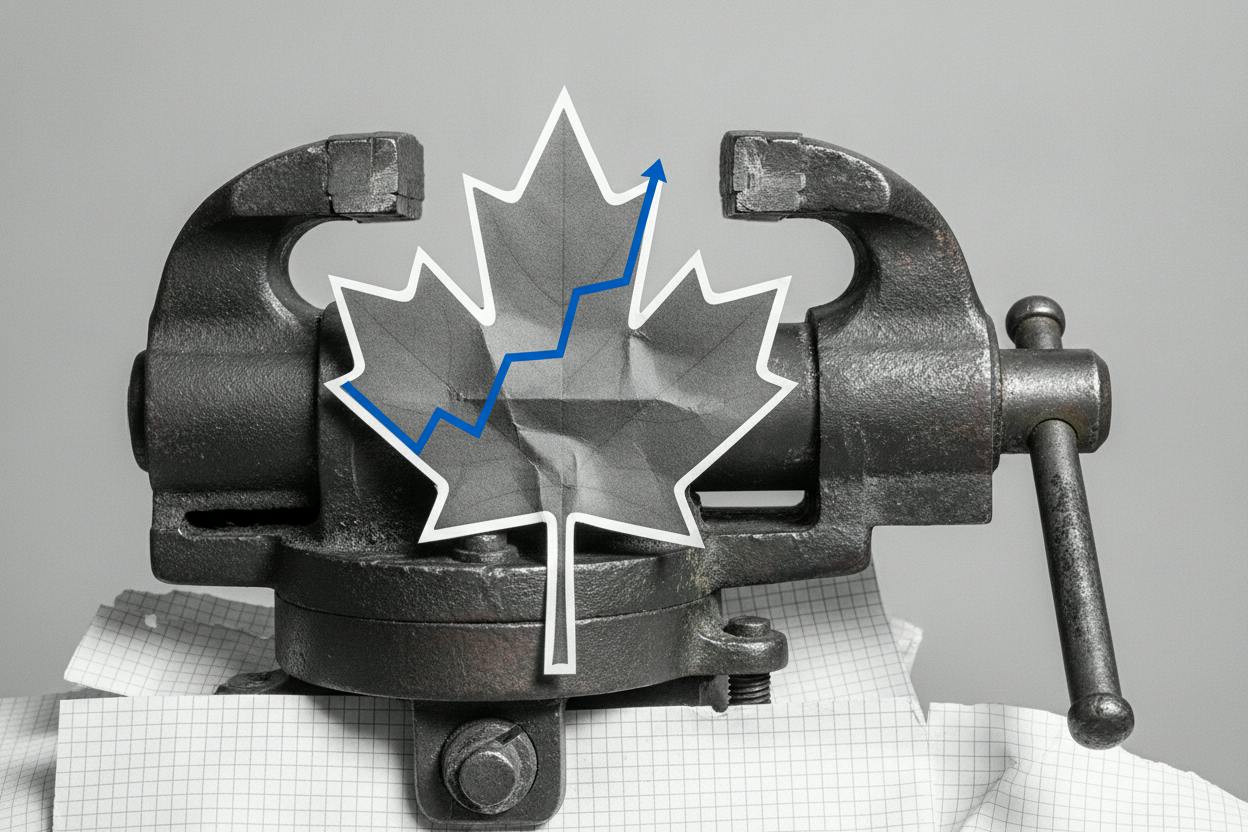
Global investment bank UBS is projecting that the Bank of Canada will keep raising its key interest rate well into the late 2020s, a forecast that points to a longer and more gradual tightening cycle than many investors had expected.
In a research note, UBS said it expects the central bank's policy rate to climb from its current 2.50% to 3.0% by January 2027, and then to 3.50% by the end of 2028. The forecast comes after the Bank of Canada's latest quarter-point increase, which brought the rate to 2.50%.
Why the Bank of Canada keeps hiking
The Bank of Canada has been raising rates to combat inflation that remains stubbornly above its 2% target. Even after major shocks like higher energy costs, price pressures are lingering, suggesting that inflation is becoming more broad-based rather than just a temporary blip.
Higher interest rates work by making borrowing more expensive, which cools spending across the economy. They can't create more oil or fix broken supply chains, but they can reduce demand so that energy-driven price jumps are less likely to spill over into other goods and services, or into wages. That spillover is what central banks fear most, because it can turn a temporary price spike into a self-reinforcing cycle.
UBS's outlook has two phases. First, it expects the Bank of Canada to push rates up to around 3.0% and then hold them there for a period. After that, as demand continues to tighten capacity, the bank would need to raise rates again, reaching 3.50% by the end of 2028.
What this means for borrowers and investors
For everyday Canadians, a higher-for-longer rate path means mortgage rates and other borrowing costs are likely to stay elevated for years. Variable-rate mortgages, lines of credit, and business loans will all feel the pinch. Savers, on the other hand, may benefit from higher interest on savings accounts and GICs.
For investors, the forecast has implications for rate-sensitive sectors. Banks, for instance, often see their net interest margins improve when rates rise, but higher rates can also slow loan growth and increase defaults. Real estate and utilities, which are sensitive to borrowing costs, could face continued pressure. The Canadian dollar might also strengthen if the Bank of Canada keeps rates higher than other central banks, which could affect exporters.
The UBS view contrasts with some market expectations that the Bank of Canada might start cutting rates sooner if the economy weakens. However, UBS's projection suggests that persistent inflation and tight capacity will keep the central bank on a tightening path for years to come.
Broader context and what to watch
This forecast comes amid a global debate about how long central banks will need to keep rates elevated. In the U.S., the Federal Reserve has also been raising rates, and some officials have signaled that rates may need to stay higher for longer. Similarly, the Bank of England has hinted at further hikes. The Bank of England's signals echo the theme of persistent inflation.
Canada's fiscal situation adds another layer. The government's budget bets big on investment, energy and defense, which could stimulate demand and make the central bank's job harder. Some economists, like David Rosenberg, have warned that Canada's widening deficits could limit the government's ability to respond to a recession, leaving more of the burden on monetary policy.
Investors will be watching upcoming inflation data and Bank of Canada meetings for clues about the pace of future hikes. The central bank's own minutes, which have previously signaled rate cuts despite uncertainty, show how quickly the outlook can shift. But UBS's long-term forecast suggests that the era of ultra-low rates is firmly in the rearview mirror.
Bottom line
UBS's projection of a 3.50% policy rate by 2028 is a reminder that the fight against inflation may be a marathon, not a sprint. For investors, that means positioning for a world where interest rates stay higher than the pre-pandemic norm. That could favor sectors that benefit from higher rates, like financials, while weighing on those that rely on cheap borrowing, such as real estate and some growth stocks.
As always, no one knows exactly where rates will go. But UBS's view adds to a growing chorus of voices suggesting that the era of easy money is over, and that investors need to adapt to a higher-rate environment for the foreseeable future.