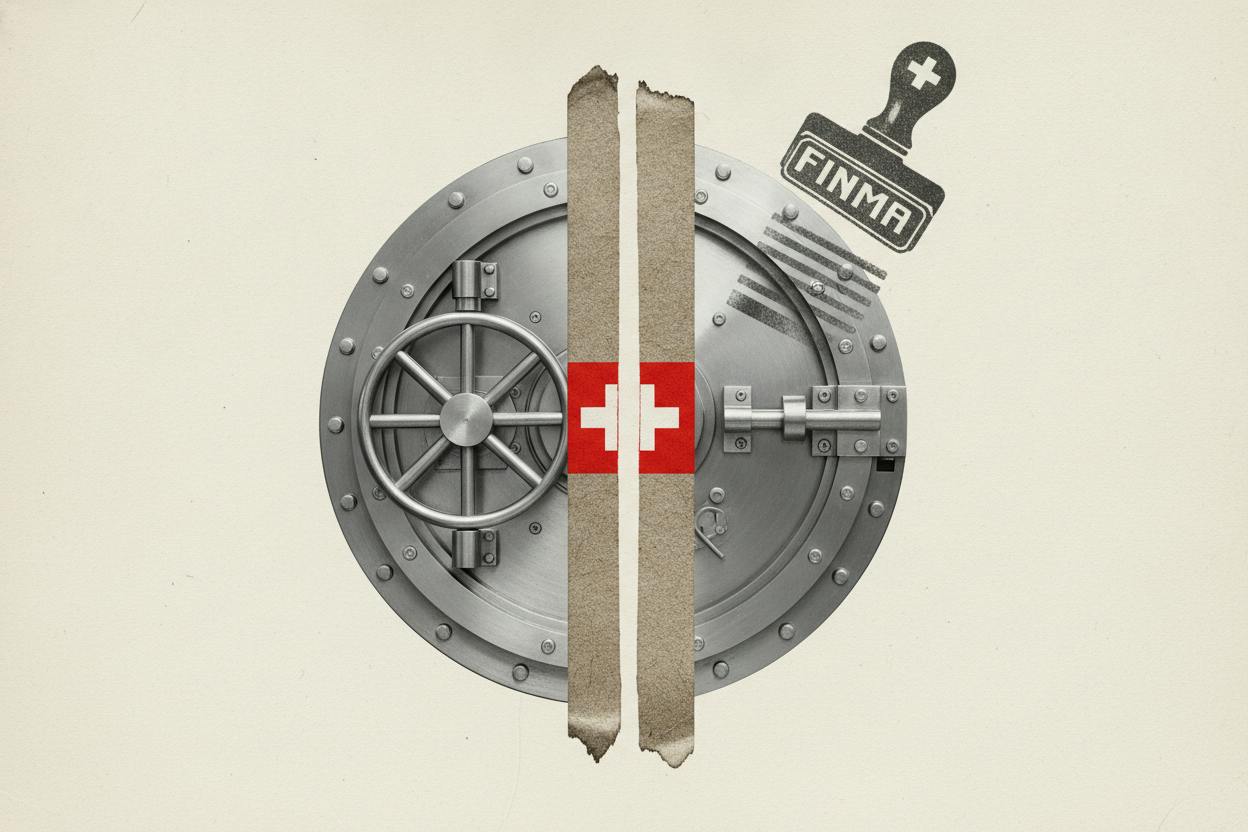
Switzerland's financial regulator, FINMA, has closed its enforcement case against private bank Julius Baer and halved the extra capital the bank is required to hold. The decision, announced on [date], removes a long-standing cloud over the lender and helped its shares rise even as the broader Swiss market dipped.
What happened
FINMA's case centered on issues in Julius Baer's former private-debt business and older anti-money laundering shortcomings. By closing the case, the regulator has signaled that the bank has addressed the concerns and that no further supervisory measures are needed.
At the same time, FINMA reduced the bank's extra common equity Tier 1 (CET1) capital requirement to 250 million Swiss francs, down from 500 million. CET1 capital is the highest-quality loss-absorbing capital a bank holds, essentially a cushion against unexpected losses. Julius Baer said the reduced requirement implies a 9.4% "de facto" minimum CET1 ratio, which is the key measure of a bank's financial strength.
Why it matters
The closure of the enforcement case removes a major overhang for Julius Baer. Regulatory investigations can be costly and distracting, and their resolution often brings relief to investors. The halving of the extra capital buffer is also significant because it frees up capital that the bank can potentially use for other purposes, such as lending, investing, or returning to shareholders.
For everyday investors, the news is a positive signal about Julius Baer's regulatory standing and financial flexibility. However, it's important to note that the bank still faces a higher capital requirement than the minimum set by regulators, reflecting the seriousness of the past issues.
Context and background
Julius Baer is one of Switzerland's largest wealth managers, catering to wealthy clients. The bank's former private-debt business, which it has since exited, was a source of concern for regulators. Anti-money laundering shortcomings also drew scrutiny, as they have for several Swiss banks in recent years.
FINMA's enforcement cases are typically serious matters, and their resolution can take years. The fact that the case has been closed without further penalties suggests that Julius Baer has cooperated and taken corrective actions.
The broader Swiss market was slightly lower on the day, making Julius Baer's share price gain stand out. This divergence highlights how company-specific news can drive individual stock moves even when the overall market is flat or down.
What it means for investors
For investors holding Julius Baer shares, the news is a clear positive. The removal of regulatory uncertainty and the lower capital requirement could support the bank's profitability and its ability to return capital to shareholders. However, it's worth remembering that the bank's CET1 ratio is still above the minimum, and any future regulatory changes could affect its capital position.
For those considering an investment in the banking sector, this development underscores the importance of regulatory risk. Banks operate in a heavily regulated environment, and changes in capital requirements or enforcement actions can have a significant impact on their finances and share prices.
As always, it's wise to look at the broader picture. Julius Baer's performance will also depend on factors like market conditions, client activity, and the health of the global economy. Regulatory clarity is just one piece of the puzzle.
Looking ahead
Investors will likely watch Julius Baer's next earnings report to see how the reduced capital requirement affects its capital ratios and any plans for dividends or buybacks. The bank may also provide more details on its strategy following the resolution of the regulatory case.
In the wider Swiss banking landscape, this news could be seen as a positive for the sector, as it shows that regulators are willing to close cases when banks demonstrate improvement. However, each case is unique, and other banks facing similar issues may not get the same outcome.
For now, Julius Baer can move forward with less regulatory overhang, and its shareholders can breathe a little easier.