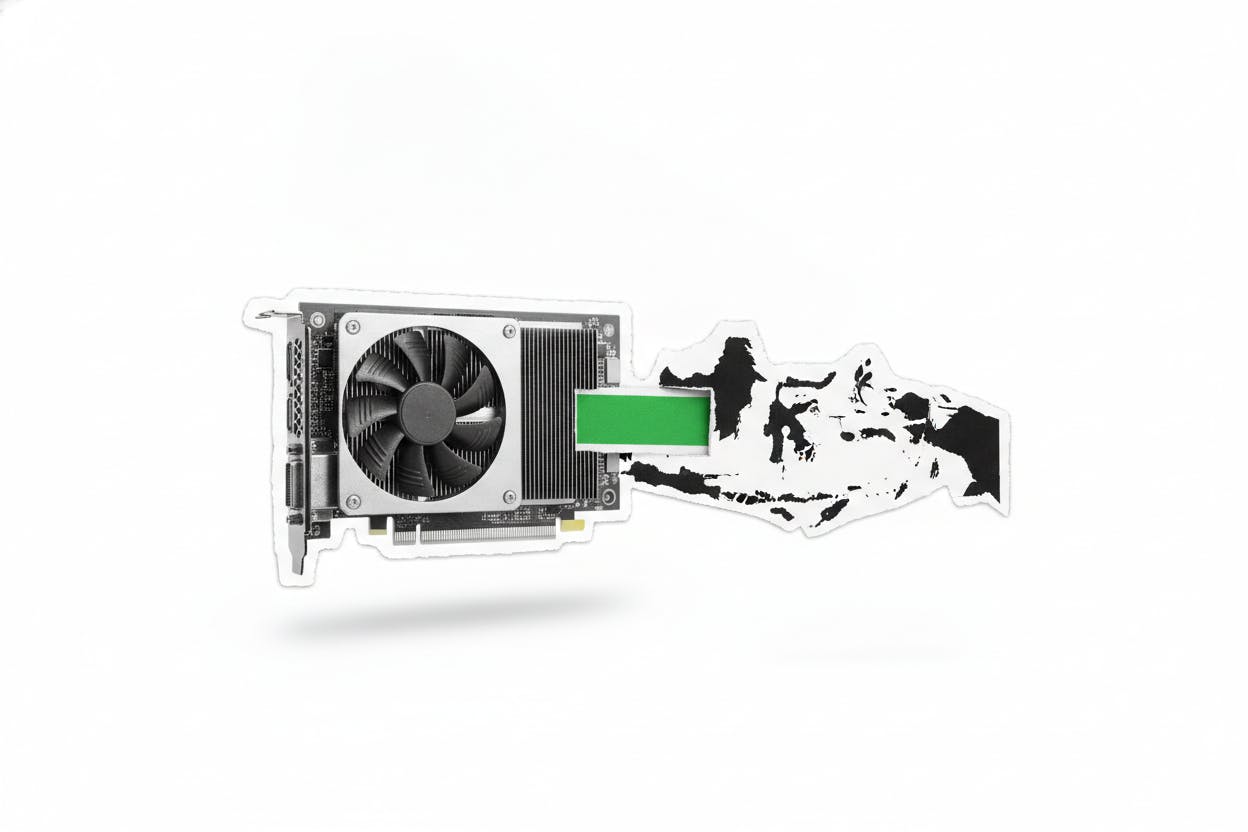
Australian-founded AI infrastructure company Firmus Technologies has announced a partnership with chip giant Nvidia to bring 170,000 graphics processing units (GPUs) to a data center in Batam, Indonesia. The rollout is scheduled from the first quarter of 2027 through early 2028, and Firmus projects the deal could generate up to $30 billion in revenue over six years.
What the partnership involves
Under the agreement, Firmus will purchase Nvidia's GPU systems and then rent out that computing power to startups and other customers through cloud services powered by Nvidia's technology. Nvidia will earn revenue from both the hardware sale and a share of the cloud revenue generated by Firmus.
GPUs are specialized chips originally designed for rendering graphics in video games, but they have become essential for training and running large artificial intelligence models. These chips can handle many calculations at once, making them far more efficient than standard computer processors for AI workloads.
The Batam facility is strategically located near Singapore, a major tech hub, and Indonesia has been positioning itself as a destination for data center investment due to its relatively low energy costs and available land.
Why this matters for the AI industry
The demand for AI computing power has skyrocketed over the past two years, driven by the rapid adoption of generative AI tools like ChatGPT and other large language models. This has created a shortage of GPUs, particularly Nvidia's high-end chips, which has driven up costs and made it difficult for smaller companies to access the computing power they need.
By offering GPU capacity through a cloud rental model, Firmus aims to lower the barrier to entry for startups that cannot afford to buy their own hardware. This approach mirrors what larger cloud providers like Amazon Web Services and Microsoft Azure already do, but with a focus on AI-specific workloads.
The deal also highlights the growing trend of AI infrastructure companies building out dedicated data centers to meet surging demand. Earlier this year, AI revenue hit $25 billion, topping depreciation costs for the second straight quarter, underscoring the financial viability of these investments.
What it means for investors
For everyday investors, this partnership is a signal that the AI infrastructure buildout is still in its early stages. Nvidia continues to benefit from strong demand for its chips, and deals like this one provide visibility into future revenue streams. However, investors should be aware that Firmus's projection of $30 billion in revenue over six years is an estimate and depends on many factors, including actual utilization rates, pricing, and competition.
The deal also underscores the importance of geographic diversification in data center investments. Indonesia's Batam island offers advantages in terms of energy costs and proximity to Asian markets, but it also carries risks related to regulatory stability and infrastructure reliability.
For those invested in cloud and AI stocks, the partnership is another reminder that the race to build AI capacity is intensifying. TD SYNNEX's Hyve unit recently drove a blowout quarter and plans a 50% capacity boost, showing that the entire supply chain for AI infrastructure is expanding rapidly.
Looking ahead
The rollout of 170,000 GPUs will take place over roughly a year, starting in early 2027. That timeline reflects the complexity of building out large-scale data center capacity and the lead times required for manufacturing and installing advanced chips.
Investors will want to watch for updates on how quickly Firmus can fill that capacity with paying customers. If demand for AI computing continues to grow as expected, the Batam facility could become a significant source of revenue. But if the AI boom cools or if competitors offer cheaper alternatives, the projected $30 billion may prove optimistic.
For now, the deal represents a bet that the hunger for AI computing power will remain strong for years to come, and that startups in particular will need affordable access to the chips that make AI possible.